
Anti-Martingale Strategy: Scale Wins, Not Losses
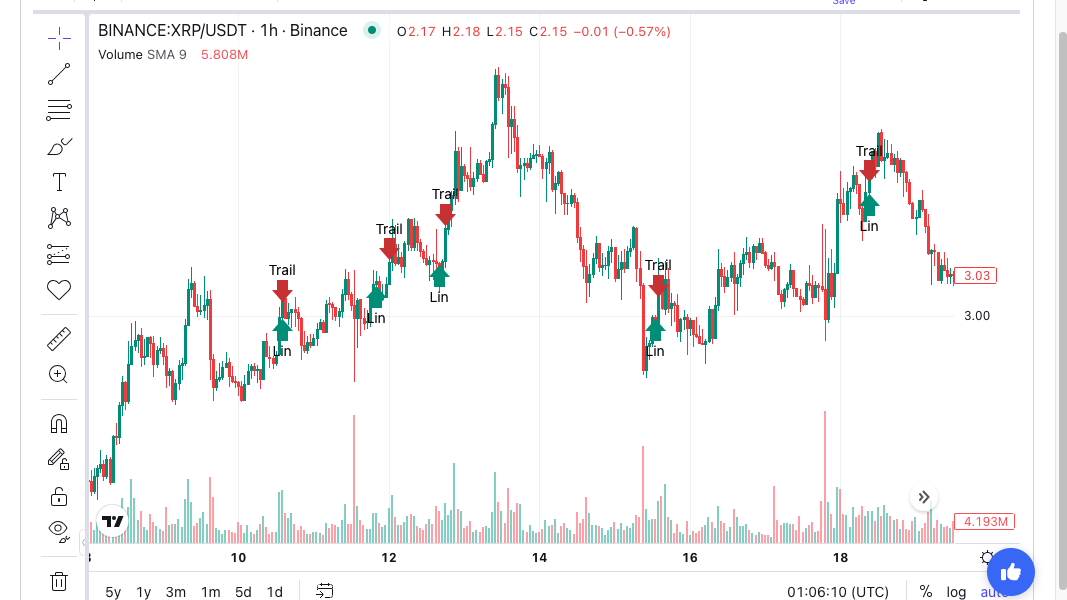
The anti-martingale strategy increases your position size after wins and cuts it after losses — the exact mirror of the doubling-down approach we dismantled in yesterday’s Martingale strategy post. Where martingale risks ruin to chase small gains, anti-martingale risks small setbacks to chase large gains. That single inversion changes everything about the risk profile.
What Is the Anti-Martingale Strategy?
The anti-martingale strategy — sometimes called the reverse martingale or Paroli system — is a position sizing method. After a winning trade, you increase your stake, typically by a fixed factor. After a losing trade, you reduce it back towards a base size. The idea, as Investopedia explains, is to compound during favourable streaks while keeping losses anchored to your smallest size.
In practice you are letting the market’s own feedback set your risk. Winning streaks earn the right to more exposure. Losing streaks take it away.
Why Scaling Wins Beats Chasing Losses
Martingale grows position size precisely when your strategy is performing worst. Anti-martingale does the opposite: your largest positions occur during your best runs, funded partly by open profits rather than fresh capital.
This matters because trading returns tend to streak. Trends persist, volatility clusters and strategies have hot and cold periods. A sizing rule that leans into hot periods and shrinks through cold ones aligns your risk with the conditions that actually pay you. It also keeps your risk of ruin low, because drawdowns are met with smaller bets, not bigger ones.
How Does Anti-Martingale Sizing Work in Practice?
Suppose your base risk is 1% of equity per trade with a 1.5x win multiplier, capped at 3%:
- Trade 1: risk 1%. Win. Next trade risks 1.5%.
- Trade 2: risk 1.5%. Win. Next trade risks 2.25%.
- Trade 3: risk 2.25%. Win. Next trade risks 3% (the cap).
- Trade 4: risk 3%. Loss. Reset to 1%.
Two design choices define the system. The multiplier controls how aggressively you compound. The cap stops one long streak from concentrating your entire account in a single trade. Without a cap, anti-martingale eventually hands back a huge position to one reversal — the same tail risk it was meant to avoid, just inverted.
When Does the Anti-Martingale Strategy Struggle?
The approach has a clear weakness: choppy, alternating markets. If wins and losses alternate — win, loss, win, loss — you always carry your larger size into the losing trade and your smaller size into the winning one. The result is a slow bleed even when your strategy’s win rate is decent.
It also gives back profits at the end of every streak by design. Your biggest position is always the one that ends the run. Accepting that final give-back is the price of compounding the streak that preceded it. Backtesting across trending and ranging periods tells you whether the trade-off pays for your specific strategy — and pairing the sizing rule with a sound base method like the Kelly criterion keeps the numbers grounded.
How to Apply the Anti-Martingale Strategy in Arrow Algo
Arrow Algo’s no-code visual builder handles this with a few drag-and-drop blocks:
- Add the Last Signal Profit block. It reports whether your previous trade closed in profit.
- Feed that into a condition block: previous profit above zero or not.
- Route the condition to your order size — a larger size when the last trade won, the base size when it lost.
- Add a cap so consecutive wins can never push size beyond your maximum.
- Backtest on live exchange data to compare fixed sizing against the anti-martingale version of the same strategy.
Because the sizing logic is separate from your entry logic, you can bolt it onto any strategy you have already built and measure exactly what it adds.
What Are the Key Takeaways?
- The anti-martingale strategy sizes up after wins and resets after losses — the mirror of martingale.
- Your biggest positions coincide with your best runs, and drawdowns are met with your smallest bets.
- A sensible multiplier and a hard cap are essential; uncapped compounding recreates the tail risk.
- Choppy, alternating markets are its weak spot — backtest across regimes before trusting it.
- Arrow Algo’s visual builder lets you attach anti-martingale sizing to any strategy without code.
Disclaimer: This content is for educational purposes only and does not constitute financial advice. Trading involves significant risk and you should only trade with capital you can afford to lose. Past performance is not indicative of future results. Always conduct your own research before making any trading decisions.
Ready to build your own automated trading strategies without writing a single line of code? Start for free at Arrow Algo and join thousands of traders who’ve made the switch to systematic trading.