
Backtest Sample Size: How Many Trades Is Enough?
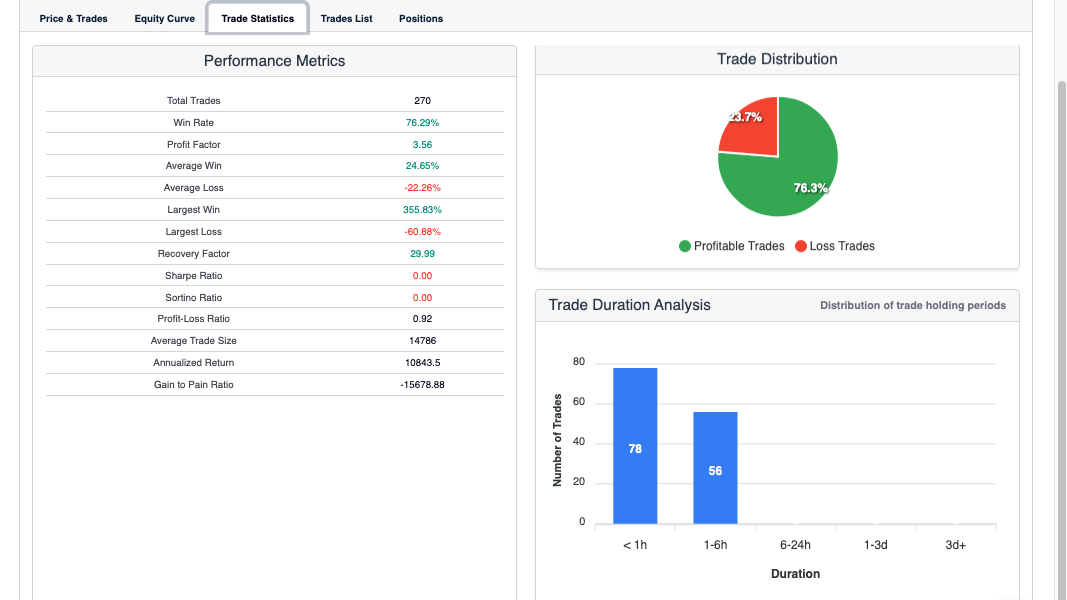
Backtest sample size is the difference between evidence and anecdote. A strategy that made money over 20 trades has told you almost nothing. The same strategy holding up over 300 trades is starting to make a real argument. Most traders judge a backtest by its return figure. The number of trades behind that figure matters more — because it decides whether the result is signal or luck.
Why Does Backtest Sample Size Matter?
Trading results are a mix of edge and randomness, and small samples let randomness dominate. Flip a fair coin 20 times and getting 14 heads is unremarkable. Conclude from it that the coin lands heads 70% of the time and you have made the small-sample error. The law of large numbers works the other way too: only as trade count grows do your measured win rate, average win, and drawdown converge toward the strategy’s true values. A 20-trade backtest is 14 coin flips wearing a suit.
How Many Trades Is Enough?
There is no magic threshold, but useful working ranges exist:
- Under 30 trades: ignore the metrics entirely. Any result is compatible with luck.
- 30-100 trades: a first impression. Direction is meaningful; precision is not. A “55% win rate” measured here could easily be 45% or 65% in truth.
- 100-300 trades: the metrics begin to stabilise. Comparisons between strategy variants start to mean something.
- 300+ trades: a serious sample. Streak statistics, drawdown estimates, and expectancy become genuinely usable.
The subtler rule: the smaller your edge, the more trades you need to see it. A coin weighted 51/49 takes hundreds of flips to distinguish from fair. Most real trading edges are 51/49 problems, not 70/30 ones.
The Trap Inside the Trap: One Regime, Many Trades
Three hundred trades collected entirely in a bull market is still one data point in the way that matters. The strategy has only ever met one market personality. Sample size must span conditions: trending and ranging, calm and violent, up and down. This is why our guide to reading a backtest report stresses the test window over the headline return. Two hundred trades across a full cycle beat six hundred inside a single melt-up.
How Do You Get a Bigger Sample?
- Extend the history. Backtest over years, not months. Crypto’s data now covers several complete cycles.
- Test across pairs. The same rules on BTC, ETH, and SOL triple your sample — and reveal whether the edge is general or one market’s quirk.
- Beware the timeframe shortcut. Dropping from 4-hour to 5-minute candles multiplies trades but changes the strategy: fees and noise scale up with frequency. It is a different system, not the same one with more data.
- Split what you have. Even a large sample should be divided for in-sample and out-of-sample testing — size without a holdout still overfits.
What Sample Size Tells You About Streaks and Drawdowns
Small samples systematically understate risk. The worst losing streak in 50 trades is mathematically mild compared to the worst streak in 500 — as covered in our losing streaks post, a 40% win-rate system should expect nine or ten straight losses somewhere in a few hundred trades. If your backtest is too short to contain its own worst case, your live trading will find it for you, at full size, with real money.
Building Bigger Samples in Arrow Algo
This is one problem the tooling genuinely solves. Arrow Algo backtests run on the exchange’s own historical data — Binance, Coinbase, HyperLiquid — so you can test the same visual-block strategy over multi-year windows and across several pairs in minutes, no data sourcing required. The backtest report shows total trade count alongside every metric: make that number the first thing you check, before the return. Then confirm with walk-forward analysis and paper trading, so the sample keeps growing after the backtest ends.
What Are the Key Takeaways?
- Backtest sample size decides whether results are evidence or noise — check trade count before the return figure.
- Under 30 trades means nothing; 100+ starts to stabilise; 300+ supports real conclusions.
- Small edges need big samples — most real edges are 51/49, not 70/30.
- Trades must span market regimes, not just accumulate inside one.
- Multi-year, multi-pair testing in Arrow Algo builds the sample cheaply — and out-of-sample validation keeps it honest.
Disclaimer: This content is for educational purposes only and does not constitute financial advice. Trading involves significant risk and you should only trade with capital you can afford to lose. Past performance is not indicative of future results. Always conduct your own research before making any trading decisions.
Ready to build your own automated trading strategies without writing a single line of code? Start for free at Arrow Algo and join thousands of traders who’ve made the switch to systematic trading.