
Backtesting: The Strategy Testing Method Every Trader Needs
Backtesting is the single most important step before deploying any trading algorithm. In this video, we break down why backtesting matters, how to do it correctly, and how to avoid the common traps that lead traders to trust a strategy that won’t hold up in real markets.
What Backtesting Actually Shows You
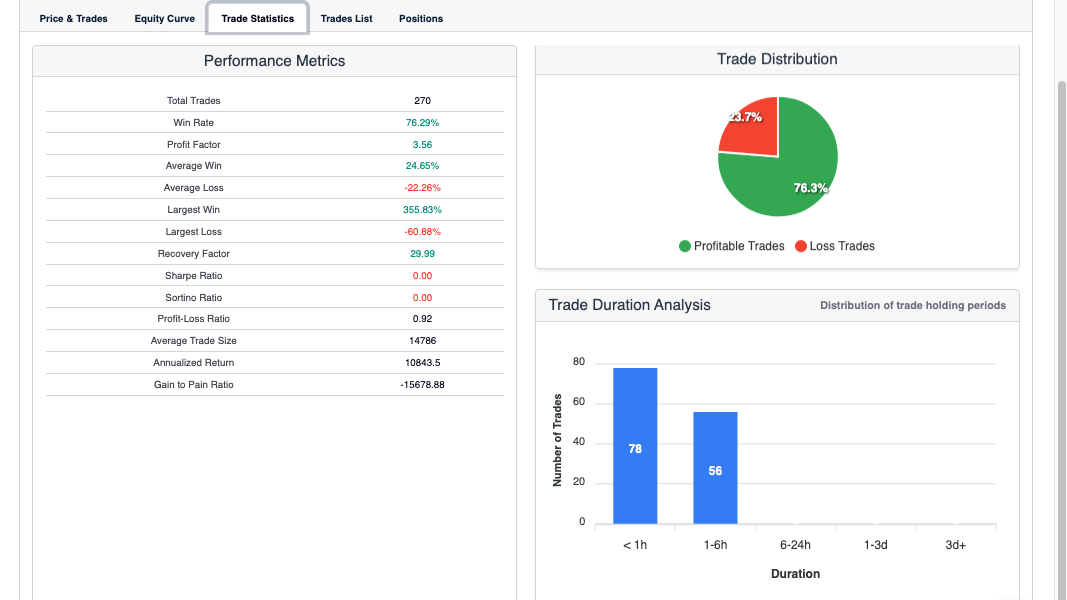
Backtesting simulates how your strategy would have performed using historical price data.
It answers key questions:
- Is the strategy profitable?
- What’s the win rate?
- How long does it hold trades?
- What are the drawdowns like?
- How volatile is the equity curve?
- How many trades does it take in a typical month?
Without this data, you’re trading blind.
The Biggest Backtesting Mistakes Traders Make
Most beginner algo traders fail for the same reasons:
1. Overfitting the strategy
They add too many rules until it fits the past perfectly, but fails in the future.
2. Not testing enough market conditions
A strategy must survive:
- Trend
- Chop
- High volatility
- Low volatility
- Black swan events
3. Ignoring drawdowns
A strategy can be profitable and still emotionally impossible to run.
4. Using too many indicators
Overcomplicating tends to reduce robustness.
How to Backtest Properly?
Follow this structure:
1. Define your core idea
- Trend strategy
- Momentum strategy
- Mean reversion
- Breakout
- Scalping
2. Test 6-12–24 months of data
Enough to see bull + bear conditions.
3. Look at key metrics
- Profit factor
- Max drawdown
- Win rate
- Average win vs average loss
- Number of trades
- Exposure time
4. Stress test
Run it:
- On different coins
- Over different years
- With different parameter settings
How to Backtest on Arrow Algo
On Arrow Algo, you simply:
- Choose your start date and end date
- State your starting balance
- Hit “Run”
You can iterate rapidly without any coding and through our optimization tool you can test hundreds of variations of parameters in minutes. Find out more here: Optimization
Ready to run your first backtest?
Educational disclaimer: This content is for educational purposes only and does not constitute financial advice. Trading involves significant risk and you should only trade with capital you can afford to lose. Past performance is not indicative of future results.