
Bollinger Band Width (BBW): Complete Guide for Algorithmic Trading
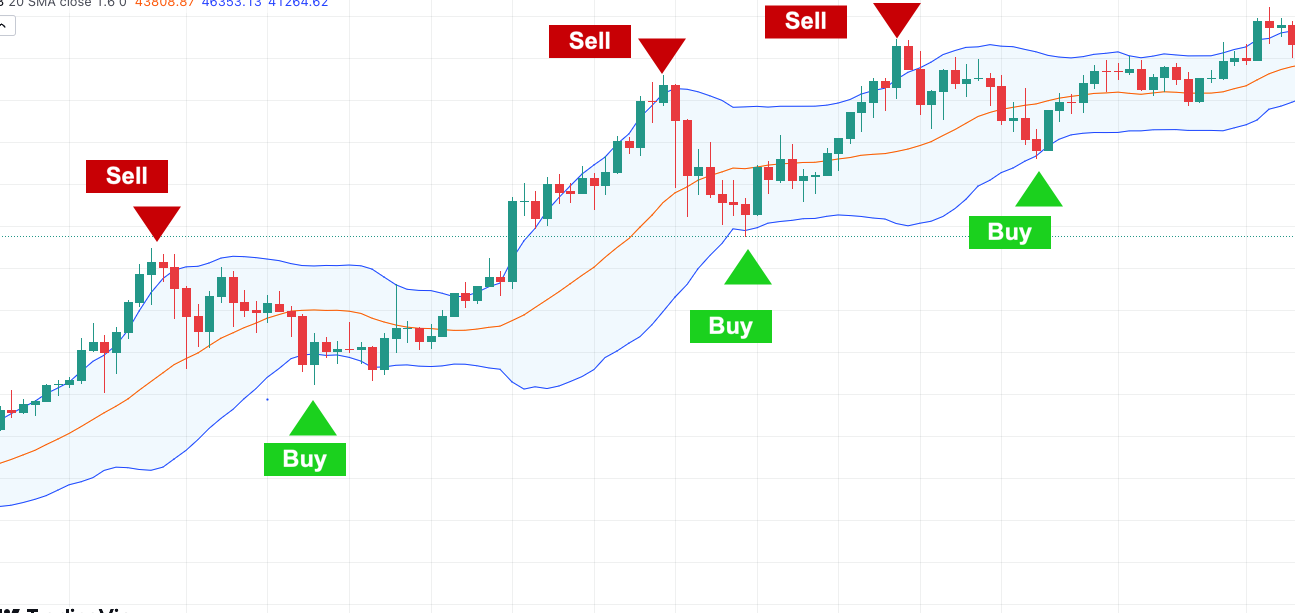
Bollinger Band Width — or BBW — is a volatility indicator built directly on top of Bollinger Bands. Where standard Bollinger Bands show you the upper and lower boundaries of price action, the Bollinger Band Width measures the gap between them as a standardised figure. It converts relative band distance into a single, readable value that tells you whether the market is compressing or expanding at any given moment.
What Is the Bollinger Band Width?
Bollinger Band Width is a technical indicator that quantifies the relative width of Bollinger Bands over time. A higher value means the bands are wide — volatility is elevated. A lower value means the bands have tightened — volatility has compressed.
The most-watched BBW condition is the Bollinger Squeeze. This occurs when BBW falls to a multi-period low. The market is coiling. A significant directional move tends to follow. BBW does not tell you which direction — only that the conditions for a breakout are building. The concept was developed by John Bollinger as a companion measure to his original Bollinger Bands indicator.
How Does the Bollinger Band Width Work?
BBW starts from a standard 20-period Bollinger Bands setup. The calculation involves three components:
- Middle band: A 20-period simple moving average (SMA20) of the closing price
- Upper band: SMA20 plus two standard deviations
- Lower band: SMA20 minus two standard deviations
- BBW: (Upper Band minus Lower Band) divided by the Middle Band
The result is a percentage-style value. A larger number means wider bands and higher volatility. A smaller number means tighter bands and compressed volatility. Because BBW normalises by the middle band value, it is comparable across different assets and timeframes. That makes it a useful tool for systematic, multi-asset strategies.
In Arrow Algo, the BBW block runs this calculation automatically. You set the period and multiplier. The block outputs the current value directly to your strategy logic — no manual calculation required.
How to Read Bollinger Band Width Signals
BBW is a volatility measure, not a directional signal. Use it to understand the state of the market, then layer a directional trigger on top.
Three core readings to understand:
- Low BBW (Squeeze): Volatility has compressed. The market is coiling. This often precedes a sharp directional move. Systematic traders watch for the first directional signal after a squeeze to time entries.
- Rising BBW: Volatility is expanding. This can confirm a breakout in progress or signal the start of a trending move. Trend-following strategies perform better in rising-BBW environments.
- High BBW: Volatility has reached an elevated level. Extended high-BBW conditions can signal an overextended move. Some mean-reversion strategies look to fade positions when BBW reaches a relative extreme.
There is no universal threshold for “high” or “low” BBW. The indicator is relative to its own history on a given asset and timeframe. Assess it against its recent range rather than applying a fixed number. The Investopedia Bollinger Band Width reference outlines the squeeze concept in more detail.
What Are the Best Bollinger Band Width Trading Strategies?
BBW is most effective when combined with a directional indicator. Three practical approaches for algorithmic traders:
1. Volatility Squeeze Breakout
Wait for BBW to reach its lowest value in a defined lookback period. This identifies a squeeze. Then add a directional trigger — such as a price crossover above the upper band or a momentum reading. Enter in the direction of the first significant move out of the squeeze. This approach suits breakout strategies on any timeframe.
2. Trend Confirmation Filter
Use BBW as a filter for trend-following signals. Only take entries when BBW is above a threshold, indicating an expansionary, trending environment. Skip signals when BBW is low. Low-BBW conditions produce more failed breakouts for trend strategies.
3. Mean Reversion After Volatility Extremes
Identify when BBW has reached a historically high level for the asset. High BBW after an extended directional move can signal exhaustion. Combine with a reversal indicator — such as RSI at an extreme — to look for mean-reversion entries as the volatility unwinds.
What Are Common Bollinger Band Width Mistakes to Avoid?
- Trading the squeeze without a directional trigger: BBW signals a move is coming, not which direction. Using it alone produces 50/50 results. Always combine with a directional signal.
- Applying fixed thresholds: A BBW value that is low on one asset may be normal on another. Use relative readings — such as “lowest in the past 20 bars” — rather than hard-coded numbers.
- Ignoring the broader context: A squeeze inside an established uptrend and a squeeze in a downtrend have very different implications. Read BBW within the context of price structure.
- Confusing BBW with %B: Bollinger Bands %B measures where price sits within the bands. BBW measures the width of the bands themselves. They are related but answer different questions.
How to Build Bollinger Band Width Strategies in Arrow Algo
Arrow Algo includes a dedicated BBW block in its visual builder. Drag it onto the canvas, set your period and standard deviation multiplier, and connect the output to your strategy logic. No coding required.
A basic squeeze breakout setup on the canvas looks like this:
- Add a BBW block — period 20, multiplier 2
- Add a Min block — finds the lowest BBW value over the past 20 bars
- Add a Crossover block — triggers when current BBW rises above its recent minimum, signalling the squeeze is ending
- Add an EMA block — determines trend direction at the moment of the squeeze exit
- Connect both outputs to an AND gate — requires both the squeeze exit and EMA alignment before triggering
- Connect the AND gate to your order block with your chosen position size
Everything runs through drag-and-drop blocks. You backtest directly against exchange data before going live. For more on combining volatility tools with trend signals, see our post on mean reversion vs trend following strategies.
What Are the Key Takeaways?
- Bollinger Band Width measures the relative gap between the upper and lower Bollinger Bands
- Low BBW signals a volatility squeeze — a coiling period that typically precedes a large directional move
- BBW does not indicate direction — always pair it with a directional trigger
- Rising BBW confirms volatility expansion and suits trend-following approaches
- High BBW at extremes can signal overextended conditions and potential mean-reversion setups
- In Arrow Algo, BBW is a visual block — connect it to crossover, min, or condition blocks to build squeeze strategies without writing any code
Disclaimer: This content is for educational purposes only and does not constitute financial advice. Trading involves significant risk and you should only trade with capital you can afford to lose. Past performance is not indicative of future results. Always conduct your own research before making any trading decisions.
Ready to build your own automated trading strategies without writing a single line of code? Start for free at Arrow Algo and join thousands of traders who’ve made the switch to systematic trading.