
Cross Over (Crossover): Complete Guide for Algorithmic Trading
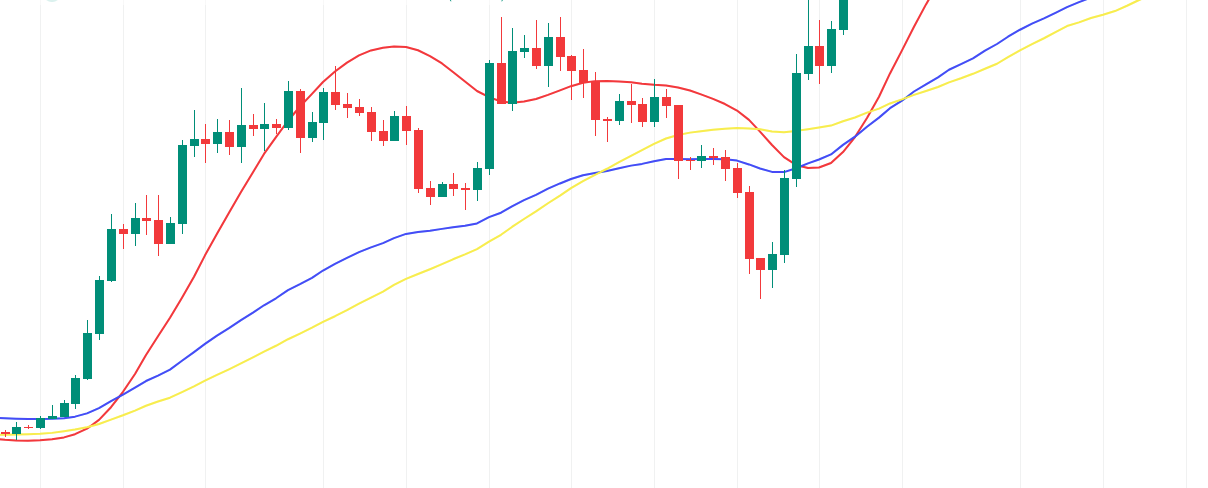
The Cross Over indicator (also called the Crossover block) is one of the most widely used signal-generation tools in systematic trading. It detects the precise moment one data series moves above another — turning a continuous price relationship into a clean, actionable entry or exit signal.
What Is the Cross Over Indicator?
The Cross Over indicator is a signal detection block that outputs a true value at the single bar when one input crosses above another. It watches two data streams — typically two moving averages, a price and a moving average, or any two indicator outputs — and fires once, at the moment the first crosses above the second.
In Arrow Algo, the Crossover block takes two inputs and produces a boolean output: true on the crossover bar, false on all others. This makes it ideal for triggering entries, resetting timers, or activating conditions in larger strategy logic.
How Does the Crossover Block Work?
The logic is straightforward. On each bar, the block compares the current value of Input A to Input B. A crossover event is confirmed when Input A was below Input B on the previous bar and is above Input B on the current bar.
This single-bar detection is deliberate. Many traders accidentally treat a crossover as a persistent condition — “A is above B” — rather than a discrete event. The Crossover block fires only at the moment of crossing, not for the entire period that A remains above B. That distinction changes strategy logic significantly.
Common input pairings include:
- Fast EMA crossing above slow EMA (golden cross)
- RSI crossing above 30 (oversold exit)
- Price crossing above a VWAP or moving average
- MACD line crossing above signal line
How to Read Crossover Signals?
A crossover signal means: at this specific bar, the relationship between two data streams just changed. The faster or more responsive series has moved above the slower or reference series.
The signal itself carries no magnitude information. A tiny crossover and a large crossover both produce a single true output. This is by design — the Crossover block handles detection, and other blocks handle confirmation, filtering, and sizing.
For interpretation, context matters. A golden cross (fast MA over slow MA) on a 4-hour chart in an uptrend carries different weight than the same signal during a choppy sideways range. Algorithmic traders pair crossover signals with trend filters, volume confirmation, or regime detection blocks to improve signal quality.
The Cross Any block (Crossany) is the complement: it fires when either input crosses the other in either direction. Use Crossover when direction matters; use Crossany when any crossing event is the trigger.
Best Trading Strategies Using Crossover Signals
Moving Average Crossover (Golden/Death Cross)
Connect a fast EMA (e.g. 20-period) and slow EMA (e.g. 50-period) to the Crossover block. When the fast EMA crosses above the slow, the block fires and triggers a long entry. This is the foundational trend-following signal used across timeframes and markets.
Momentum Entry Filter
Use the Crossover block to detect when RSI crosses above 50, signalling a shift from weak to strong momentum. Pair this with a trend direction filter — only accept the signal when price is above a 200-period moving average. This combination reduces false entries in downtrends.
Oscillator Reversal Entry
Connect a price oscillator or stochastic output to the Crossover block with a fixed threshold as the second input. When the oscillator crosses above its midline or oversold level, the block triggers a potential reversal entry. Add a volume confirmation block to filter low-conviction signals.
Common Crossover Mistakes to Avoid
- Treating crossover as persistent: The block fires once. If your logic requires “A remains above B”, use a comparison block, not a crossover block.
- No trend filter: Crossover signals in ranging markets generate frequent whipsaws. Always combine with a trend or regime filter.
- Over-optimising the period lengths: Fitting MA periods to historical data produces crossover strategies that look perfect in backtests and fail live. Use round-number defaults and validate on out-of-sample data.
- Ignoring signal lag: Moving average crossovers are inherently lagging. By the time the signal fires, a portion of the move has already occurred. Account for this in your entry logic and profit targets.
- Stacking crossovers without logic: Using multiple crossover blocks without AND/OR gate logic between them can produce conflicting or redundant signals. Map the flow clearly before building.
How to Build Crossover Strategies in Arrow Algo
Arrow Algo’s no-code visual builder makes crossover strategies straightforward to construct. The Crossover block sits in the signal detection section of the block library.
To build a basic EMA crossover entry:
- Add two EMA blocks — set one to a short period (e.g. 20) and one to a longer period (e.g. 50)
- Connect both EMA outputs to the two inputs of a Crossover block
- Connect the Crossover output to a Buy condition block
- Add a position size block and connect it to your order block
To add a trend filter, connect a third EMA (e.g. 200-period) and a comparison block — only pass the crossover signal through when price is above the long-term EMA. This can be wired with an AND gate (use a math/condition block with && operator).
Backtesting is built into Arrow Algo. Once your crossover strategy is wired up, run a backtest directly on live exchange data from Binance, Coinbase, or HyperLiquid — no data sourcing required.
For more on building signal logic, see the Arrow Algo blog for indicator guides and strategy walkthroughs.
Key Takeaways
- The Cross Over indicator fires once at the bar where Input A moves above Input B — not for the entire period A remains above B
- It converts a continuous relationship between two data series into a discrete, actionable signal
- Moving average crossovers, oscillator threshold crossovers, and price/indicator crossovers are the three most common use cases
- Always pair crossover signals with a trend filter or regime detection block to reduce whipsaws in ranging markets
- Arrow Algo’s visual builder lets you wire crossover strategies with drag-and-drop blocks — no coding required
- Use Cross Any (Crossany) when either crossing direction should trigger; use Crossover when only the upward cross matters
Disclaimer: This content is for educational purposes only and does not constitute financial advice. Trading involves significant risk and you should only trade with capital you can afford to lose. Past performance is not indicative of future results. Always conduct your own research before making any trading decisions.
Ready to build your own automated trading strategies without writing a single line of code? Start for free at Arrow Algo and join thousands of traders who’ve made the switch to systematic trading.