
Liquidation Cascades: How to Survive the Flush
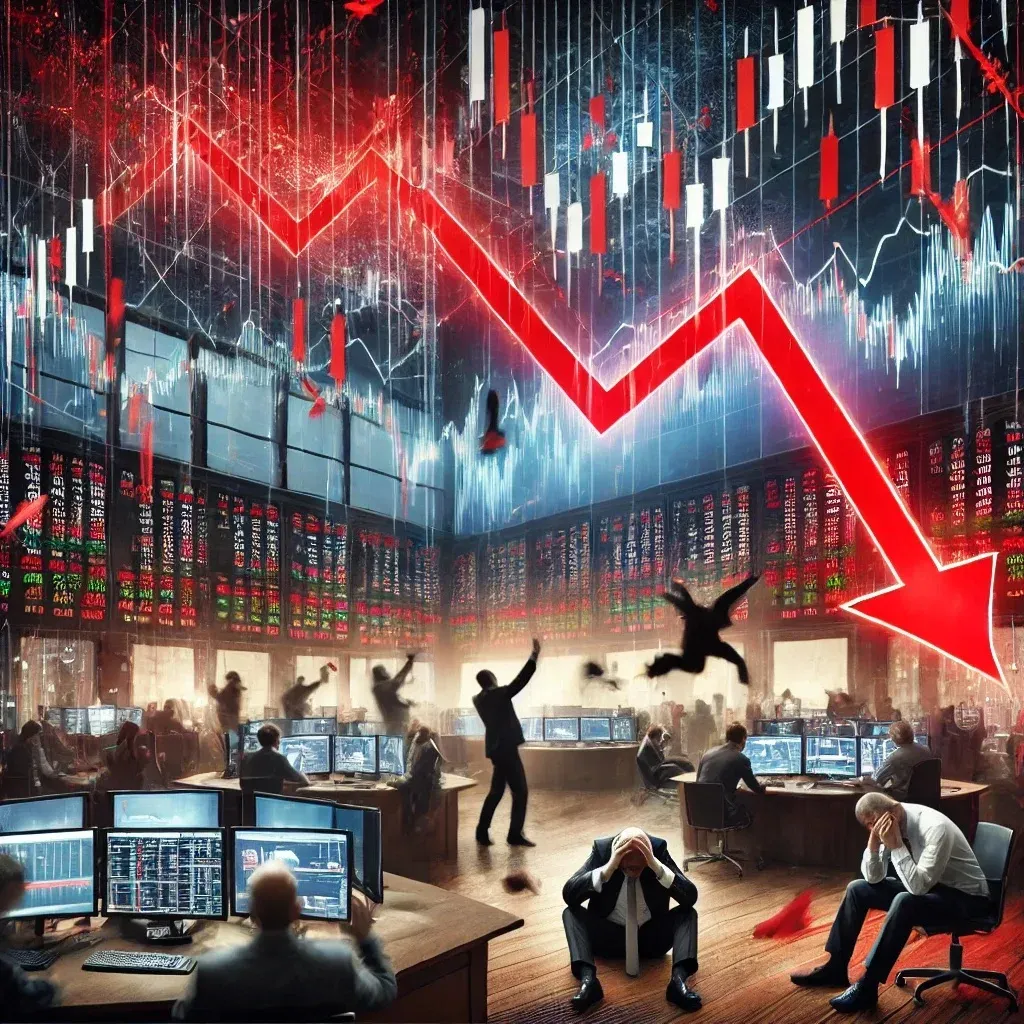
A liquidation cascade turned a bad headline into a rout this week. When the US Senate vote failed on Tuesday, crypto did not just dip — roughly $600 million in leveraged longs were forcibly closed, and about $289 million of that vanished in a single hour. Ninety-one percent of those positions were longs. That concentration is the signature of a cascade: the selling was not thousands of traders changing their minds. It was exchanges closing positions automatically, each closure pushing price into the next trader’s liquidation level.
What Is a Liquidation Cascade?
A liquidation cascade is a chain reaction of forced position closures in leveraged markets. When a leveraged trader’s losses approach their margin, the exchange forcibly liquidates the position — it sells a long or buys back a short at market, with no input from the trader. That market order moves price. If price moves far enough, it crosses the liquidation level of the next-most-leveraged trader, triggering another forced order. Each closure fuels the next. Selling begets selling until the over-leveraged positions are cleared out.
The mechanism only needs two ingredients: leverage concentrated on one side of the market, and a shove. The shove can be a headline, a whale order, or nothing much at all. The leverage does the rest.
Why Cascades Matter to Systematic Traders
Cascades are why crypto produces 5-10% moves in an hour on news that “should” be worth 2%. The initial repricing is rational. The overshoot is mechanical. For an algorithmic trader this cuts two ways.
If you trade with high leverage, a cascade can take you out even when your directional call was right. Price wicks through your liquidation level on forced flow, your position is closed at the worst print, and then the market recovers without you. Unlike a stop-loss, a liquidation does not just end the trade — it consumes your margin.
If you trade with sensible risk, cascades become information. They mark the moments when price detaches furthest from any fair estimate of value. Forced sellers are the only market participants guaranteed to be trading at the worst possible time, and being on the other side of them is one of the most durable edges in leveraged markets.
Where Do Cascades Start?
Liquidation levels are not spread evenly across the chart — they cluster. Traders lever up at similar prices, using similar round-number entries and similar leverage multiples, so their liquidation prices bunch into pools. Data services like Coinglass publish liquidation heatmaps precisely because these clusters are visible and price is drawn toward them. The behaviour overlaps with stop hunting, but the fuel is different: a stop merely closes a position, while a liquidation closes it and forcibly dumps it into a thin book.
The tell-tale signs of cascade risk
Three conditions raise the odds. Funding rates pinned heavily positive signal a crowded long side — the fuel is loaded. Open interest at highs after a strong run means the leverage was added late, near the top, with liquidation levels close beneath price. And thin liquidity — weekends, overnight sessions, event windows — means each forced order moves price further, crossing more levels per dollar sold.
How Do You Build a Cascade-Resistant Strategy?
The first defence is blunt: keep leverage low enough that no plausible wick reaches your liquidation price. If your stop-loss would fire long before your margin is threatened, a cascade can hurt your trade but never your account. Size positions from volatility — an ATR-based stop distance and a fixed risk per trade — rather than from how much leverage the exchange offers.
The second defence is exit discipline during the flush. Market orders into a cascading book fill terribly. A strategy that must exit during extreme moves should already have been stopped out earlier, at its own chosen level, not the exchange’s.
The third option is offence. Cascades exhaust themselves quickly: once the leveraged positions are cleared, the forced flow stops and price often snaps back. Mean-reversion entries that require an extreme move plus evidence the flush is ending — a reclaimed level, a candle close back inside the prior range — systematically buy from forced sellers without catching the knife mid-fall.
Applying This in Arrow Algo
Arrow Algo’s visual builder lets you assemble each defence from drag-and-drop blocks, with no code. An ATR block sets stop distances that scale with volatility, so your exit always sits far inside your liquidation buffer. A rate-of-change block can detect a cascade-sized move, and a condition gate can pause new entries while the flush is underway. For the offensive version, combine the extreme-move detector with a crossover block that waits for price to reclaim a level before entering — the confirmation that forced selling has run dry.
Backtest the rules on live exchange data from Binance or HyperLiquid, including the violent sessions. A strategy that survives the flush days in a backtest has earned the right to trade the calm ones.
What Should You Take Away?
- A liquidation cascade is a chain of forced closures: each liquidation moves price into the next one.
- It needs crowded leverage plus a trigger — the news is the spark, the leverage is the fuel.
- Crowded funding, record open interest, and thin liquidity are the warning conditions.
- Keep liquidation prices unreachable: volatility-sized stops and low leverage protect the account.
- Cascades overshoot mechanically, which is why disciplined mean-reversion systems wait for them.
- Never exit at market into a cascading book — your stop should have fired long before.
Disclaimer: This content is for educational purposes only and does not constitute financial advice. Trading involves significant risk and you should only trade with capital you can afford to lose. Past performance is not indicative of future results. Always conduct your own research before making any trading decisions.
Ready to build your own automated trading strategies without writing a single line of code? Start for free at Arrow Algo and join thousands of traders who’ve made the switch to systematic trading.