
Look-Ahead Bias: Why Backtests Beat Live Trading
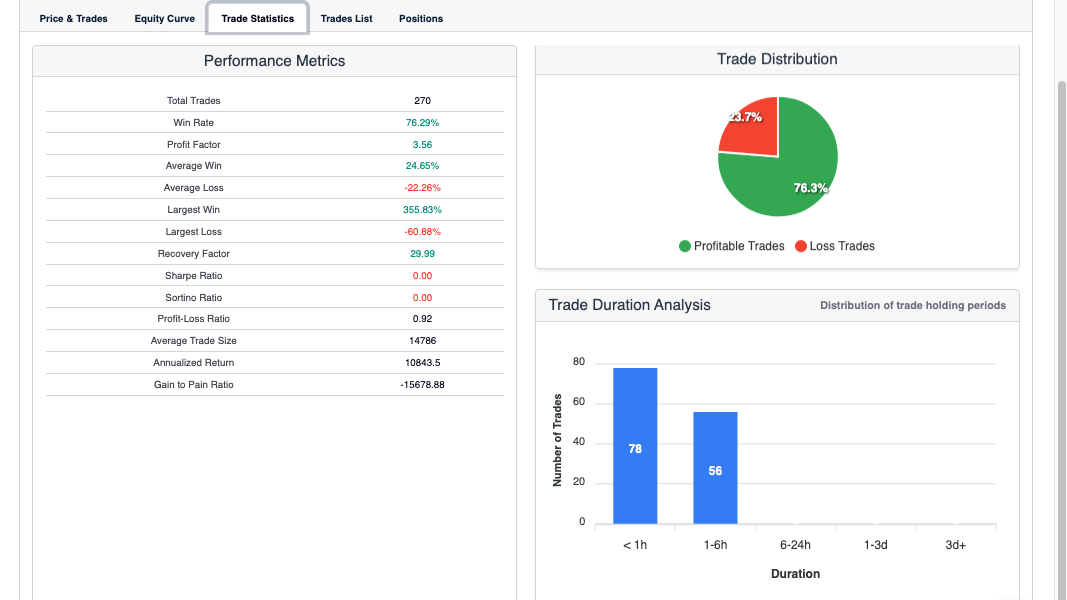
Look-ahead bias is what happens when a backtest uses information that would not have been available at the moment of the trade. The strategy looks brilliant on paper, then loses money live — because the paper version could quietly see the future. It is one of the most common reasons self-built backtests fail, and the important thing to understand up front: this is a problem of how backtests are built. Traders who code their own tests in Python or spreadsheets fight it constantly. A purpose-built engine like Arrow Algo’s eliminates the main causes by construction — more on that below.
What Is Look-Ahead Bias?
Look-ahead bias means a simulation makes decisions using data that arrived later than the decision point. The textbook example, per Investopedia, is trading on a company’s earnings figure dated to the quarter it covers rather than the day it was actually published. In DIY systematic trading the leaks are usually subtler: a signal that acts on a candle before that candle has finished forming, or an indicator value that changes after the fact.
The result is always the same. The backtest inherits a small, consistent informational edge that no live trader can have. Small edges compound — a few basis points of impossible foresight per trade can turn a losing system into a spectacular one.
Why Look-Ahead Bias Destroys Live Results
A look-ahead-biased strategy is not merely mediocre — it is systematically miscalibrated. Every entry is slightly better than reality allows. Every exit is slightly cleverer. When it goes live, the edge does not shrink — it vanishes entirely, because it was never a market edge at all. It was a data-handling error. This is why a strategy can boast a beautiful equity curve in a home-made backtest and bleed from day one in production, echoing the gap we covered in survivorship bias: the flaw is invisible in the report itself.
Where Do Hand-Built Backtests Leak the Future?
When traders write their own backtesting code or model a strategy in a spreadsheet, they are responsible for every detail of data timing. A few patterns account for most real-world leaks:
- Trading on unfinished candles. The test evaluates a rule against a candle’s final values, then pretends the trade happened during that same candle — at a price you could only know once the candle closed.
- Data alignment mistakes. In hand-written code, shifting a data series by one row in the wrong direction silently hands every signal tomorrow’s information. It is the single most common bug in home-made backtests, and nothing crashes to warn you.
- Repainting indicators. Some indicators redraw their historical values as new data arrives — certain zigzag, fractal, and swing-detection tools. The chart shows perfect calls that never existed in real time.
- Intrabar assumptions. Rules like “buy the low of the day” assume you knew it was the low before the day ended.
- Mixing timeframes carelessly. Referencing today’s daily close while simulating an hourly strategy mid-session hands the model hours of future information.
- Revised data. Economic and fundamental figures get restated. Testing on final revisions instead of first releases embeds hindsight, as the standard definition notes.
How Can You Spot a Biased Backtest?
You will meet look-ahead bias mostly in results you did not produce — strategy threads, courses, and screenshots of equity curves. Suspicion should scale with beauty. Win rates above 70-80%, equity curves with barely a dip, and profits that survive any parameter are all classic symptoms. Three practical checks for any result you are shown:
- Ask how signals were timed. Did trades execute after the signal candle closed, or during it? If the answer is vague, assume the worst.
- Delay every signal by one bar. A genuine edge degrades slightly; a look-ahead edge collapses.
- Demand forward results. Paper trading with no history is the acid test. A large gap between forward performance and the backtest is the smoking gun.
Why Arrow Algo Backtests Don’t Have This Problem
Look-ahead bias is an engineering failure, and the fix is an engine that makes the mistake impossible rather than a checklist of things to remember. Arrow Algo’s backtester works exactly like live trading: candles are processed in strict sequence, your strategy’s blocks only ever see completed candles, and a scenario cannot trigger until the candle that produced the signal has closed. There is no custom code, so there are no data alignment bugs to write. The same visual blocks that run your backtest run your live strategy, so the timing behaviour is identical in both.
What the engine cannot do is protect you from the other backtest traps — overfitting, survivorship bias, and data snooping. For those, validate like a professional: split your data with in-sample and out-of-sample testing, run walk-forward analysis, and paper trade before committing capital.
Key Points to Take Away
- Look-ahead bias means a backtest used information unavailable at trade time — an impossible edge that disappears live.
- It is a build-quality problem: hand-written code and spreadsheet backtests leak the future through unfinished candles, alignment mistakes, repainting indicators, and revised data.
- Too-perfect results are a symptom, not a triumph. Delay signals by one bar and see what survives.
- Arrow Algo’s engine removes the causes by construction: strategies only ever act on closed candles, in sequence, with identical logic in backtest and live.
- Use out-of-sample testing and paper trading to guard against the biases no engine can remove — overfitting and selection effects.
Disclaimer: This content is for educational purposes only and does not constitute financial advice. Trading involves significant risk and you should only trade with capital you can afford to lose. Past performance is not indicative of future results. Always conduct your own research before making any trading decisions.
Ready to build your own automated trading strategies without writing a single line of code? Start for free at Arrow Algo and join thousands of traders who’ve made the switch to systematic trading.