
Median Price (MEDPRICE): Complete Guide for Algorithmic Trading
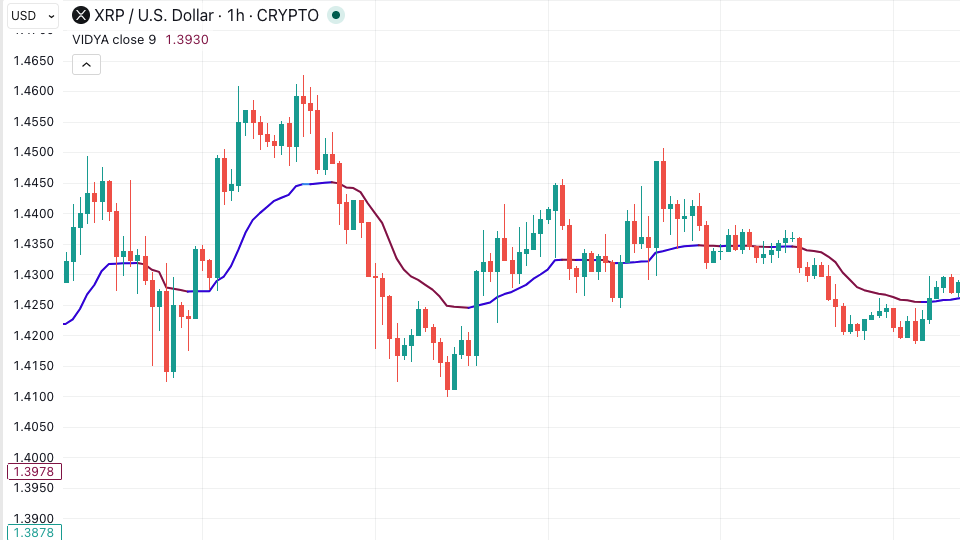
The Median Price (MEDPRICE) is a price transformation that calculates the midpoint of each period’s high and low. Simple by design, it strips away open and close noise to give a clean view of where price sat across the full session range.
What Is the Median Price?
The Median Price is a calculated value that represents the middle point of a price bar’s range. It uses only two inputs: the period high and the period low. MEDPRICE is not a standalone trading signal. It is a price transformation — a different way of representing price that you feed into other calculations.
Think of it as choosing between several lenses through which to view the same market. There are four commonly used price transformations in technical analysis:
- Close price: The most widely used. Reflects where the market settled at period end.
- Median Price (MEDPRICE): (High + Low) ÷ 2. Ignores open and close entirely.
- Typical Price: (High + Low + Close) ÷ 3. Balances the full range with the close.
- Weighted Close: (High + Low + Close + Close) ÷ 4. Gives extra weight to the closing price.
By ignoring the close, MEDPRICE is less susceptible to last-minute price spikes or stop hunts that distort the closing bar. It represents the pure geometric centre of the period’s range — nothing more, nothing less.
How Is the Median Price Calculated?
The formula is straightforward. Take the highest price reached in the period. Add the lowest price reached in the period. Divide by two.
If a candle has a high of $78,500 and a low of $76,000, the MEDPRICE for that period is $77,250. The open and close play no role in this calculation.
This is calculated independently for every period in the chart. The result is a single value per bar — not a moving average — that can then be used as the price input for any indicator that requires one.
Where you might normally feed a closing price into an EMA or RSI, you can substitute MEDPRICE instead. This changes the character of whatever indicator you build on top of it. An EMA built on MEDPRICE will be slightly smoother and less reactive to closing anomalies than a standard close-based EMA.
How to Read Median Price Signals?
On its own, MEDPRICE has no thresholds to cross and no overbought or oversold zones. It is not read in isolation. It is read in context — by comparing it to other values or using it as the base input for another indicator.
That said, there are a few useful ways to interpret MEDPRICE directly:
- Close vs MEDPRICE: When the closing price is consistently above MEDPRICE, buyers are finishing sessions in control. When close is consistently below MEDPRICE, sellers are dominating into the close.
- MEDPRICE slope: A rising MEDPRICE across multiple periods shows upward pressure through the range, not just at the close. A falling MEDPRICE shows the opposite.
- MEDPRICE as a mean: In consolidating markets, price tends to revert toward the MEDPRICE level across a series of bars. Sustained deviations above or below can signal short-term overextension.
These observations become significantly more powerful when combined with volume or volatility indicators.
What Are the Best Median Price Trading Strategies?
1. MEDPRICE as an EMA Input
Feed MEDPRICE into an Exponential Moving Average instead of the default close price. The resulting EMA is smoother and less reactive to closing price anomalies. Use this as a trend filter — only take long signals when price is above the MEDPRICE-based EMA, and short signals when below. The smoother filter reduces whipsaws in volatile or news-driven markets.
2. Close vs MEDPRICE Divergence
Compare the close price to MEDPRICE on each bar. A consistently rising gap — where close climbs further above MEDPRICE — suggests accumulation. A narrowing or inverting gap suggests distribution. Use this as a confirmation filter layered onto a directional entry signal rather than as a primary trigger.
3. MEDPRICE with ATR Bands
Apply an ATR-based envelope around MEDPRICE to create a volatility-adjusted channel. Entries occur near the lower band in uptrends and near the upper band in downtrends. Because MEDPRICE is less noisy than close price, the resulting bands are cleaner and generate fewer false signals at the edges.
What Are Common Median Price Mistakes to Avoid?
Treating MEDPRICE as a signal. MEDPRICE does not generate buy or sell signals on its own. Strategies that enter purely because price crossed MEDPRICE have no statistical edge. Always combine it with a momentum or trend confirmation.
Confusing it with Typical Price. These are different calculations. Typical Price includes the close. MEDPRICE does not. The distinction matters when closing prices are consistently skewed by late-session volatility or stop hunts near session end.
Using it where close price is better. In markets where the closing auction carries genuine significance — such as equity index futures — the close price contains real information. Replacing it with MEDPRICE in those contexts may reduce signal quality.
Ignoring the timeframe context. A 1-minute MEDPRICE and a daily MEDPRICE serve very different roles. The shorter the timeframe, the noisier the range — and the more the smoothing effect of MEDPRICE is genuinely useful. On higher timeframes, the difference between MEDPRICE and close is often minimal.
How to Build Median Price Strategies in Arrow Algo?
Arrow Algo includes a dedicated MEDPRICE block in its visual builder. Connect it as a price input to any indicator that accepts a price source — such as EMA, RSI, Bollinger Bands, or ATR. The indicator then calculates using median price instead of close price. Route that indicator’s output into your entry and exit logic as normal.
Because Arrow Algo uses a drag-and-drop interface, swapping price inputs is a single connection change. You can run two backtests side by side — one using close price, one using MEDPRICE — to compare how the same strategy behaves under each input. No rebuilding required.
For related approaches, see the AVGPRICE guide, which covers the four-price average transformation, and the Typical Price guide for the three-price variant including the close.
What Are the Key Takeaways?
- MEDPRICE is (High + Low) ÷ 2 — the midpoint of the period’s price range
- It ignores both open and close, focusing purely on the range centre
- It is a price transformation, not a signal generator — use it as an input for other indicators
- Most effective when fed into indicators like EMA, RSI, or Bollinger Bands
- Smoother than close price in high-volatility or news-driven markets
- Compare with Typical Price and Weighted Close to find what best suits your strategy
- Arrow Algo lets you swap price inputs with a single block connection in the visual builder
Disclaimer: The information provided in this article is for educational purposes only and does not constitute financial advice. Trading involves significant risk and you should only trade with capital you can afford to lose. Past performance is not indicative of future results. Always conduct your own research before making any trading decisions.
Ready to build your own automated trading strategies without writing a single line of code? Start for free at Arrow Algo and join thousands of traders who’ve made the switch to systematic trading.