
Moving Chande Forecast Oscillator (MCFO): Complete Guide for Algorithmic Trading
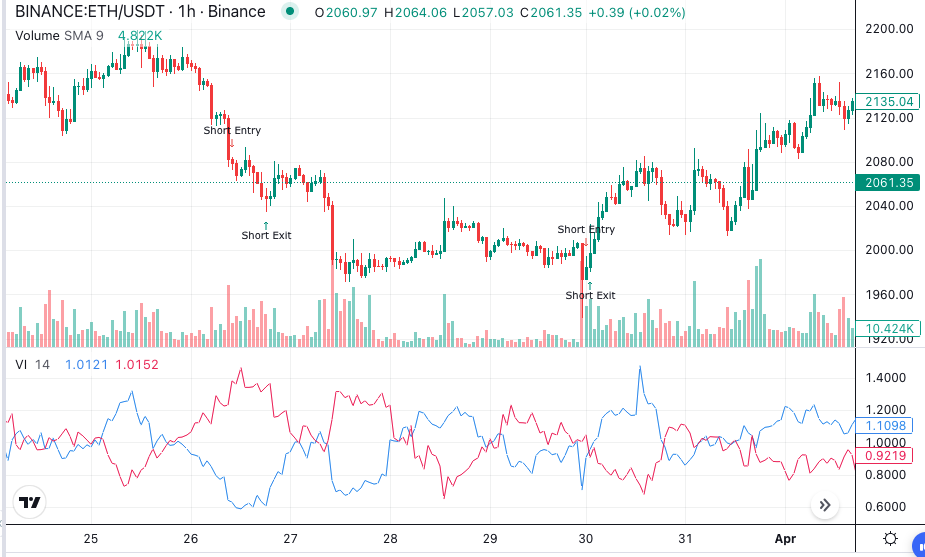
The Moving Chande Forecast Oscillator (MCFO) is a smoothed momentum indicator that applies a moving average to the values of the Chande Forecast Oscillator (CFO), creating a less reactive, noise-reduced version of the underlying signal. Where CFO measures the raw percentage deviation of price from its linear regression line, MCFO smooths those readings over a secondary period — making it better suited to identifying sustained trend direction and filtering out short-term whipsaws.
What Is the Moving Chande Forecast Oscillator?
MCFO builds directly on CFO. The CFO calculates how far the current closing price sits above or below its n-period linear regression value, expressed as a percentage. MCFO then applies a moving average to those CFO values over a second period, producing a smoother oscillator line.
The result oscillates above and below zero, like CFO, but with fewer short-term fluctuations. Positive MCFO values indicate that price has consistently been above its linear regression trend. Negative values indicate sustained below-trend performance. The smoothing makes MCFO more reliable for identifying trend direction but slower to react to fresh reversals.
The practical difference: CFO catches turns earlier but generates more false signals. MCFO confirms trends more reliably but enters later. Which is preferable depends entirely on how your strategy is designed to use it.
How Does the Moving Chande Forecast Oscillator Work?
The calculation follows two steps:
- Calculate CFO: Compute the percentage difference between the current close and the linear regression value of prices over the lookback period (commonly 14 periods).
- Smooth with a moving average: Apply a moving average — typically a simple or exponential MA — to the CFO values over a secondary smoothing period (commonly 3–5 periods).
A shorter smoothing period keeps MCFO close to the raw CFO signal. A longer smoothing period produces a significantly lagged but very clean output — useful as a directional filter rather than a timing signal.
Two parameters to set: the CFO lookback period and the smoothing period. Testing both together during backtesting is important — changes to either can significantly affect strategy behaviour.
How to Interpret MCFO Signals
Zero-line position: When MCFO is above zero, the smoothed trend of CFO is positive — price has been consistently trading above its linear regression line. This is a bullish regime signal. When MCFO is below zero, the smoothed trend is negative — price has been persistently below its regression line. Use this as a directional filter: only trade longs when MCFO is positive, only trade shorts when negative.
Zero-line crossovers: When MCFO crosses above zero, the trend has shifted from below-average to above-average — a potential entry signal. A cross below zero signals the opposite. Because MCFO is smoothed, these crossovers are fewer and more deliberate than raw CFO crossovers — but they lag slightly behind the actual price turn.
CFO versus MCFO crossovers: When the raw CFO line crosses above the MCFO line, fresh positive momentum is building faster than the smoothed average — a potential early long signal. When CFO crosses below MCFO, momentum is fading before the trend has fully reversed. This type of crossover is analogous to how MACD crosses its signal line, and can provide earlier entries than waiting for the MCFO zero-line cross alone.
Best MCFO Trading Strategies for Systematic Traders
MCFO as a regime filter: Use MCFO’s zero-line position to define market regime. Only allow long entries from your primary signal — whether that is an EMA crossover, RSI, or breakout — when MCFO is above zero. Block all long entries when MCFO is below zero. This single filter can significantly reduce counter-trend trades without adding complexity to your entry logic.
CFO-MCFO crossover entries: Set up a crossover condition between raw CFO and the smoothed MCFO line. Enter long when CFO crosses above MCFO and both are in positive territory. Exit when CFO crosses back below MCFO. This approach captures momentum acceleration early while the smoothed MCFO line provides directional context.
MCFO with volume confirmation: Pair MCFO zero-line crossovers with an On Balance Volume (OBV) or Volume Price Trend (VPT) block. Only take MCFO crossover signals when volume confirms the move — rising volume on an upside crossover adds conviction. Without volume confirmation, MCFO crossovers in low-activity periods can produce unreliable signals.
Common MCFO Mistakes to Avoid
Treating MCFO as interchangeable with CFO: MCFO is not simply a smoother CFO — it serves a different purpose. CFO is better for short-term timing. MCFO is better for trend direction and regime filtering. Using MCFO expecting CFO’s responsiveness will result in missed entries and frustration.
Over-smoothing the signal: Setting the smoothing period too high produces an MCFO line that barely reacts to meaningful price changes. Test the smoothing period carefully during backtesting. A very long smoothing period may look clean on a chart but will consistently enter trends too late to capture meaningful moves.
Using both CFO and MCFO as separate confirmations: Because MCFO is derived directly from CFO, they are not independent signals. Using both to confirm each other adds no new information — it is the same data processed twice. Use CFO for timing and MCFO for direction, or combine them via the crossover approach, but do not treat them as unrelated confirmation layers.
Building MCFO Strategies in Arrow Algo
Arrow Algo’s no-code visual builder includes an MCFO block that handles both the CFO calculation and the smoothing step — set both parameters directly in the block without any manual formula work.
To build a regime-filtered strategy using MCFO:
- Add an MCFO block and configure the CFO lookback and smoothing periods
- Add a condition block — set MCFO > 0 as a regime filter
- Add your primary entry signal (e.g. an EMA crossover or RSI block)
- Connect both the MCFO condition and your entry signal to an AND gate
- Connect the AND gate output to your Entry block — entries only fire when both conditions are met
- Define your exit: MCFO crossing back below zero, a trailing stop, or a fixed take-profit
Run a backtest across varied market conditions — bull, bear, and ranging periods — to evaluate how the smoothing period affects performance. Arrow Algo’s Walk-Forward Analysis tool can validate whether the MCFO parameters hold up on data the strategy was never optimised on. See the Arrow Algo documentation for a full list of available indicator blocks.
Key Takeaways
- MCFO applies a moving average to CFO values, producing a smoother, less reactive version of the oscillator
- Use MCFO above zero as a bullish regime signal and below zero as a bearish regime signal
- CFO-versus-MCFO crossovers provide earlier entry signals than waiting for MCFO zero-line crosses
- MCFO and CFO are not independent — do not use both as separate confirmation layers
- Arrow Algo’s MCFO block handles both calculation steps; combine with an AND gate for clean regime-filtered strategies
Disclaimer: This content is for educational purposes only and does not constitute financial advice. Trading involves significant risk and you should only trade with capital you can afford to lose. Past performance is not indicative of future results. Always conduct your own research before making any trading decisions.
Ready to build your own automated trading strategies without writing a single line of code? Start for free at Arrow Algo and join thousands of traders who’ve made the switch to systematic trading.