
Overtrading: How to Stop It with Systematic Rules
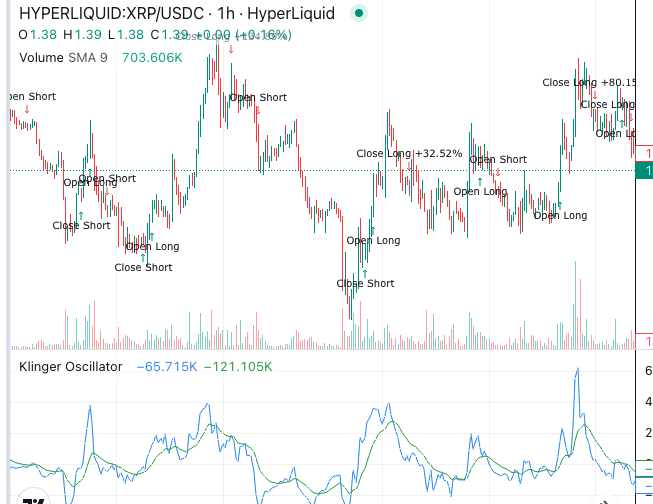
Overtrading is the habit of taking too many trades — more than your strategy has an edge for — and it quietly destroys more retail accounts than any single bad trade ever does. Days like today are exactly when it strikes. Bitcoin just jumped 11%, sentiment flipped from fear to greed overnight, and the urge to click buy on everything is enormous.
What Is Overtrading?
Overtrading is executing trades beyond what your strategy, capital or edge justifies. That can mean too many positions at once, too many entries per day, or trading markets and hours you never planned to touch. Investopedia defines it as excessive buying and selling — but the practical definition is simpler: any trade your written rules didn’t call for.
The classic academic study on the subject, Barber and Odean’s “Trading Is Hazardous to Your Wealth”, found the most active retail traders underperformed the market by around 6.5% per year. The edge didn’t fail. The frequency did.
Why Overtrading Destroys Returns
Three costs stack against the overtrader. First, fees and slippage scale with every trade, so unnecessary trades are a guaranteed drag. Second, extra trades taken outside your rules carry no edge — they are coin flips with costs attached. Third, each impulsive position increases your exposure at exactly the moments you are least objective.
Compounding makes the damage worse than it looks. A strategy that earns 1% per week can be wiped to breakeven by a handful of unplanned trades per month. The maths of recovery — covered in our guide to risk of ruin — means the losses from overtrading cost more to win back than they did to lose.
What Does Overtrading Look Like in Practice?
- Revenge trading. Re-entering immediately after a loss to “win it back”.
- Euphoria chasing. Piling into a runaway move because everyone on your feed is celebrating.
- Boredom trades. Entering because nothing has happened for hours, not because a signal fired.
- Timeframe creep. A swing trader scalping the 1-minute chart by lunchtime.
Every one of these is emotional, not analytical. That is precisely why rules beat willpower here.
How Do Algorithms Eliminate Overtrading?
An algorithm cannot revenge trade. It cannot get bored, feel FOMO or widen its own limits after a loss. It takes the entries its rules define and nothing else. This is one of the strongest arguments for systematic trading: the algorithm’s discipline is structural, not psychological.
The strategy itself defines trade frequency before any money is at risk. If your backtest shows the edge appears four times a week, the live system trades four times a week — whether the market is boring or euphoric. The 200 extra trades a discretionary trader would have sprinkled on top simply never happen.
How to Apply Overtrading Controls in Arrow Algo
Arrow Algo’s no-code visual builder includes blocks built for exactly this kind of discipline:
- Timer block: enforce a cooldown after every trade, so consecutive entries can’t stack within minutes.
- Counter block: cap the number of trades per day or week — once the limit hits, the strategy stands down.
- Time Filter block: restrict trading to the hours where your backtest shows the edge actually lives.
- Condition gates: require every entry to pass all your signal conditions, so “close enough” setups never execute.
Drag these around any strategy you have built and backtest the difference. Traders are often surprised how much performance improves when the marginal trades disappear.
What Are the Key Takeaways?
- Overtrading means taking trades your edge doesn’t justify — and it compounds fees, noise and emotional risk.
- The most active retail traders underperform by roughly 6.5% a year, per Barber and Odean.
- Revenge trades, euphoria chasing and boredom entries are the classic forms — all emotional, none analytical.
- Algorithms fix overtrading structurally: frequency is defined by the backtest, not by mood.
- Arrow Algo’s Timer, Counter and Time Filter blocks let you build those limits into any strategy without code.
Disclaimer: This content is for educational purposes only and does not constitute financial advice. Trading involves significant risk and you should only trade with capital you can afford to lose. Past performance is not indicative of future results. Always conduct your own research before making any trading decisions.
Ready to build your own automated trading strategies without writing a single line of code? Start for free at Arrow Algo and join thousands of traders who’ve made the switch to systematic trading.