
Pivot Points: Complete Guide for Algorithmic Trading
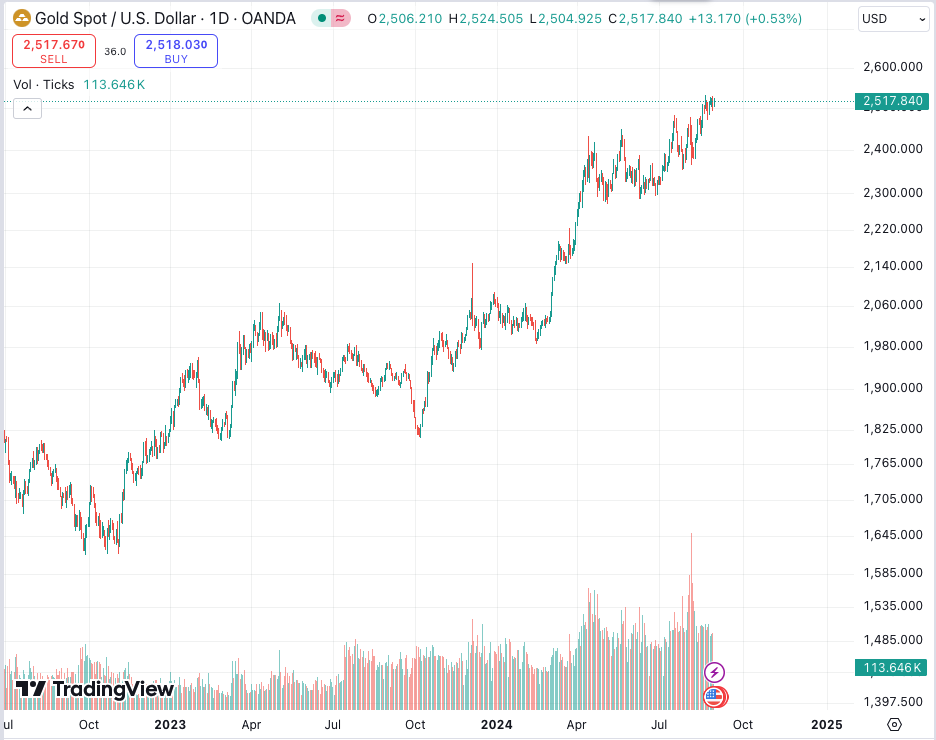
Pivot Points are one of the most widely used tools in technical analysis, giving traders a clear framework of support and resistance levels calculated from the previous period’s price action. Whether you trade crypto, forex, or equities, Pivot Points provide objective reference levels that remove guesswork from your entries and exits.
What Are Pivot Points?
Pivot Points are a set of horizontal price levels derived from the high, low, and close of a prior trading period — typically the previous day, week, or month. The central pivot acts as the primary support and resistance reference, with additional levels (S1, S2, S3 and R1, R2, R3) radiating outward above and below. Traders have relied on Pivot Points since the days of floor trading in the 1930s, and they remain one of the few indicators that are purely price-derived with no lag.
Unlike moving averages, which smooth past data over time, Pivot Points reset each period and provide fresh levels. This makes them particularly useful for intraday and swing traders who need clearly defined zones for decision-making.
How Are Pivot Points Calculated?
The classic (or “floor trader”) method uses three inputs from the previous period: the high (H), low (L), and close (C).
The central Pivot Point equals the average of the high, low, and close. From there, the first resistance level (R1) is calculated by doubling the pivot and subtracting the low. The first support level (S1) doubles the pivot and subtracts the high. R2 and S2 extend further by adding or subtracting the full range (high minus low) from the pivot. R3 and S3 stretch one more range beyond R2 and S2.
Several variations exist. Fibonacci Pivot Points apply Fibonacci ratios (38.2%, 61.8%, 100%) to the range instead of using simple arithmetic. Woodie Pivot Points weight the closing price more heavily, while Camarilla Pivot Points use a tighter set of multipliers designed for intraday reversals. Each variant suits different market conditions and timeframes.
How to Read Pivot Point Signals?
The central pivot is the anchor. When price trades above the pivot, the short-term bias is bullish. When price trades below it, the bias is bearish. This simple rule forms the backbone of many Pivot Point strategies.
Support and resistance bounces: Price often reacts at Pivot Point levels. A bounce off S1 can signal a buying opportunity, while rejection at R1 may indicate selling pressure. The more times a level is tested without breaking, the stronger it becomes.
Breakout signals: When price slices through a Pivot Point level with strong volume, it often continues to the next level. A break above R1 targets R2. A break below S1 targets S2. Algorithmic traders can set these breakout conditions as triggers in their strategies.
Confluence zones: Pivot Points become especially powerful when they align with other indicators. If the S1 level coincides with a Bollinger Band lower boundary or a key EMA, that zone carries extra significance.
What Are the Best Pivot Point Trading Strategies?
1. Pivot bounce strategy: Enter long when price pulls back to S1 or S2 and shows a reversal signal (such as a bullish candle pattern or RSI divergence). Place stops just below the support level, and target the central pivot or R1 for the exit. Reverse the logic for short entries at resistance levels.
2. Pivot breakout strategy: Wait for price to close above R1 (or below S1) with above-average volume. Enter in the direction of the breakout and target the next Pivot Point level. This works well in trending markets where momentum carries price through multiple levels in a single session.
3. Range-bound strategy: In sideways markets, trade the zone between S1 and R1. Buy near S1, sell near R1, and keep tight stops outside the range. This approach pairs well with oscillators like the Stochastic Oscillator to confirm overbought and oversold conditions within the range.
What Are Common Pivot Point Mistakes to Avoid?
Treating levels as exact prices: Pivot Points are zones, not precise lines. Price may overshoot S1 by a few ticks before reversing. Build a small buffer around each level rather than placing orders at the exact calculated price.
Ignoring the broader trend: Buying at S1 in a strong downtrend often leads to losses. Always check the higher-timeframe direction. If the daily trend is bearish, treat resistance Pivot Points as selling opportunities rather than fighting the trend at support.
Using a single timeframe: Daily Pivot Points work best for intraday trading. If you are swing trading, weekly or monthly Pivot Points provide more meaningful levels. Match the pivot period to your holding period.
Overcrowding your chart: Displaying classic, Fibonacci, and Camarilla pivots simultaneously creates confusion. Pick one method, learn its behaviour in your market, and stick with it.
How to Build Pivot Point Strategies in Arrow Algo?
Arrow Algo’s no-code visual block builder makes it straightforward to incorporate Pivot Points into your automated strategies. Drag the Pivot Point indicator block onto your canvas, select your preferred calculation method (classic, Fibonacci, Woodie, or Camarilla), and choose the timeframe for the input period.
Connect the Pivot Point output to condition blocks to create your trading rules. For example, set a condition that triggers a buy when price crosses above S1 and OBV is rising, then add a sell condition when price reaches R1. You can backtest the entire strategy against historical exchange data — no coding required.
Combine Pivot Points with other indicator blocks to build layered strategies. Add an ADX filter to only trade bounces when the trend is weak, or add a volume block to confirm breakouts. The visual builder lets you experiment freely and see results in minutes.
What Are the Key Takeaways?
- Pivot Points calculate objective support and resistance levels from prior-period high, low, and close
- Price above the central pivot suggests bullish bias; below suggests bearish bias
- The classic method is the most widely used, but Fibonacci and Camarilla variants suit specific styles
- Bounce and breakout strategies offer two complementary approaches to trading Pivot Points
- Always match the pivot timeframe to your trading timeframe — daily for intraday, weekly for swing
- Confluence with other indicators like Bollinger Bands, RSI, or volume strengthens Pivot Point signals
- Arrow Algo’s visual block builder lets you automate Pivot Point strategies without writing any code
Educational disclaimer: This content is for educational purposes only and does not constitute financial advice. Trading involves significant risk and you should only trade with capital you can afford to lose. Past performance is not indicative of future results.
Disclaimer: The information provided in this article is for educational purposes only and does not constitute financial advice. Trading involves significant risk and you should only trade with capital you can afford to lose. Past performance is not indicative of future results. Always conduct your own research before making any trading decisions.
Ready to build your own automated trading strategies without writing a single line of code? Start for free at Arrow Algo and join thousands of traders who’ve made the switch to systematic trading.