
Portfolio Heat: Control Your Total Risk Across All Open Trades
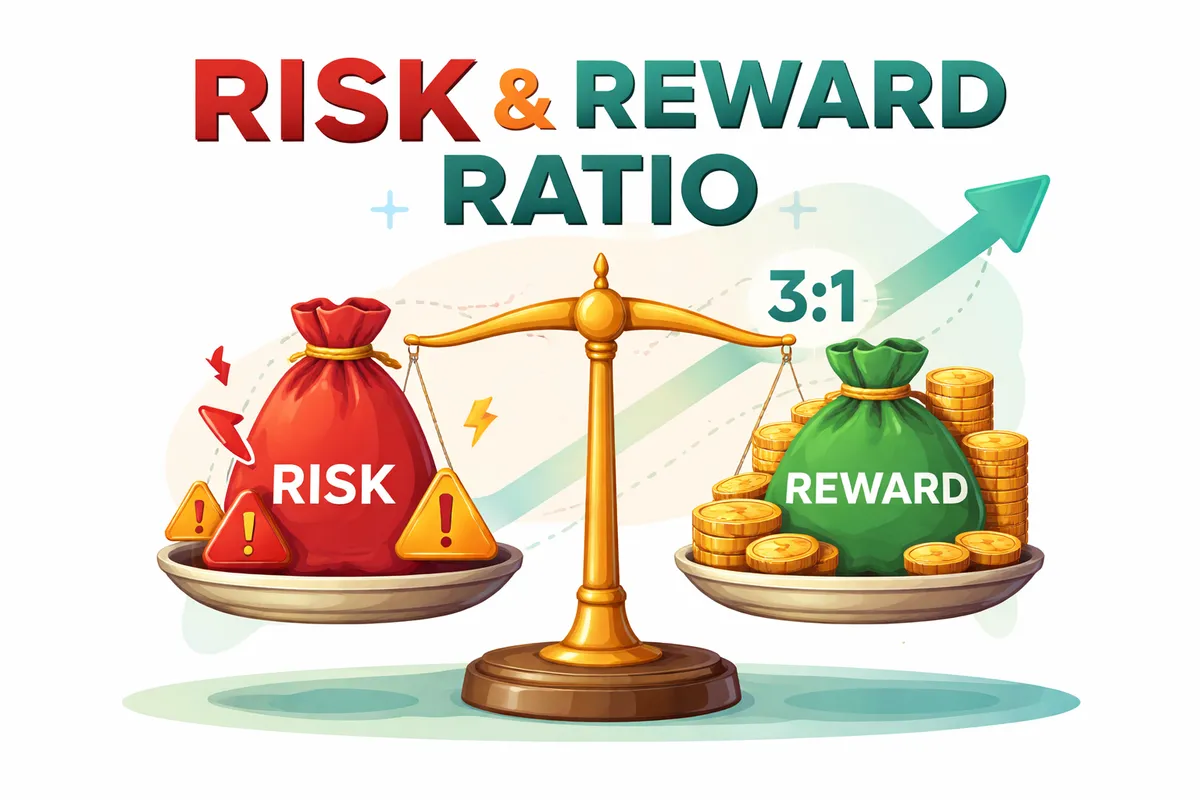
Portfolio heat is the total percentage of your account currently at risk across all open positions simultaneously. A single position risking 2% of account is manageable. Five positions each risking 2% means 10% of your account is exposed to loss at the same time — and if those positions are correlated, a single market move can trigger all five stops at once. Tracking portfolio heat is how systematic traders prevent individual position sizing rules from producing dangerous aggregate exposure.
What Is Portfolio Heat?
Portfolio heat is the sum of the risk on every open position in your account at any given moment. It is calculated by adding together the distance from each position’s entry price to its stop-loss, expressed as a percentage of total account value. If you have three open trades each with a 2% stop-risk, your portfolio heat is 6% — meaning a worst-case scenario where all three stop out simultaneously costs you 6% of your account.
The concept was popularised by trend-following fund managers who needed a systematic way to manage aggregate exposure across large, diversified portfolios. It applies equally to retail algorithmic traders running multiple strategies or multiple positions within a single strategy.
Why Portfolio Heat Matters for Systematic Traders
Individual position sizing rules — risk 1–2% per trade — are necessary but not sufficient. They control the risk on each trade in isolation. They say nothing about how much total risk accumulates when multiple positions are open simultaneously.
In trending market conditions, a momentum strategy may open five or six positions across correlated assets in quick succession. Each individual position passes the 2% risk rule. Collectively they represent 10–12% of account at risk. If the trend reverses sharply — which is exactly when correlated assets tend to move together — all positions may stop out in the same session. The individual risk rule was followed perfectly. The aggregate outcome is a 10–12% drawdown from a single market event.
Portfolio heat provides the aggregate view that individual position sizing cannot. It is the difference between managing risk at the trade level and managing risk at the portfolio level.
How to Set a Portfolio Heat Limit
A maximum portfolio heat limit defines the ceiling on total account risk at any one time. Common starting points:
Conservative (5–8% max heat): Suitable for volatile assets, high-frequency strategies, or traders who prioritise capital preservation. At 5% maximum heat, five simultaneous 1% positions is the limit — the strategy pauses new entries until existing positions close or stop out.
Moderate (10–15% max heat): Appropriate for diversified multi-strategy portfolios where positions have low correlation. If strategies trade different assets and timeframes, the probability of all positions stopping out simultaneously is lower — allowing a higher aggregate heat limit.
Aggressive (20%+): Only appropriate where position correlation is very low and the strategy has a well-validated edge across a range of market conditions. This level of aggregate risk requires robust drawdown controls at the portfolio level to prevent a single bad period from being account-threatening.
Your heat limit should be calibrated against your backtest’s maximum drawdown. If your backtest shows a maximum drawdown of 15% under realistic conditions, a heat limit that could produce a 20%+ single-day loss from correlated stops is inconsistent with what the backtest implies. For the broader framework of managing drawdowns, see our post on drawdown management.
Correlation — the Hidden Multiplier in Portfolio Heat
Portfolio heat calculations assume positions are independent. When positions are correlated — moving in the same direction in response to the same market event — the effective heat is higher than the arithmetic sum suggests.
A portfolio of five BTC, ETH, SOL, BNB, and ADA long positions in a risk-off crypto selloff is not five independent 2% risks. All five assets drop simultaneously. The effective heat approaches 10% regardless of whether they were entered on different signals. This is why diversification at the strategy level — running a mean-reversion strategy alongside a trend-following strategy, for example — reduces effective portfolio heat more reliably than simply trading different assets with the same directional bias.
How to Implement Portfolio Heat Tracking in Arrow Algo
Arrow Algo’s drag-and-drop builder allows you to implement portfolio heat controls through condition blocks and position status logic — without writing any code.
Use the Position Status block to track how many positions are currently open. Connect its output to a condition block that checks whether the current open position count is below your maximum. Wire this condition as a gate on all new entry signals — when the maximum number of simultaneous positions is reached, no new entries fire until an existing position closes.
For a more precise heat calculation, combine position count with your fixed stop-loss percentage. If each position risks 2% and your maximum heat is 10%, the gate should block new entries when five or more positions are open simultaneously. Adjust the threshold based on your chosen heat limit and per-trade risk percentage.
Run the strategy through Arrow Algo’s backtester with and without the portfolio heat gate to quantify exactly how much it reduces maximum drawdown during correlated market events — the difference is typically most visible during sharp sell-off periods where multiple positions would otherwise stop out together.
What Are the Key Takeaways?
- Portfolio heat is the total percentage of account at risk across all open positions simultaneously
- Individual 1–2% position sizing rules do not prevent dangerous aggregate exposure when multiple positions are open at the same time
- Correlated positions amplify effective heat — five long crypto positions in a broad sell-off behave like a single large position
- Common heat limits: 5–8% (conservative), 10–15% (moderate), 20%+ (aggressive with low correlation)
- Calibrate your heat limit against your backtest’s maximum drawdown — they should be consistent
- Arrow Algo’s Position Status block lets you gate new entries based on current open position count — no code required
Disclaimer: This content is for educational purposes only and does not constitute financial advice. Trading involves significant risk and you should only trade with capital you can afford to lose. Past performance is not indicative of future results. Always conduct your own research before making any trading decisions.
Ready to build your own automated trading strategies without writing a single line of code? Start for free at Arrow Algo and join thousands of traders who’ve made the switch to systematic trading.