
Trading Journal Metrics That Improve Algorithms
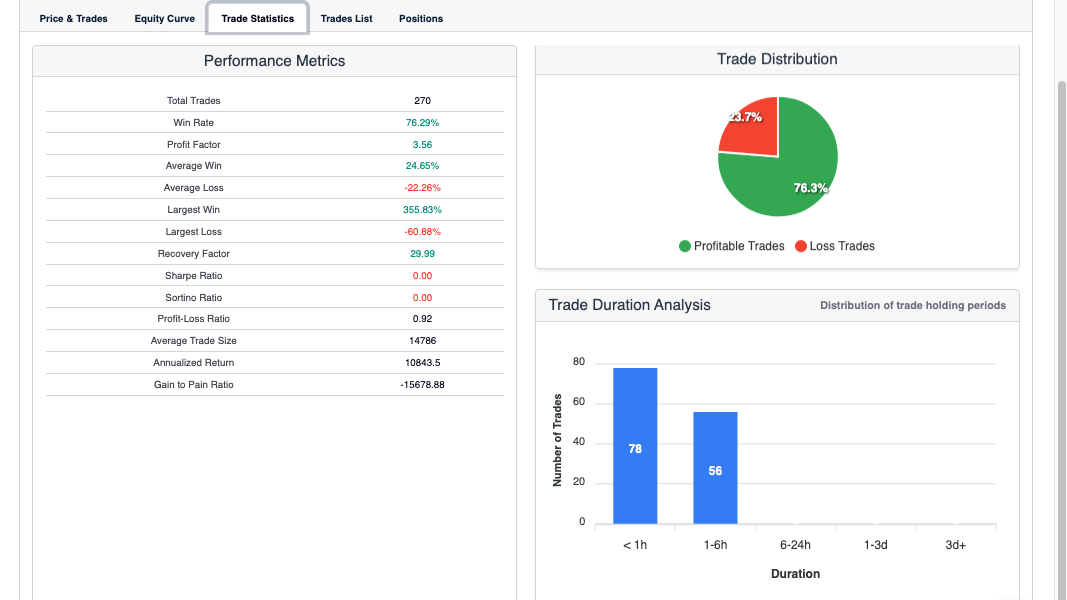
Trading journal metrics are the numbers and observations a trader records after each trade so they can improve strategy quality over time. For algorithmic traders, a journal is not a diary. It is a feedback system.
What Are Trading Journal Metrics?
Trading journal metrics are structured records of what happened before, during, and after each trade. They include basic data such as entry price, exit price, position size, profit or loss, and holding time. They also include strategy context: which signal fired, what market regime was present, whether the trade followed the rules, and what changed after the entry.
Manual traders often use journals to track emotions and discipline. Algorithmic traders use them differently. The goal is to identify which parts of a strategy are working, which conditions create losses, and which assumptions need to be tested again.
A good journal turns live trading into usable evidence. Without it, a trader is left with only the equity curve and a vague memory of what happened.
Why Trading Journal Metrics Matter
Backtests show how a strategy behaved historically. Live trading shows how it behaves under real execution conditions. A trading journal connects those two worlds.
If a strategy underperforms live, the journal helps isolate the reason. Was slippage higher than expected? Did the strategy perform badly only during low-volume sessions? Were losses concentrated in one asset, one timeframe, or one type of setup? Those answers are difficult to find from total profit and loss alone.
Journal metrics also protect traders from overreacting. A three-trade losing streak may feel serious, but the journal may show it is normal for that strategy. A profitable week may feel good, but the journal may show that the gains came from one lucky outlier while the core setup is weakening.
Which Metrics Should Every Trader Track?
Entry and exit reason should be recorded for every trade. A trade that entered because of a breakout condition should not be evaluated the same way as a trade that entered because of a mean reversion condition.
Planned risk versus realised loss shows whether the strategy is behaving as designed. If realised losses regularly exceed planned risk, execution costs, slippage, or stop logic may need attention.
Market regime is one of the most useful journal fields. Mark whether the market was trending, ranging, volatile, or quiet. Over time, this reveals where the strategy actually has an edge.
Holding time helps identify mismatch. If a strategy is designed for short swings but winning trades take far longer than expected, the exit logic may be too early or the entry logic may be mistimed.
Setup quality can be scored with simple categories such as A, B, or C. The goal is not subjective storytelling. The goal is to learn whether the highest-quality setups are genuinely producing better outcomes.
How Do Journal Metrics Improve Strategy Design?
Journal metrics reveal patterns that are invisible in aggregate performance. A strategy might be profitable overall but lose money during sideways markets. Another might make money on Bitcoin and Ethereum but fail on smaller altcoins because spreads and slippage are too high.
Once those patterns are visible, the strategy can be adjusted with precision. Add a regime filter. Remove a low-quality asset. Tighten execution rules. Change the timeframe. The key is that the adjustment comes from evidence, not frustration.
This is where algorithmic trading has an advantage. Because the rules are explicit, each journaled trade can be traced back to the exact conditions that triggered it. That makes improvement more systematic than trying to remember why a discretionary trade looked good at the time.
What Should You Avoid Tracking?
More data is not always better. A journal with 40 fields that never gets reviewed is useless. Track the metrics that can actually change a decision.
Avoid vague labels such as good trade or bad trade unless they are defined. A losing trade can be good if it followed the rules and managed risk correctly. A winning trade can be bad if it broke the strategy plan. The journal should separate process quality from outcome.
Also avoid changing the journal format every week. Consistency is what makes patterns visible. If the fields keep changing, the data becomes difficult to compare.
How to Apply Trading Journal Metrics in Arrow Algo
Arrow Algo helps traders build strategies with visual blocks, then backtest and run them using clear rule-based logic. That makes journaling easier because every trade has a defined reason for existing.
When reviewing a strategy, track which blocks were responsible for the entry: trend filter, momentum confirmation, volatility filter, stop condition, or exit rule. If most losing trades share the same weak condition, that condition can be tested, adjusted, or removed.
A practical workflow is to review trades weekly. Group them by market regime, asset, timeframe, and setup type. Then make one change at a time. This keeps strategy improvement controlled and measurable rather than reactive.
What Are the Key Takeaways?
- Trading journal metrics turn live trading into evidence you can review
- The most useful fields include entry reason, exit reason, planned risk, realised loss, regime, and holding time
- Journal data helps identify when a strategy works and when it should be paused or adjusted
- Process quality and trade outcome should be evaluated separately
- Arrow Algo’s visual builder makes trade review clearer because every entry comes from defined strategy logic
Disclaimer: This content is for educational purposes only and does not constitute financial advice. Trading involves significant risk and you should only trade with capital you can afford to lose. Past performance is not indicative of future results. Always conduct your own research before making any trading decisions.
Ready to build your own automated trading strategies without writing a single line of code? Start for free at Arrow Algo and join thousands of traders who’ve made the switch to systematic trading.