
Volume Oscillator (VOSC): Complete Guide for Algorithmic Trading
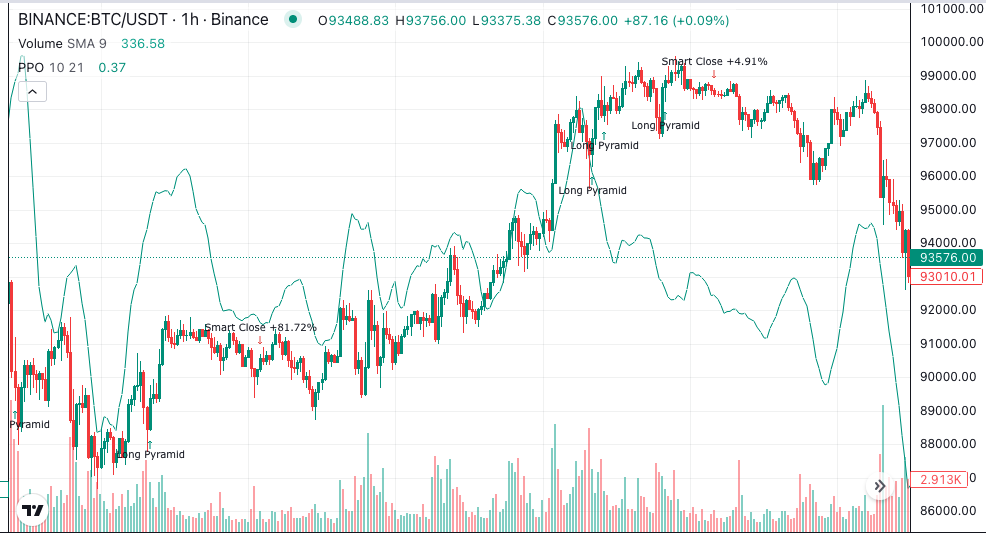
The Volume Oscillator (VOSC) is a momentum indicator that measures the percentage difference between two volume-based moving averages to show whether buying or selling activity is expanding or contracting. It helps algorithmic traders confirm trends, spot divergences, and filter out low-conviction setups before they enter a trade.
What Is the Volume Oscillator?
The Volume Oscillator is a momentum tool that compares a short-term volume average to a long-term volume average and expresses the result as a percentage. It reveals whether current market activity runs above or below its recent norm. When trading volume expands, it tends to validate price moves. When volume contracts, it raises questions about the strength of those moves.
Unlike price-based indicators, VOSC focuses entirely on the number of units traded. This makes it a useful complement to any price-based signal in your strategy.
How Is the Volume Oscillator Calculated?
The Volume Oscillator takes two moving averages of trading volume — one covering a shorter period and one covering a longer period. It subtracts the longer average from the shorter average, divides the result by the longer average, and multiplies by 100 to produce a percentage reading.
Common default settings use a 14-period short average and a 28-period long average, though traders adjust these to suit the timeframe of their strategy. A positive reading means recent volume runs above its longer-term average. A negative reading means recent volume sits below its longer-term average.
No price data enters the calculation at all. The indicator focuses entirely on the flow of market participation.
How to Read Volume Oscillator Signals?
A VOSC reading above zero signals that short-term volume exceeds the long-term norm. This confirms that traders participate actively in the current price move. A breakout accompanied by a rising VOSC carries more weight than one on falling volume.
A reading below zero signals that participation is declining. Trends supported by falling volume often stall or reverse. Pullbacks and consolidations typically show low or negative VOSC readings.
Zero-line crossovers draw the most attention. When VOSC crosses from negative to positive, volume activity is picking up. When it crosses from positive to negative, participation is fading. Traders often use these crossovers as filters rather than standalone entry signals.
Divergence is another key reading to monitor. If price makes a new high while VOSC makes a lower high, the price move is losing volume support. That divergence warns of a potential reversal before price confirms it.
What Are the Best Volume Oscillator Trading Strategies?
The Volume Oscillator works best as a confirmation layer rather than a trigger on its own. Here are three common approaches.
Trend Confirmation
Use a trend indicator — such as an EMA crossover or ADX — to identify trend direction. Add VOSC as a filter. Only take trend-following signals when VOSC sits above zero. This ensures you enter when the market actively participates in the move, not when volume has quietly dried up.
Breakout Validation
Breakout strategies identify moments when price exits a consolidation range. A breakout with a rising VOSC suggests genuine demand or supply entering the market. A breakout with a flat or negative VOSC can signal a false move. Using VOSC as a breakout filter reduces low-quality entries and improves the overall quality of your setup selection.
Divergence Reversal
Monitor for situations where price makes a higher high but VOSC makes a lower high. This divergence — where the two readings move in opposite directions — suggests price climbs without growing volume support. Systematic traders add a reversal condition to their strategy when divergence appears and confirm the signal with a price reversal pattern before triggering an entry.
What Are Common Volume Oscillator Mistakes to Avoid?
Using VOSC alone is the most common error. Volume expansion confirms price moves but does not tell you the direction. Always pair VOSC with a directional indicator.
Ignoring context is another frequent mistake. High VOSC readings during major news events often reflect one-time spikes. These spikes do not necessarily signal the start of a sustained trend. Check whether a catalyst explains the volume before acting on the signal.
Applying standard settings to all timeframes without adjustment leads to poor results. A 14/28 period setting works well on daily charts. Shorter timeframes require smaller periods to stay responsive. Always test your VOSC settings against the specific market and timeframe you trade.
Treating a negative VOSC as a sell signal creates confusion. A reading below zero means volume is below its historical norm — it does not mean sell. A downtrend with negative VOSC simply means the move happens on thin participation, which may or may not prove significant on its own.
How to Build Volume Oscillator Strategies in Arrow Algo?
Arrow Algo includes the Volume Oscillator as a built-in indicator block. You add it to your strategy canvas without any manual formula entry. The platform handles the calculation automatically.
Connect a VOSC block to a comparison block. Set your threshold — for example, “VOSC greater than zero” — to create a volume confirmation condition. Chain that condition to your entry logic using Arrow Algo’s visual flow builder. The strategy triggers only when both the price signal and the volume condition are met.
To build a divergence-based filter, use two VOSC data points — one from a recent bar and one from an earlier bar — and compare them against the equivalent price highs using Arrow Algo’s lookback blocks. When VOSC prints a lower reading on a higher price high, your divergence condition becomes active.
All of this happens through drag-and-drop blocks on Arrow Algo’s visual canvas. You set the parameters, define the logic, and Arrow Algo runs it automatically, in backtests and then live against your exchange account. For a deeper look at how volume fits into broader strategy design, see our guide to volume analysis in algorithmic trading. The StockCharts guide to the Volume Oscillator also provides useful context on how this indicator sits within the broader family of volume tools.
What Are the Key Takeaways?
- The Volume Oscillator measures the percentage difference between a short-period and long-period volume average.
- A positive reading confirms active participation in the current price move.
- A negative reading signals below-average volume, which may weaken the move.
- Zero-line crossovers flag shifts in volume momentum.
- Divergence between price highs and VOSC highs warns of potential reversals before price confirms them.
- Use VOSC as a filter or confirmation layer — not as a standalone entry trigger.
- Arrow Algo lets you build VOSC strategies visually, with no code required.
Educational disclaimer: This content is for educational purposes only and does not constitute financial advice. Trading involves significant risk and you should only trade with capital you can afford to lose. Past performance is not indicative of future results.
Disclaimer: The information provided in this article is for educational purposes only and does not constitute financial advice. Trading involves significant risk and you should only trade with capital you can afford to lose. Past performance is not indicative of future results. Always conduct your own research before making any trading decisions.
Ready to build your own automated trading strategies without writing a single line of code? Start for free at Arrow Algo and join thousands of traders who’ve made the switch to systematic trading.