
VWAP Deviation Strategy: How to Build It in Arrow Algo
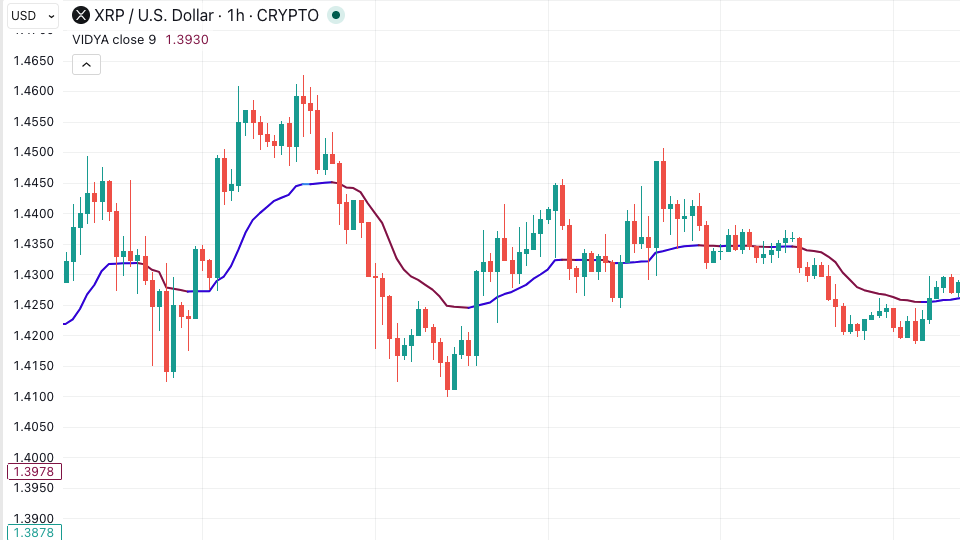
The VWAP deviation strategy takes the core VWAP framework one step further — adding standard deviation bands above and below the session average to identify when price has moved too far, too fast. Where basic VWAP signals tell you whether price is above or below the institutional average, VWAP deviation bands tell you by how much, and whether that distance represents a tradeable extreme or normal price behaviour.
What Are VWAP Deviation Bands?
VWAP deviation bands are standard deviation envelopes calculated around the VWAP line itself. The first deviation band sits one standard deviation above and below VWAP. The second sits two standard deviations out. These bands expand and contract with market volatility — wider during active, high-volume sessions, tighter during quiet periods.
The concept is analogous to Bollinger Bands, but anchored to VWAP rather than a simple moving average. Because VWAP incorporates volume into its calculation, the deviation bands reflect not just price distance but the volume-weighted significance of that distance. A price at the second deviation band has moved two standard deviations from where the market has collectively been transacting — a statistically meaningful extreme in most conditions.
How to Read VWAP Deviation Signals
The bands generate two types of signal depending on market conditions.
In ranging sessions: Price oscillating within the first deviation band is in normal territory. When price pushes to the second deviation band — two standard deviations from VWAP — it has overextended. Mean reversion entries at the outer band target a return toward VWAP. The first deviation band is a natural first target; VWAP itself is the full target. This is the primary use case for the strategy and works best on liquid assets during sessions without a strong directional trend.
In trending sessions: A trending market can hold price at or beyond the first deviation band for extended periods — the band does not act as a ceiling in strong trends. In this context, the deviation bands flip from reversion signals to trend confirmation tools. Price riding the first deviation band and bouncing from it on pullbacks signals a strong trend continuation. The strategy switches from fading the move to following it.
The critical skill is distinguishing ranging from trending sessions before applying the signal. ATR or ADX can serve as the regime detector: high ADX or expanding ATR signals a trending session where reversion signals should be suppressed; low ADX or contracting ATR signals a ranging session where deviation band entries are higher probability.
Setting Up the Strategy
The standard configuration uses two band levels: ±1 standard deviation for early warning and ±2 standard deviations for high-probability entries. The calculation period matches the VWAP session — typically the full trading day reset at midnight UTC for crypto.
Entry rules for the reversion approach:
- Price touches or crosses the second deviation band (±2σ from VWAP)
- ADX is below 25 — confirming a ranging rather than trending session
- Enter in the direction of VWAP: buy at lower band, sell at upper band
- First target: ±1 standard deviation band (partial exit)
- Second target: VWAP itself (full exit)
- Stop loss: a defined percentage beyond the second band — exiting if price continues away from VWAP rather than reverting
What Can Go Wrong
Trading the bands during news events: CPI releases, NFP prints, and geopolitical shocks can push price through the second deviation band and hold it there, turning what looks like an overextension into the beginning of a sustained directional move. Avoid deviation band reversion entries in the 30-minute window around major data releases.
Assuming the bands are fixed levels: VWAP deviation bands move constantly as new volume transacts. A price that was at the second deviation band one hour ago may now be at the first — or back inside the bands entirely — as the session’s volume profile evolves. The entry level at the band is only valid at the moment price reaches it.
Ignoring the trend regime: The most common reason deviation band reversion entries fail is that the session is trending, not ranging. Always check ADX or ATR before entering a reversion trade at the outer bands.
How to Build a VWAP Deviation Strategy in Arrow Algo
Arrow Algo’s drag-and-drop builder lets you construct VWAP deviation logic entirely through visual blocks.
Add a VWAP block to your canvas and connect close price from your Data Watcher. Add a Standard Deviation block set to match your session period. Multiply the standard deviation output by 2 using a multiply block — this gives you the second band distance. Add this value to VWAP for the upper band and subtract it for the lower band using add and subtract blocks.
Connect condition blocks to check whether current price is below the lower band (buy signal) or above the upper band (sell signal). Add an ADX block with a condition checking ADX below 25 — wire this as an AND gate with your band signal so entries only fire in ranging conditions. Connect the combined output to your entry blocks with targets set at ±1σ and VWAP.
Backtest across multiple sessions in Arrow Algo to calibrate the standard deviation multiplier and ADX threshold for your specific asset. Compare performance during trending sessions versus ranging sessions to confirm the regime filter is suppressing the right signals.
What Are the Key Takeaways?
- VWAP deviation bands add standard deviation envelopes to VWAP — identifying when price has moved a statistically significant distance from the session average
- Second deviation band (±2σ) touches are the primary entry signal for mean reversion toward VWAP
- The strategy requires a regime filter — only trade reversion when ADX is below 25; in trending sessions the bands flip to trend confirmation tools
- Avoid entries around major data releases where overextensions can become sustained directional moves
- Bands are dynamic and move with each new bar — the entry level is only valid at the moment price reaches it
- Arrow Algo’s no-code builder lets you construct the full VWAP deviation strategy using VWAP, standard deviation, multiply, and condition blocks
Disclaimer: This content is for educational purposes only and does not constitute financial advice. Trading involves significant risk and you should only trade with capital you can afford to lose. Past performance is not indicative of future results. Always conduct your own research before making any trading decisions.
Ready to build your own automated trading strategies without writing a single line of code? Start for free at Arrow Algo and join thousands of traders who’ve made the switch to systematic trading.