
VWAP Trading Strategy: How to Build It in Arrow Algo
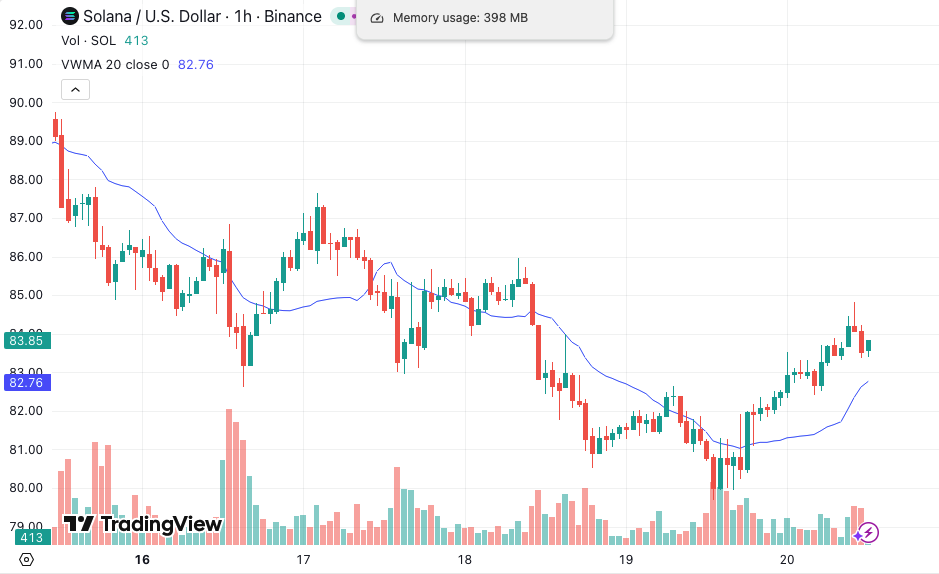
Most retail traders treat the Volume Weighted Average Price as a line on a chart. Institutional desks treat it as the benchmark that determines whether they are getting a good fill or a bad one. That difference in perspective is why the VWAP trading strategy works — and why understanding how institutions use it gives systematic traders a meaningful edge.
Why VWAP Is More Than Just Another Moving Average
VWAP is not a smoothing mechanism for price. It is the average price at which all volume has transacted over a defined session, weighted by the size of each transaction. A price above VWAP means the session’s buying pressure has been concentrated at higher prices. A price below VWAP means selling has dominated lower levels.
This matters because large institutional orders — funds rebalancing, ETF inflows being deployed, algorithmic execution algorithms — use VWAP as their primary execution benchmark. They are measured against it. A fund that buys above VWAP has underperformed its benchmark. This creates predictable behaviour: institutional buyers step in when price dips below VWAP, and institutional sellers emerge when price runs too far above it. The indicator has self-fulfilling properties precisely because so many large participants are aligned around it.
How VWAP Is Calculated
VWAP is calculated by multiplying each transaction’s price by its volume, summing those values across the session, then dividing by total volume. The result is reset at the start of each trading session — or, in the case of crypto’s 24/7 markets, typically at midnight UTC.
Because VWAP incorporates volume into its calculation, it responds differently to high-volume price moves versus low-volume ones. A large-volume candle that pushes price significantly shifts VWAP meaningfully. A low-volume candle barely moves it. This makes VWAP a more accurate picture of where the market has actually been transacting than a simple price average.
Three VWAP Trading Approaches
VWAP reversion: In ranging or consolidating markets, price tends to oscillate around VWAP. Enter long when price drops significantly below VWAP and short-term momentum is oversold. Exit when price returns to VWAP. This is a mean-reversion approach that works best on liquid assets during sessions with no strong directional bias. It performs poorly in strong trending sessions where price can remain above or below VWAP for extended periods.
VWAP trend confirmation: In trending markets, use VWAP as a directional filter. Only take long entries when price is above VWAP — confirming that the session’s net buying pressure is dominant. Only take short entries when price is below VWAP. This is the most common institutional use case: VWAP as a regime gate rather than a signal generator. Pair it with a momentum indicator like MACD or RSI to time entries within the confirmed direction. See our post on the MACD Crossover Strategy for how crossover entries combine with directional filters.
VWAP deviation bands: Add standard deviation bands above and below VWAP — similar in concept to Bollinger Bands but anchored to VWAP rather than a simple moving average. Price reaching the first deviation band (±1 standard deviation) suggests an extended move. Price at the second band (±2 standard deviations) suggests a high-probability reversion setup. Entries at the outer bands with a target back toward VWAP offer favourable risk-reward ratios in non-trending conditions.
What Are the Most Common VWAP Mistakes?
Treating VWAP as a support or resistance level: VWAP is a dynamic average, not a static price level. It moves every bar. A price that was “at VWAP” two hours ago may be well below or above it now. Strategies that treat VWAP like a fixed horizontal level — setting stops or targets at the current VWAP value and expecting it to hold — misunderstand how the indicator works.
Using VWAP on illiquid assets: VWAP’s effectiveness depends on the volume data being meaningful. On low-liquidity assets where volume is thin and erratic, the indicator becomes noisy and unreliable. It performs best on highly liquid assets like BTC, ETH, and major trading pairs where volume data accurately reflects real transaction flow.
Ignoring the session reset: VWAP resets at the start of each session. Early in a session, VWAP is based on very little volume and is therefore unstable — a single large trade can move it significantly. VWAP-based signals are most reliable after at least two to four hours of session volume has accumulated and the indicator has stabilised.
How to Build a VWAP Strategy in Arrow Algo
Arrow Algo’s drag-and-drop builder lets you implement VWAP-based logic entirely through visual blocks — no code required.
Add a VWAP block to your canvas. Connect the close price from your Data Watcher to the VWAP input. The VWAP output gives you the session-anchored average price on every bar.
For a trend confirmation strategy, add a condition block checking whether close price is greater than VWAP output. Connect the “true” output as a gate into your entry signal — for example, an RSI oversold condition or MACD crossover. Entries only fire when price is above VWAP, keeping the strategy aligned with institutional buying pressure.
For a reversion strategy, add a second condition checking whether price has deviated a defined percentage below VWAP. Connect this to a buy entry. Add an exit condition that closes the position when price returns to within a small margin of VWAP. Run the strategy through Arrow Algo’s backtester to calibrate the deviation threshold for your specific asset and timeframe.
What Are the Key Takeaways?
- VWAP is the volume-weighted average transaction price — it reflects where the market has actually been trading, not just where price has been
- Institutional execution desks benchmark against VWAP, creating predictable buying below and selling above it
- Three approaches: reversion toward VWAP, trend confirmation using VWAP as a directional gate, and deviation band entries
- Most effective on highly liquid assets after several hours of session volume have accumulated
- Do not treat VWAP as a static support/resistance level — it is a dynamic average that resets each session
- Arrow Algo’s no-code builder lets you implement VWAP trend confirmation or reversion logic through condition and AND gate blocks
Disclaimer: This content is for educational purposes only and does not constitute financial advice. Trading involves significant risk and you should only trade with capital you can afford to lose. Past performance is not indicative of future results. Always conduct your own research before making any trading decisions.
Ready to build your own automated trading strategies without writing a single line of code? Start for free at Arrow Algo and join thousands of traders who’ve made the switch to systematic trading.