
Williams Accumulation/Distribution (WAD): Complete Guide for Algorithmic Trading
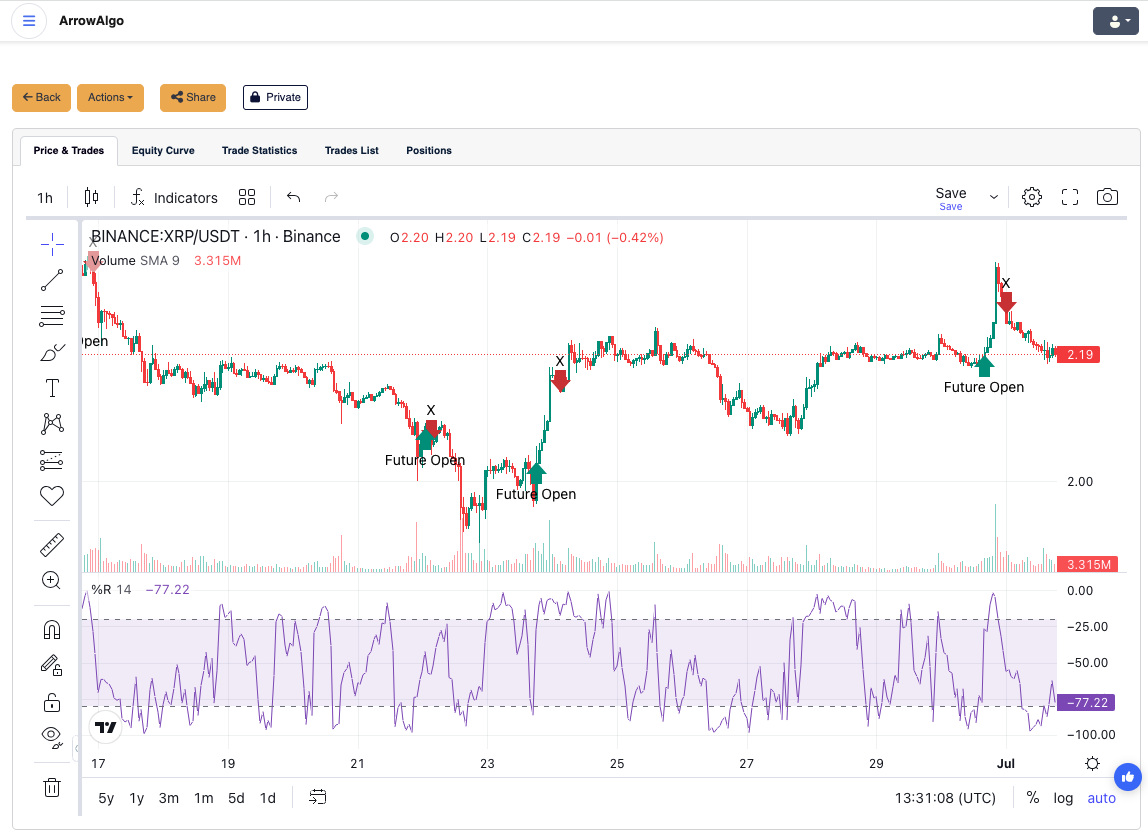
The Williams Accumulation/Distribution (WAD) is a cumulative volume indicator that measures buying and selling pressure by tracking where price closes in relation to intraday highs and lows. Larry Williams — the legendary commodities trader behind many widely used technical tools — developed WAD to give traders a clearer picture of who is actually winning each session: buyers or sellers. Unlike simpler volume tools that only check whether price moved up or down, WAD captures the intensity of that move by measuring where within the bar the close landed. That distinction makes Williams Accumulation/Distribution one of the most useful volume indicators for detecting hidden divergences before price confirms them.
What Is the Williams Accumulation/Distribution?
Williams Accumulation/Distribution is a cumulative line that rises when buyers close price near the top of each bar’s range and falls when sellers close price near the bottom. Think of it as a running score. Every session, the buyers or sellers add to their total. A rising WAD line tells you buyers are consistently strong. A falling WAD line tells you sellers are dominating. The key distinction between WAD and On-Balance Volume (OBV) — another popular volume indicator — is how each session’s contribution calculates. OBV adds or subtracts the full session volume based on whether price closed up or down. WAD weights each session by where price settled within the day’s range, not just the close direction. This makes WAD more sensitive to intraday buying and selling pressure. Read our complete On-Balance Volume guide to compare how the two indicators differ in practice.
How Is the Williams Accumulation/Distribution Calculated?
WAD builds as a running total. Each bar adds or subtracts a value based on two things: whether the session was an accumulation (buying) day or a distribution (selling) day, and how far the close sits from a reference level.
On an accumulation day — when the close finishes above the previous close — WAD adds the difference between today’s close and the lower of today’s low or yesterday’s close. On a distribution day — when the close finishes below the previous close — WAD subtracts the difference between the higher of today’s high or yesterday’s close and today’s close. When the close equals the previous close, today’s contribution is zero. Each day’s result adds to the prior WAD value, creating the cumulative line you see on a chart.
The use of the previous close as a reference level matters. It means WAD accounts for overnight gaps and sharp opens. A gap-up session that then closes near the daily high still registers as strong accumulation — even if the intraday range was narrow. Investopedia’s Williams A/D reference page covers the formula in additional detail for those who want to explore the maths further.
How to Read Williams Accumulation/Distribution Signals?
WAD has no fixed overbought or oversold thresholds. You read it by direction and by how it compares to price movement.
- WAD trending upward: Buyers are consistently closing price near the strong end of each bar. The trend carries underlying volume support.
- WAD trending downward: Sellers are dominating. Each session adds to distribution pressure regardless of what the price chart shows.
- Bullish divergence: Price drops to a new low but WAD holds above its prior low. Sellers are losing control. A reversal may be forming.
- Bearish divergence: Price climbs to a new high but WAD fails to follow. Buyers are fading. A potential top may be forming.
Divergences are the most powerful WAD signals. They warn you that the visible price action does not reflect what volume data actually shows — and volume often leads price by several sessions.
What Are the Best Williams Accumulation/Distribution Trading Strategies?
WAD works best alongside price structure, not in isolation.
Trend confirmation: When price makes higher highs and WAD also makes higher highs, the uptrend has real buying power behind it. Enter long trades with greater confidence. If price rises but WAD stays flat or falls, treat the trend with caution.
Divergence reversal entries: A bearish WAD divergence — where price reaches a new high but WAD does not — signals that buying pressure is fading. Use this as a potential exit from long positions or a trigger to watch for a reversal setup. A bullish divergence at a key support level can flag a high-probability long entry before price confirms the turn.
Breakout validation: When price breaks above a resistance level, check whether WAD also breaks to a new high at the same time. A breakout with WAD confirmation shows strong buying participation across the session. A breakout without WAD confirmation may be a false move driven by thin volume.
Mean reversion filter: In ranging markets, an extreme WAD drop combined with price sitting near a key support level can signal an oversold condition worth monitoring. Combine with a mean reversion entry signal for better timing and tighter risk management.
What Are Common Williams Accumulation/Distribution Mistakes to Avoid?
Treating WAD like an oscillator: WAD is a cumulative line with no upper or lower bounds. It cannot tell you when a market is overbought or oversold the way RSI does. Applying those concepts to WAD leads to bad entry timing.
Ignoring the price relationship: WAD only gains meaning when you compare it to price direction. A declining WAD while price also declines is simply a downtrend. The signal only becomes interesting when WAD and price diverge from each other.
Reacting to short-term noise: Single-bar WAD swings are not reliable signals. Look for multi-bar divergences or clear trend breaks that persist across several sessions before acting on them.
Applying WAD to illiquid markets: WAD depends on clean volume data. Thinly traded assets have unreliable volume, which makes WAD signals noisy and less meaningful. Use Williams Accumulation/Distribution on liquid markets where volume data is consistent and well-reported.
How to Build Williams Accumulation/Distribution Strategies in Arrow Algo?
Arrow Algo includes the Williams Accumulation/Distribution block in its visual indicator library. You add it to your strategy canvas with a single drag. No formulas or manual setup are necessary. Arrow Algo computes WAD automatically across your selected asset and timeframe.
To build a divergence detection setup, add a WAD block alongside a price high or low reference block. Connect both to a comparison block that checks whether the latest WAD high sits lower than the previous WAD high while the latest price high sits higher than the previous price high. Set a condition block to fire an alert or entry trigger when both conditions hold at the same time. Use a moving average block on the WAD line to smooth short-term noise and identify the dominant WAD trend direction before applying divergence logic on top.
For a trend confirmation strategy, combine a WAD slope condition with a trend filter — such as a simple moving average applied to price direction. Enter trades only when WAD slope and the price trend both agree. Arrow Algo’s no-code visual builder connects all these conditions with simple block links. No programming is necessary at any stage.
What Are the Key Takeaways?
- Williams Accumulation/Distribution is a cumulative volume indicator that tracks where price closes within each bar’s range
- A rising WAD line signals accumulation; a falling WAD line signals distribution
- WAD has no fixed overbought or oversold levels — read it relative to price direction
- Divergences between WAD and price are the most actionable signals this indicator produces
- Combine WAD with price structure and trend filters for best results
- Avoid applying WAD to illiquid markets where volume data is unreliable
- Arrow Algo’s visual builder lets you build WAD strategies without writing any code
Educational disclaimer: This content is for educational purposes only and does not constitute financial advice. Trading involves significant risk and you should only trade with capital you can afford to lose. Past performance is not indicative of future results.
Disclaimer: The information provided in this article is for educational purposes only and does not constitute financial advice. Trading involves significant risk and you should only trade with capital you can afford to lose. Past performance is not indicative of future results. Always conduct your own research before making any trading decisions.
Ready to build your own automated trading strategies without writing a single line of code? Start for free at Arrow Algo and join thousands of traders who’ve made the switch to systematic trading.