
Chaikin Volatility Index (CVI): Complete Guide for Algorithmic Trading
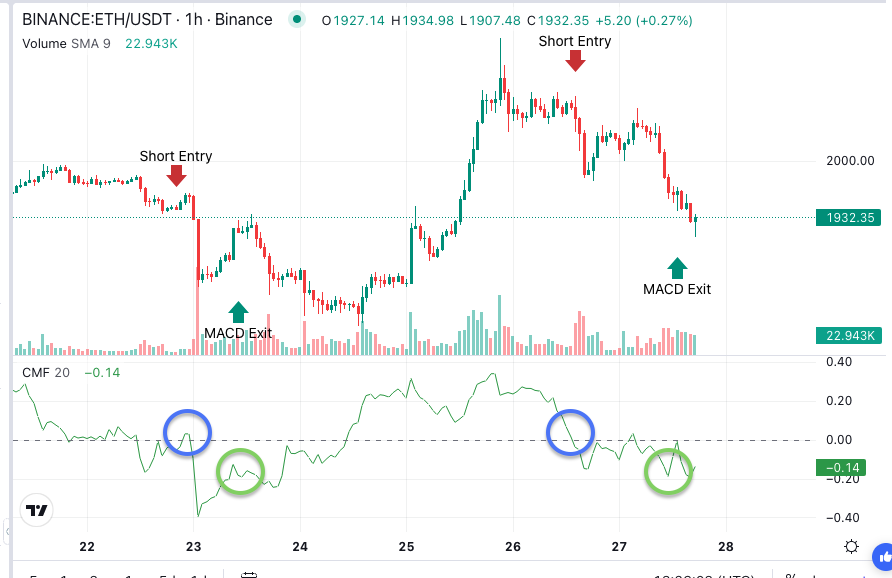
The Chaikin Volatility Index (CVI) is a technical indicator that measures the rate of change in an asset’s trading range. Developed by analyst Marc Chaikin, the Chaikin Volatility Index helps algorithmic traders identify periods of volatility expansion and compression. It does not predict price direction — it measures volatility momentum, making it a powerful filter and confirmation tool in systematic strategies.
What Is the Chaikin Volatility Index?
The Chaikin Volatility Index is a volatility measurement tool that tracks how quickly the spread between an asset’s high and low prices is changing over time. A rising CVI means the trading range is widening — volatility is picking up. A falling CVI means the range is narrowing — the market is compressing. This distinction makes CVI particularly useful for breakout strategies and for filtering out entries during low-energy market conditions.
CVI differs from other volatility tools like the Average True Range (ATR). ATR measures the absolute size of recent price moves. CVI measures the rate of change of those moves. That distinction matters for algorithmic traders. CVI can signal an acceleration in volatility even before price breaks out of a visible range.
How Is the Chaikin Volatility Index Calculated?
CVI uses three steps to produce a single volatility reading.
First, subtract each period’s low from its high. This gives the raw trading range — how wide the spread between buyers and sellers was for each candle. Second, apply an Exponential Moving Average (EMA) to those range values. The EMA smooths out noise and reveals the underlying trend in volatility. Arrow Algo uses a 10-period EMA by default. Third, measure the Rate of Change (ROC) of that smoothed EMA over a lookback period — also typically 10 periods. This step reveals not just the current range size, but how fast it is growing or shrinking.
The result is a percentage value. A positive CVI reading means today’s smoothed range is larger than it was 10 periods ago. A negative reading means the range has contracted. For more on how rate-of-change calculations work in trading indicators, Investopedia’s rate of change explainer is a useful reference.
How to Read Chaikin Volatility Index Signals?
CVI readings fall into three broad zones.
A rising CVI signals expanding volatility. The trading range is widening. This often accompanies breakouts, strong trending moves, or news-driven price action. Systematic traders treat a rising CVI as confirmation that a move has genuine energy behind it.
A falling CVI signals contracting volatility. The range is shrinking. Markets in compression tend to consolidate sideways. Falling CVI can signal the end of a trend — but it also sets the stage for the next explosive move. Many breakout strategies watch for a sustained fall in CVI followed by a sharp reversal upward.
A flat or near-zero CVI means volatility is stable. No meaningful acceleration or deceleration in the trading range is present. Range-bound strategies tend to outperform momentum strategies in this environment.
One critical caveat: CVI tells you how much volatility is changing, not which direction price will move. A CVI spike does not predict whether a breakout will go up or down. Always combine CVI with a directional signal.
What Are the Best Chaikin Volatility Index Trading Strategies?
Breakout Confirmation
Price breakouts that occur alongside a rising CVI carry more conviction. When price breaks above a resistance level and CVI is rising, the combination confirms the move has momentum behind it. When price breaks but CVI is flat or falling, the breakout may be a false move. Use CVI as a confirmation layer on top of your breakout signals rather than a standalone entry trigger.
Volatility Compression Entry
When CVI falls to historically low levels for a given asset, the market is compressing. Compressed markets often precede sharp expansions. Set up a trigger: when CVI turns back upward from a low reading, look for the next directional entry. This strategy suits algorithmic traders who want to catch the early stages of a breakout before the crowd piles in.
Trend Strength Filter
Many trend-following strategies generate entries in both trending and ranging markets — reducing performance in flat periods. Use CVI to filter out ranging conditions. Only allow trend-following entries when CVI sits above a defined threshold. This approach reduces the number of low-quality trades and improves overall strategy performance over time.
What Are Common Chaikin Volatility Index Mistakes to Avoid?
Treating CVI as a directional signal. CVI is a volatility tool. It tells you whether the range is expanding or contracting — not whether price is moving up or down. Treating a rising CVI as a buy signal is a fundamental misuse of the indicator.
Reacting to CVI spikes in isolation. A sharp CVI spike means volatility expanded quickly. That might signal a breakout — but it could also be a spike-and-reversal. Always wait for price confirmation before acting on a CVI extreme.
Ignoring the asset’s normal CVI range. What counts as high or low CVI depends entirely on the asset and timeframe. A CVI of 20 might be extreme for a low-volatility pair and routine for Bitcoin. Always compare CVI against its own recent history rather than an absolute number.
Over-optimising the period settings. CVI uses two period inputs: the EMA length and the ROC lookback. Optimising these heavily on historical data without out-of-sample testing leads to overfitting — where a strategy performs well in the past but fails in live conditions. For more on this, Investopedia’s overfitting guide covers the key concepts. Keep CVI settings stable until live performance gives clear evidence that a change improves results.
How to Build Chaikin Volatility Index Strategies in Arrow Algo?
Arrow Algo includes CVI as a native indicator block. Drag it onto your strategy canvas, set your EMA and ROC period inputs, and connect it to your logic blocks. No coding required at any stage.
To build a breakout confirmation strategy, place a CVI block and connect a Threshold block to its output. Define your minimum CVI level — the point at which you consider volatility sufficient to act. Then connect your breakout signal — a price crossover above a defined resistance level — to an AND block that also requires the CVI condition to be true. Arrow Algo only triggers an entry when both conditions are active simultaneously.
To build a volatility compression strategy, use a CVI block alongside a Lowest Value block tracking CVI’s recent minimum. When CVI rises above its recent low by a defined margin, the trigger fires. Connect that output to a directional signal and your entry block.
Arrow Algo’s backtesting engine lets you test both setups across years of historical data on any supported exchange — Binance, Coinbase, HyperLiquid, and others — before committing any capital. Adjust your CVI thresholds and observe the impact on backtest results directly in the platform.
What Are the Key Takeaways?
- The Chaikin Volatility Index measures the rate of change of an asset’s high-low trading range.
- A rising CVI signals expanding volatility. A falling CVI signals compression.
- CVI does not predict price direction — always pair it with a directional signal.
- Best applications: breakout confirmation, volatility compression setups, and trend strength filtering.
- Avoid treating CVI spikes as standalone entry signals or comparing CVI values across assets without context.
- Arrow Algo includes a native CVI block. Build and backtest Chaikin Volatility Index strategies visually with no code required.
Educational disclaimer: This content is for educational purposes only and does not constitute financial advice. Trading involves significant risk and you should only trade with capital you can afford to lose. Past performance is not indicative of future results.
Disclaimer: The information provided in this article is for educational purposes only and does not constitute financial advice. Trading involves significant risk and you should only trade with capital you can afford to lose. Past performance is not indicative of future results. Always conduct your own research before making any trading decisions.
Ready to build your own automated trading strategies without writing a single line of code? Start for free at Arrow Algo and join thousands of traders who’ve made the switch to systematic trading.