
Factor-Based Trading: Build a Systematic Edge in Crypto
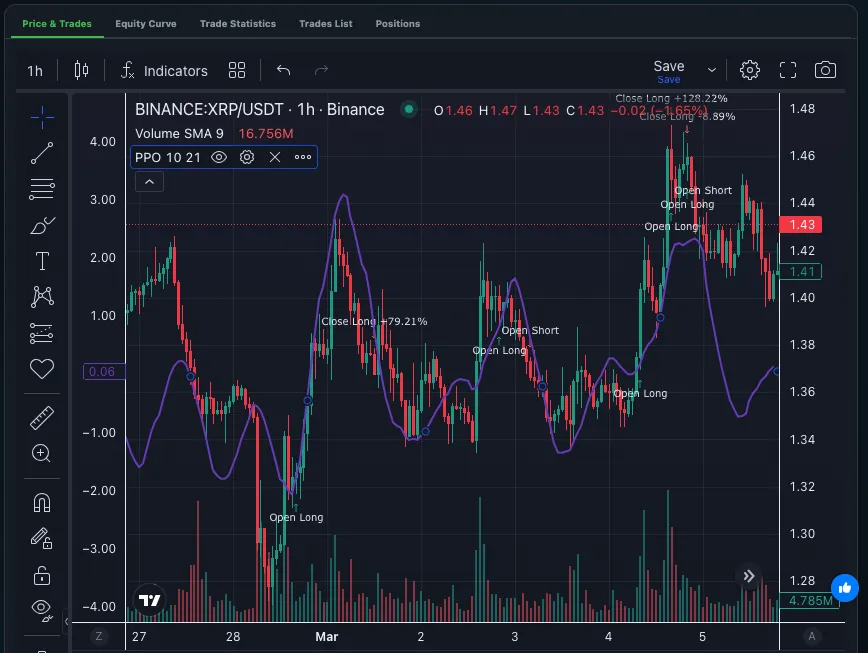
Factor-based trading is a systematic approach that builds strategies around specific, measurable market characteristics — called factors — that have historically been associated with excess returns. Rather than reacting to price action or news, a factor-based strategy defines in advance what it is looking for in an asset, then screens and ranks the market systematically to find the best current expression of that factor.
What Is Factor-Based Trading?
Factor-based trading is the practice of constructing systematic strategies around identifiable, repeatable drivers of asset returns. A factor is a quantifiable characteristic — momentum, volatility, volume trend, relative strength — that can be calculated objectively and applied consistently across a universe of assets. The strategy selects or weights assets based on their factor scores rather than on discretionary judgement.
The approach originated in equity markets, where academic research identified factors like value, size, momentum, and quality as persistent drivers of long-run returns. In crypto markets, the same framework applies — with adaptations for the 24/7 structure, higher volatility, and different liquidity dynamics of digital assets.
Why Factor-Based Trading Works for Systematic Traders
Discretionary trading asks: what do I think will happen? Factor-based trading asks: what has historically happened when these measurable conditions are present? The second question has a testable answer. The first does not.
By anchoring strategy decisions to quantifiable factors, you remove the inconsistency of discretionary judgement and replace it with a repeatable process. The same factor calculation runs on Monday as on Friday, at 9am as at 3am, in a bull market as in a bear market. The consistency of execution is itself part of the edge.
Factor-based approaches also naturally diversify across multiple positions. Because the strategy ranks assets by factor score rather than concentrating on a single setup, a factor portfolio distributes risk across many bets simultaneously — reducing the impact of any single bad trade on overall performance.
The Four Most Applicable Factors in Crypto
Momentum: Assets that have risen the most over a defined lookback period tend to continue outperforming in the near term. A momentum factor ranks assets by their rate of change over the past 20–90 days and allocates to the top performers. This is the most well-documented factor in crypto and one of the most consistently exploitable across market regimes.
Volatility: Lower-volatility assets within a universe tend to produce better risk-adjusted returns than higher-volatility ones over time. A volatility factor ranks assets by their realised volatility — using ATR or standard deviation over a defined period — and favours those with lower readings. This is counterintuitive in crypto but well-supported by data across longer timeframes.
Volume trend: Assets with rising volume relative to their historical baseline tend to attract sustained price momentum. A volume factor flags assets where volume is expanding above its moving average — a signal that new capital is entering the position rather than existing holders rotating out. Volume trend works best as a confirmation factor alongside momentum rather than in isolation.
Relative strength: Assets outperforming Bitcoin or a broader market index on a rolling basis are showing relative strength — they are rising faster or falling slower than the market. Relative strength is a useful factor for identifying which altcoins are leading rather than lagging in a given market environment. For a broader treatment of how performance is measured against a benchmark, see our post on the information ratio.
How to Combine Multiple Factors
Single-factor strategies are exploitable and subject to periods of underperformance when their specific factor is out of favour. Multi-factor strategies combine two or more factors into a composite score, improving consistency across different market regimes.
A simple multi-factor approach: score each asset in the universe on momentum and volume trend separately, then combine the scores into a single composite ranking. Allocate to the top-ranked assets. The combination means an asset needs to score well on multiple independent dimensions before receiving an allocation — reducing false positives from any single factor.
Factor weights can be equal or calibrated based on historical reliability. Equal weighting is a reasonable starting point. Unequal weighting requires backtesting to validate, as it introduces the risk of overfitting the weights to historical data.
How to Build a Factor-Based Strategy in Arrow Algo
Arrow Algo’s drag-and-drop builder supports factor-based logic through indicator, comparison, and condition blocks — all without writing code.
To build a momentum factor, add a Rate of Change block set to your lookback period (e.g. 20 bars). Connect its output to a condition block that checks whether ROC is above a defined threshold — for example, above 5%. This flags assets currently showing positive momentum above your minimum requirement.
To add a volume trend factor, connect an OBV or volume SMA block and add a condition checking whether current volume is above its 20-period average. Wire both conditions into an AND gate — the strategy only activates when both momentum and volume trend are simultaneously confirmed.
Run the factor combination through Arrow Algo’s backtester across multiple assets to evaluate how well the composite score identifies outperforming setups. Test each factor individually first, then combined, to understand how much each one contributes to the strategy’s overall performance.
What Are the Key Takeaways?
- Factor-based trading builds strategies around quantifiable market characteristics — momentum, volatility, volume trend, relative strength — rather than discretionary judgement
- Factors produce testable, repeatable entry and ranking criteria that run consistently regardless of market conditions or time of day
- The four most applicable crypto factors: momentum, volatility, volume trend, and relative strength
- Multi-factor strategies combine two or more factors into a composite score — improving consistency across different market regimes
- Equal weighting across factors is a robust starting point; unequal weighting requires careful backtesting to avoid overfitting
- Arrow Algo’s no-code builder lets you implement factor logic using ROC, volume, condition, and AND gate blocks without any programming
Disclaimer: This content is for educational purposes only and does not constitute financial advice. Trading involves significant risk and you should only trade with capital you can afford to lose. Past performance is not indicative of future results. Always conduct your own research before making any trading decisions.
Ready to build your own automated trading strategies without writing a single line of code? Start for free at Arrow Algo and join thousands of traders who’ve made the switch to systematic trading.