
False Breakouts: How to Stop Getting Trapped
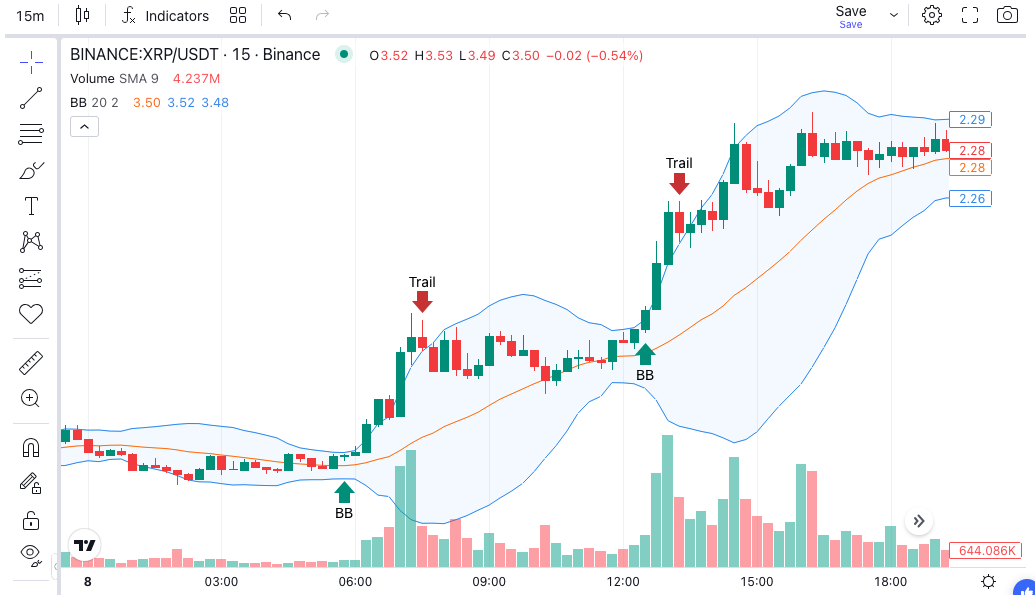
False breakout trading is the art of not being the exit liquidity. Price pushes through a level everyone is watching, breakout buyers pile in, and then the move dies and reverses. The trapped buyers become forced sellers, and the market snaps back inside the range. Every breakout trader eats these losses. The good ones eat fewer, because they make price prove itself first.
The topic is timely. Bitcoin just broke to eight-month highs on a wave of short liquidations. The move might be the start of a new leg. It might also be a squeeze that fades once the forced buying is spent. The rules in this post exist for exactly this situation.
What Is a False Breakout?
A false breakout is a move beyond a support or resistance level that fails to hold. Price closes back inside the range, usually within a few candles. Investopedia calls it a failed break, traders call it a fakeout, and the chart signature is a long wick through the level with no follow-through.
The damage is double-sided. You lose on the entry, and the reversal often triggers your opposite signal too. A strategy that buys every level break in a ranging market bleeds to death one fakeout at a time.
Why Do Breakouts Fail?
Levels attract orders. Above an obvious resistance sit two pools of liquidity: stop-losses from shorts and breakout buy orders from bulls. A push through the level fills both, which is exactly why large players sometimes drive price there. Once those orders are consumed, there is no fresh buying left, and price falls back. That is the mechanic behind stop hunts, and it is why the most obvious levels produce the most fakeouts.
Squeezes fail for a related reason. When a rally is powered by shorts being forcibly closed, the buying is mechanical, not conviction. Roughly $650 million of shorts were liquidated into Monday’s Bitcoin rally. If little spot demand follows that fuel, the breakout is running on fumes — what desks call a liquidity grab.
How Do You Confirm a Real Breakout?
Confirmation trades certainty for price. You will enter later and worse, but far less often into traps. Four filters do most of the work:
- The confirmation close. Ignore the wick. Require a full candle close beyond the level, or two consecutive closes for slower systems.
- The retest. Real breakouts often return to the broken level and hold it as new support. Entering on the retest turns the trap zone into your risk anchor.
- Volume. Genuine breaks bring expanding volume. A break on thin volume is suspect by default.
- The higher timeframe. A daily break means more than a 5-minute one. Sunday’s weekly close above the 50-week moving average — Bitcoin’s first in 45 weeks — carries more evidence than any intraday spike.
Can You Trade the Failure Itself?
Yes, and some systematic traders prefer it. The failed-breakout reversal enters in the opposite direction once the fakeout is confirmed: price breaks a level, closes back inside the range, and you trade back toward the other side. Your stop sits just beyond the fakeout’s extreme. The trapped traders exiting become the fuel for your position. It is a mean-reversion trade with a clearly defined invalidation, which makes it easy to encode as rules.
How to Apply Breakout Confirmation in Arrow Algo
Arrow Algo’s no-code visual builder turns each filter into a block. Use a Maximum In Period block to define the resistance level, and a Crossover block to detect the break. Then add the discipline: an AND condition requiring the candle close beyond the level, a volume condition comparing current volume against its moving average, and an ADX or higher-timeframe trend block to filter out ranging conditions.
For the reversal version, use a Latch block to remember that a break occurred, then signal when price closes back inside the range. Backtest both versions against naive breakout trading on live exchange data. The comparison usually speaks for itself: fewer trades, better ones.
Key Rules to Take With You
- False breakouts happen because obvious levels are liquidity pools, not barriers.
- Squeeze-driven moves need spot follow-through — mechanical short covering alone fades.
- Demand a confirmation close, a retest, or volume expansion before trusting any break.
- Weight higher-timeframe closes over intraday spikes.
- The failed breakout is itself a tradeable, rule-friendly setup.
- Arrow Algo lets you build and backtest every one of these filters with drag-and-drop blocks.
Disclaimer: This content is for educational purposes only and does not constitute financial advice. Trading involves significant risk and you should only trade with capital you can afford to lose. Past performance is not indicative of future results. Always conduct your own research before making any trading decisions.
Ready to build your own automated trading strategies without writing a single line of code? Start for free at Arrow Algo and join thousands of traders who've made the switch to systematic trading.