
Ichimoku Cloud: Complete Guide for Algorithmic Trading
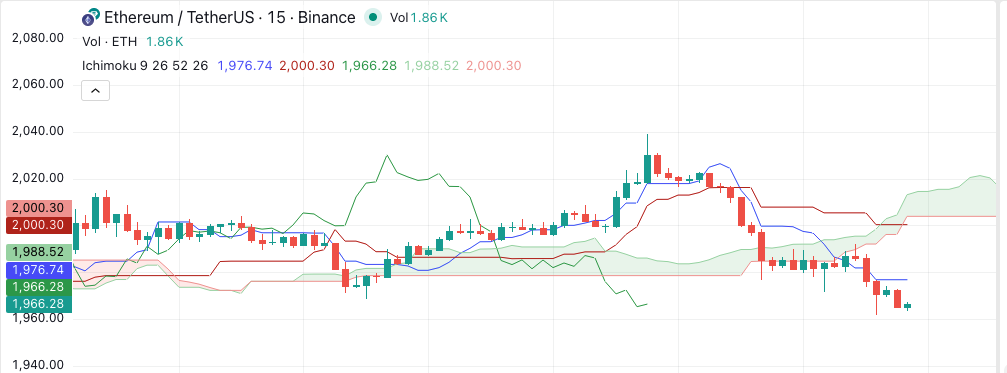
Mastering the Ichimoku Cloud for Algorithmic Trading
The Ichimoku Cloud, also known as Ichimoku Kinko Hyo, is a powerful and comprehensive technical analysis tool that provides traders with a wealth of information about trend direction, momentum, and potential support and resistance levels. Developed in the late 1930s by Japanese journalist Goichi Hosoda, the Ichimoku Cloud has gained widespread popularity among traders worldwide, particularly in forex and cryptocurrency markets. This advanced indicator stands out for its ability to offer a holistic view of market conditions at a glance. By combining multiple components, the Ichimoku Cloud helps traders identify trends, gauge momentum, and spot potential entry and exit points. Its versatility makes it particularly valuable for algorithmic trading, where multiple factors can be analyzed simultaneously to make informed trading decisions. Algo traders appreciate the Ichimoku Cloud for its ability to generate clear signals and adapt to different market conditions. When implemented correctly in automated strategies, it can provide a robust framework for trend identification, risk management, and trade execution.
How Does Ichimoku Cloud Work?
The Ichimoku Cloud consists of five main components, each calculated based on historical price data:
- Tenkan-sen (Conversion Line): (9-period high + 9-period low) / 2
- Kijun-sen (Base Line): (26-period high + 26-period low) / 2
- Senkou Span A (Leading Span A): (Tenkan-sen + Kijun-sen) / 2, plotted 26 periods ahead
- Senkou Span B (Leading Span B): (52-period high + 52-period low) / 2, plotted 26 periods ahead
- Chikou Span (Lagging Span): Current closing price, plotted 26 periods behind
The calculation process follows these steps:
- Calculate the Tenkan-sen and Kijun-sen based on recent price data.
- Determine Senkou Span A using the average of Tenkan-sen and Kijun-sen.
- Calculate Senkou Span B using the 52-period high and low.
- Project Senkou Span A and B 26 periods into the future to form the “cloud.”
- Plot the current closing price 26 periods in the past as the Chikou Span.
Visually, the Ichimoku Cloud appears as a series of lines on a price chart, with the area between Senkou Span A and B filled to create the characteristic “cloud” shape. The cloud changes color depending on which span is on top, typically green when Span A is higher (bullish) and red when Span B is higher (bearish). Key parameters in the Ichimoku Cloud are the periods used for calculations (9, 26, and 52). These can be adjusted, but the standard settings work well across various markets and timeframes. The Ichimoku Cloud measures multiple aspects of price action: - Trend direction and strength (cloud color and position relative to price) - Momentum (Tenkan-sen and Kijun-sen crossovers) - Support and resistance levels (cloud boundaries) - Price equilibrium (Kijun-sen)
How to Read Ichimoku Cloud Signals?
Reading the Ichimoku Cloud involves analyzing the relationships between its components and price: Trend Direction:
- Bullish when price is above the cloud
- Bearish when price is below the cloud
- Trendless or transitioning when price is within the cloud
Momentum:
- Strong when Tenkan-sen is above Kijun-sen
- Weak when Tenkan-sen is below Kijun-sen
Support/Resistance:
- The cloud acts as dynamic support in uptrends and resistance in downtrends
Common trading signals include:
- Buy Signal: Price moves above the cloud, Tenkan-sen crosses above Kijun-sen, and Chikou Span is above price from 26 periods ago.
- Sell Signal: Price moves below the cloud, Tenkan-sen crosses below Kijun-sen, and Chikou Span is below price from 26 periods ago.
Signal strength can be assessed by: - The distance between price and the cloud - The thickness and color consistency of the cloud - Alignment of multiple Ichimoku components (e.g., all bullish or all bearish) Traders should also watch for: - Cloud Twist: When Senkou Span A and B cross, indicating a potential trend change - Kijun-sen Crossover: Price crossing the Kijun-sen can signal short-term trend shifts - Chikou Span Position: Confirms trend strength when aligned with current price direction
What Are the Best Ichimoku Cloud Trading Strategies?
Here are two specific trading strategies using the Ichimoku Cloud:
1. Trend Following Strategy
Entry Rules: - Price closes above/below the cloud - Tenkan-sen is above/below Kijun-sen - Chikou Span is above/below price from 26 periods ago Exit Rules: - Price closes on the opposite side of the cloud - Tenkan-sen crosses Kijun-sen in the opposite direction Example: Imagine BTC/USD trading at $30,000. The cloud is below the price at $28,000-$29,000, Tenkan-sen ($30,100) is above Kijun-sen ($29,800), and Chikou Span ($30,000) is above the price from 26 periods ago ($27,500). This setup would trigger a long entry.
2. Momentum Breakout Strategy
Entry Rules: - Price breaks above/below the Kijun-sen - Cloud is thin or twisting, indicating potential trend change - Chikou Span is not obstructed by price from 26 periods ago Exit Rules: - Price touches the opposite edge of the cloud - Tenkan-sen crosses Kijun-sen in the opposite direction Example: Consider ETH/USD at $2,000, with Kijun-sen at $1,980. The cloud is thin and twisting between $1,950-$2,020, and Chikou Span ($2,000) is above price from 26 periods ago ($1,900). A break above $1,980 would trigger a long entry. Best Timeframes: The Ichimoku Cloud works well on various timeframes, but many traders prefer the 4-hour or daily charts for trend identification and the 1-hour chart for entry timing. Market Conditions: The Ichimoku Cloud excels in trending markets but can provide false signals in choppy, range-bound conditions. It’s less reliable in extremely volatile markets or during major news events.
Implementation in Algo Trading
To integrate the Ichimoku Cloud into algorithmic strategies:
- Calculate all components of the indicator for each new price data point.
- Implement logic to identify cloud position relative to price, Tenkan-sen/Kijun-sen crossovers, and Chikou Span position.
- Create conditions that combine multiple Ichimoku signals for stronger trade setups.
- Use cloud boundaries as dynamic support/resistance for stop-loss and take-profit levels.
- Incorporate timeframe analysis by checking Ichimoku signals on multiple timeframes simultaneously.
When backtesting: - Ensure sufficient historical data (at least 52 periods) for accurate cloud formation. - Test across various market conditions to assess strategy robustness. - Pay attention to slippage, especially when using cloud boundaries for trade management. Common pitfalls to avoid: - Over-reliance on a single Ichimoku component - Ignoring overall market context and complementary indicators - Failing to account for the lag in Chikou Span and future cloud projections Optimization tips: - Experiment with different period settings for various assets or timeframes. - Combine Ichimoku signals with volume indicators or oscillators for confirmation. - Use the cloud for position sizing, increasing exposure when price is further from the cloud in the trend direction.
Building with Arrow Algo’s Block Builder
Implementing Ichimoku Cloud strategies using Arrow Algo’s NO-CODE block builder is straightforward and intuitive:
- Start by dragging the Ichimoku Cloud indicator block into your strategy workspace.
- Configure the indicator parameters (9, 26, 52) using the visual settings panel - no coding required.
- Add condition blocks to check for specific Ichimoku signals:
- Price above/below cloud
- Tenkan-sen and Kijun-sen crossovers
- Chikou Span position relative to price
- Connect these condition blocks to trading logic blocks for entries and exits.
- Use math blocks to calculate dynamic stop-loss and take-profit levels based on cloud thickness or distance from price.
- Incorporate timeframe analysis by adding multiple Ichimoku Cloud blocks set to different timeframes.
- Utilize Arrow Algo’s built-in backtesting tools to evaluate your strategy’s performance across various market conditions.
The visual nature of Arrow Algo’s platform allows you to easily experiment with different Ichimoku-based strategies, combining various signals and fine-tuning parameters without writing a single line of code.
Conclusion
The Ichimoku Cloud is a powerful tool for algorithmic traders, offering a comprehensive view of market trends, momentum, and potential support/resistance levels. By understanding its components and implementing thoughtful strategies, traders can leverage the Ichimoku Cloud to make informed decisions in various market conditions. Key takeaways: - Use multiple Ichimoku components for stronger signals - Combine with other indicators for confirmation - Be aware of limitations in choppy or highly volatile markets - Regularly optimize and backtest strategies When implemented correctly in algorithmic trading systems, the Ichimoku Cloud can provide a robust framework for trend identification, risk management, and trade execution across various timeframes and markets. Ready to build your own strategies using Ichimoku Cloud? Visit https://www.arrowalgo.com to start creating custom indicator-based strategies with Arrow Algo’s NO-CODE block builder platform.
Disclaimer: Algorithmic trading involves substantial risk. Past performance is not indicative of future results. This content is for educational purposes only and should not be considered financial advice. Always do your own research and consider consulting with a financial advisor before making trading decisions.
Educational disclaimer: This content is for educational purposes only and does not constitute financial advice. Trading involves significant risk and you should only trade with capital you can afford to lose. Past performance is not indicative of future results.