
Ichimoku TK Cross Strategy: How to Build It in Arrow Algo
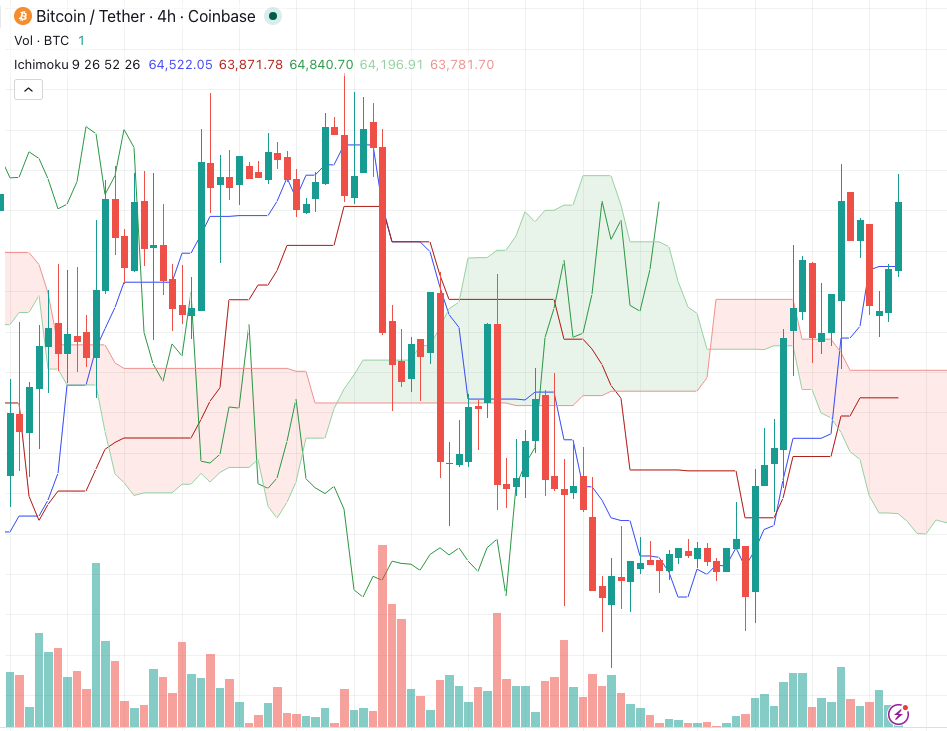
The Ichimoku TK cross strategy trades the crossover between the Tenkan-sen and Kijun-sen — the two fastest-moving lines in the Ichimoku system. Yesterday we covered trading the cloud itself in our Ichimoku Cloud strategy guide. The TK cross is the timing engine that sits on top of it: earlier than a cloud breakout, but only reliable when you grade each signal by where it fires.
What Is the Ichimoku TK Cross Strategy?
An Ichimoku TK cross strategy enters when the Tenkan-sen (the faster line) crosses the Kijun-sen (the slower line). A bullish cross — Tenkan crossing above Kijun — signals that short-term momentum has turned up against the medium-term baseline. A bearish cross signals the opposite.
It works like a moving average crossover, but with a twist. Ichimoku lines are built from price midpoints rather than averages. That makes them react to the range of recent price action, not just its mean. The result is a crossover that respects recent highs and lows.
How Do the Tenkan and Kijun Lines Work?
The Tenkan-sen is the midpoint of the highest high and lowest low over the last 9 periods. The Kijun-sen is the same midpoint taken over 26 periods. Neither is a moving average — a single new high or low shifts them instantly.
The Kijun acts as an equilibrium line. Price far above it tends to snap back; price hugging it signals balance. The Tenkan tracks the short-term swing. When the fast midpoint overtakes the slow one, the market’s recent range has genuinely shifted — which is what the cross detects, as Investopedia’s Ichimoku overview explains.
How Strong Is a TK Cross Signal?
Traditional Ichimoku analysis grades every cross by its position relative to the cloud:
- Strong signal. A bullish cross that fires above the cloud, in the direction of the established trend. These carry the best follow-through.
- Neutral signal. A cross that fires inside the cloud. Trend context is unclear, so conviction is lower.
- Weak signal. A bullish cross below the cloud — a counter-trend bounce until proven otherwise. Most losing TK cross trades come from treating these like strong signals.
This grading system is what separates the TK cross from a plain moving average crossover. The cloud gives every signal a context score for free.
Three Ways to Trade the TK Cross
1. Strong-Signal Trend Entry
Only take bullish crosses that occur above the cloud, and bearish crosses below it. This single filter removes the majority of chop-driven false signals. Exit on the opposite cross, or when price closes back inside the cloud.
2. TK Cross Timing With a Cloud Regime Filter
Use the cloud to set the regime and the cross to time entries within it. While price holds above a bullish cloud, treat every bullish TK cross as a pullback entry into the trend. Ignore bearish crosses entirely — they become exit signals only.
3. The Kijun Bounce Combination
Wait for price to pull back to the Kijun-sen in an uptrend, then enter on the next bullish TK cross. The Kijun touch shows the pullback reached equilibrium. The cross confirms momentum has turned back up. Fewer trades, better locations.
What Trips Up TK Cross Traders?
- Taking every cross. In a sideways market the lines braid around each other and generate constant false signals. Grade by cloud position, always.
- Ignoring the flat Kijun. A horizontal Kijun-sen means the 26-period range hasn’t moved — there is no trend to join, whatever the cross says.
- Trading crosses against a fresh breakout. After a vertical move, the Tenkan stretches far from the Kijun. The eventual bearish cross is usually consolidation, not reversal.
- Skipping the backtest. The 9/26 defaults predate 24/7 markets. Test them against alternatives on your pair and timeframe before going live.
How Can You Build a TK Cross Strategy in Arrow Algo?
Arrow Algo’s no-code Ichimoku block exposes the Tenkan-sen, Kijun-sen and both cloud spans as separate outputs, so the whole system assembles visually:
- Drag the Ichimoku block onto the canvas and connect your price feed.
- Add a crossover block watching the Tenkan and Kijun outputs — it fires the moment the fast line crosses the slow one.
- Add a condition requiring price above both cloud spans, so only strong signals pass.
- Combine the crossover and the cloud filter, then connect the result to your buy order.
- Use the opposite cross as your exit, and backtest the whole strategy on live exchange data from Binance, Coinbase or HyperLiquid.
No formulas, no code — the same grading logic professional Ichimoku traders apply by eye, running automatically 24/7.
What Are the Key Takeaways?
- The Ichimoku TK cross strategy trades the Tenkan/Kijun crossover — a midpoint-based signal, not a moving average one.
- Grade every cross by cloud position: above-cloud bullish crosses are strong, inside-cloud neutral, below-cloud weak.
- The cloud filter is what turns a noisy crossover into a tradeable system.
- Watch for flat Kijun lines and post-breakout stretch — both produce misleading crosses.
- Arrow Algo’s visual builder lets you assemble, filter and backtest the full TK cross system without writing code.
Disclaimer: This content is for educational purposes only and does not constitute financial advice. Trading involves significant risk and you should only trade with capital you can afford to lose. Past performance is not indicative of future results. Always conduct your own research before making any trading decisions.
Ready to build your own automated trading strategies without writing a single line of code? Start for free at Arrow Algo and join thousands of traders who’ve made the switch to systematic trading.