
Market Regime Detection: Adapt Your Algo Strategy
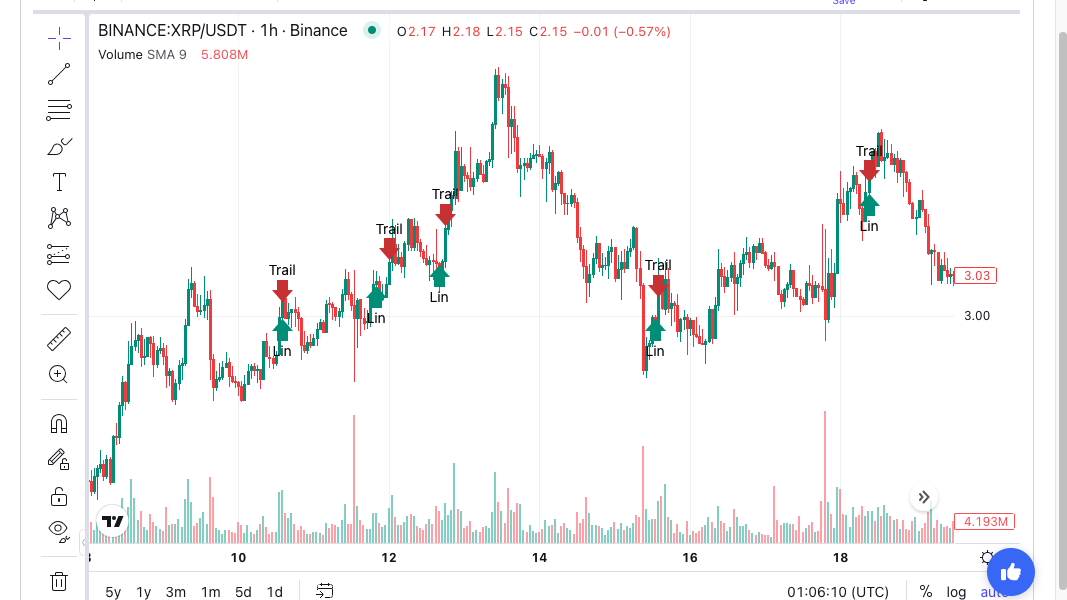
Market regime detection is one of the most powerful — and most underused — concepts in algorithmic trading. Understanding what type of market you are operating in fundamentally changes which strategies will profit, which will fail, and how risk should be managed. Systematic traders who can identify market regimes automatically are able to adapt their strategies in real time, rather than discovering underperformance weeks after the fact.
What Is Market Regime Detection?
Market regime detection is the process of classifying current market conditions into a defined state — such as a trending market, a ranging market, or a high-volatility market — so that trading strategies can be adjusted accordingly. Markets do not behave uniformly across time. The same indicator settings and strategy rules that generate strong returns in a trending environment will often produce consistent losses when the market is ranging, and vice versa.
Rather than applying a one-size-fits-all approach, traders who use market regime detection build their algorithms to first ask: “What kind of market is this?” — before deciding whether or how to trade.
Why Does Market Regime Detection Matter?
Many algorithmic trading strategies are unknowingly optimised for a specific market condition. A momentum strategy, for example, performs well in trending markets but suffers significant drawdowns when price oscillates without direction. A mean-reversion strategy profits from that oscillation but loses heavily when a trend breaks out and keeps running.
Without market regime detection, a trader might backtest a strategy over a period dominated by trends, see excellent results, and deploy it live — only to encounter an extended ranging period that destroys performance. Regime detection acts as a filter. It switches strategies on and off based on whether current conditions match what they were designed for, protecting capital during unfavourable periods.
What Are the Main Market Regimes?
Trending Markets
In a trending regime, price moves persistently in one direction. Higher highs and higher lows define an uptrend; lower highs and lower lows define a downtrend. Trending markets reward momentum-based approaches: ride breakouts, hold with the trend, and exit when momentum fades. The Average Directional Index (ADX) is one of the most reliable tools for detecting trending regimes — an ADX reading above 25 is widely used as the threshold for a directional market.
Ranging Markets
In a ranging regime, price bounces between a well-defined support and resistance band without establishing a clear directional bias. Mean-reversion strategies thrive here: buy near support, sell near resistance. Oscillators like RSI and Stochastic RSI are more useful in ranging conditions than trend-following tools. The key risk is a breakout — when price finally escapes the range, a mean-reversion strategy can be caught badly on the wrong side of a sharp move.
High-Volatility Markets
High-volatility regimes are defined by large, rapid price swings in both directions. These conditions often follow major economic announcements, regulatory events, or macro shocks. Both trend-following and mean-reversion strategies can struggle in high-volatility regimes, as signals become unreliable and stop-losses are triggered before trades have time to develop. Many systematic traders reduce position sizes substantially — or exit the market entirely — during these periods, preserving capital until conditions normalise. The Average True Range (ATR) is the most practical tool for measuring whether volatility has expanded beyond its historical average.
How Do Algorithmic Traders Detect Market Regimes?
Several technical methods can classify market regimes. These can be applied individually or in combination for greater accuracy.
- ADX threshold: ADX above 25 indicates a trending market; below 20 typically signals a ranging or directionless environment. The zone between 20 and 25 is transitional — many traders reduce activity until a regime becomes clear.
- Moving average slope: When a 50-period EMA is rising steadily, the market is trending. A flat or oscillating moving average suggests a range. The steepness of the slope can also indicate trend strength.
- ATR comparison: Comparing current ATR to its historical average reveals whether volatility is expanding or contracting. Rapidly expanding ATR can signal an imminent regime shift — either a trend beginning or a volatility spike.
- Bollinger Band width: Narrow Bollinger Bands indicate low volatility and compressed price action — often a precursor to a breakout. Wide bands signal active, volatile conditions where range-trading becomes risky.
- Price structure: Identifying higher highs and higher lows (uptrend) or lower highs and lower lows (downtrend) is the most direct regime check. Automating this logic in a strategy requires defining swing high and swing low conditions precisely.
How to Apply Market Regime Detection in Arrow Algo?
Arrow Algo’s no-code visual block builder makes it possible to incorporate market regime detection directly into strategies without writing any code. You can use the ADX indicator block as a regime filter: add a condition that only activates your strategy when ADX is above or below a threshold you set.
For a complete regime-switching approach, build two separate strategy layers in Arrow Algo — one designed for trending conditions and one for ranging conditions. Add an ADX condition block to each: the trending strategy activates when ADX is above 25, and the ranging strategy activates when ADX is below 20. During the transition zone between 20 and 25, neither strategy runs, reducing exposure during ambiguous conditions.
Pair this with ATR-based position sizing to ensure trade size automatically scales down when volatility is elevated, protecting capital during unpredictable regime transitions. Arrow Algo’s backtesting engine lets you test this entire regime-switching logic across years of historical exchange data — so you can see exactly how each filter improves strategy performance before going live.
What Are the Key Takeaways?
- Market regime detection classifies market conditions — trending, ranging, or volatile — so strategies can adapt automatically
- Applying a single strategy across all market conditions is one of the most common causes of inconsistent performance in algorithmic trading
- ADX, moving average slope, ATR, and Bollinger Band width are the most practical tools for regime classification
- Regime-filtered strategies reduce unnecessary trades and drawdowns during unfavourable market conditions
- In Arrow Algo, you can build regime detection directly into your no-code strategy using condition blocks — no programming required
- Always backtest regime-filtered strategies across multiple market types to confirm they perform as intended in each condition
For further reading, see Investopedia’s overview of market conditions and sentiment and the CME Group’s research on adaptive algorithmic trading.
Educational disclaimer: This content is for educational purposes only and does not constitute financial advice. Trading involves significant risk and you should only trade with capital you can afford to lose. Past performance is not indicative of future results.
Disclaimer: The information provided in this article is for educational purposes only and does not constitute financial advice. Trading involves significant risk and you should only trade with capital you can afford to lose. Past performance is not indicative of future results. Always conduct your own research before making any trading decisions.
Ready to build your own automated trading strategies without writing a single line of code? Start for free at Arrow Algo and join thousands of traders who’ve made the switch to systematic trading.