
Order Types: Choose the Right Execution for Every Trade
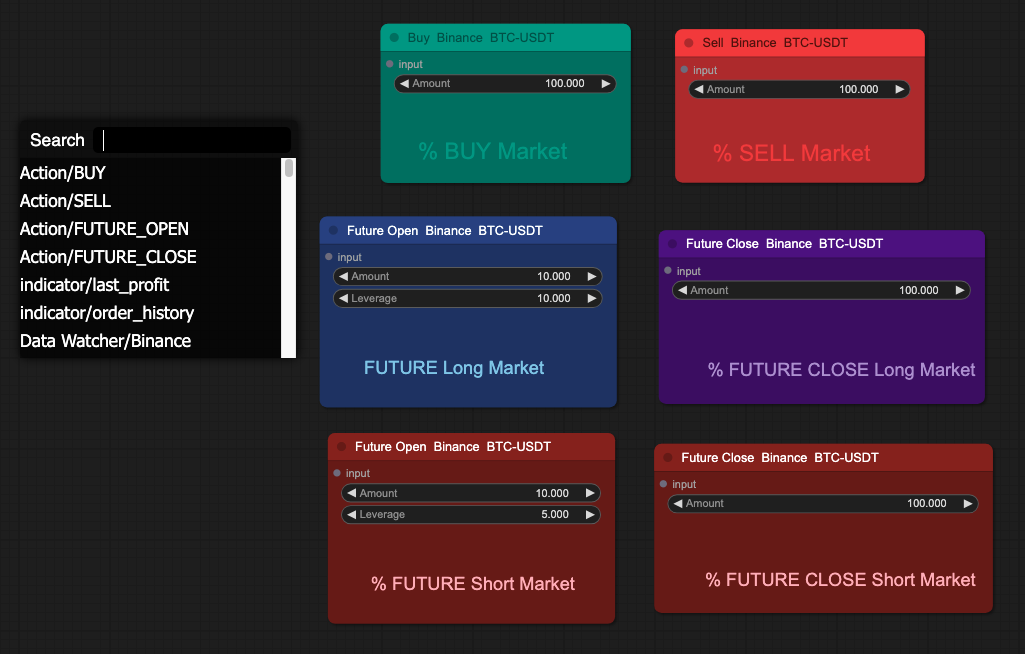
Order types are the instructions you give an exchange to execute your trades, and choosing the right one can make the difference between a clean entry and unnecessary slippage. Every algorithmic trading strategy depends on precise execution, and understanding how market orders, limit orders, and conditional orders behave is essential for building strategies that perform in live markets the way they do in backtests.
What Are Order Types in Trading?
Order types are standardised instructions that tell an exchange how, when, and at what price to execute a trade. The simplest is a market order, which buys or sells immediately at the best available price. More advanced order types add conditions — a specific price, a time limit, or a trigger event — that give traders greater control over execution quality and risk.
For algorithmic traders, order types are not just a technicality. They are a core part of strategy design. The wrong order type can cause a strategy to fill at unfavourable prices, miss entries entirely, or accumulate slippage costs that erode returns over hundreds of trades.
Why Do Order Types Matter for Algorithmic Trading?
In manual trading, you can watch the order book and adjust in real time. In algorithmic trading, your strategy must decide the order type in advance based on rules. This makes the choice critical for three reasons.
First, execution speed versus price control. Market orders guarantee a fill but not a price. Limit orders guarantee a price but not a fill. Every strategy must balance this trade-off based on whether missing a trade or getting a bad price is more costly.
Second, slippage accumulates. A strategy that trades 500 times per year with 0.1% average slippage per trade loses roughly 50% of its edge to execution costs alone. Choosing limit orders where appropriate can cut this dramatically.
Third, order types affect backtest realism. Most backtests assume perfect fills at the closing price. In live trading, market orders fill at whatever price is available, and limit orders may not fill at all. Understanding this gap is essential for strategies that survive the transition from backtest to live.
What Are the Main Order Types?
Market orders execute immediately at the best available price. They are ideal when getting into or out of a position quickly matters more than the exact fill price — for example, when a stop-loss triggers during a fast-moving sell-off. The downside is that in low-liquidity conditions or during volatile moves, the fill price can differ significantly from the price you expected.
Limit orders set a maximum buy price or minimum sell price. The order only fills at that price or better. Limit orders are preferred for entries where you want to buy on a pullback to a specific level, or for position sizing where precision matters. The risk is that the price may never reach your limit, and the trade never executes.
Stop orders become active only when a specified trigger price is reached. A stop-loss order triggers a market order to sell when price drops below a threshold, protecting against large losses. A stop-limit order triggers a limit order instead, giving price control but risking non-execution during fast crashes.
Conditional orders combine multiple conditions before executing. For example, an order that only triggers when RSI drops below 30 and price is above the 200-day moving average. In algorithmic trading, these conditions are typically handled by the strategy logic itself rather than the exchange order type.
How Should You Choose Order Types for Your Strategy?
The right order type depends on your strategy’s goals. Scalping strategies that need immediate fills should default to market orders, accepting the slippage cost as a price of speed. Swing trading strategies with wider profit targets can afford to use limit orders for entries, since the cost of missing one trade is low compared to the benefit of better average fill prices across hundreds of trades.
For exits, the decision often comes down to risk tolerance. Stop-loss orders should almost always be market orders to guarantee execution during sharp moves. Take-profit orders can be limit orders, since you are in no rush to exit a winning position at a worse price.
A common approach in algorithmic trading is to use market orders for all entries and exits during backtesting, then switch to limit orders with a small offset (a few ticks above or below the signal price) in live trading to capture the fill improvement without missing too many trades.
How to Apply Order Types in Arrow Algo
Arrow Algo’s visual block builder lets you select order types directly in your action blocks. When you add a Buy, Sell, Future Open, or Future Close block, you can choose between Market and Limit execution. For limit orders, you connect a price input from your data source or indicator blocks to set the exact fill price.
This means you can build strategies that use market orders for stop-loss exits (guaranteeing the exit happens) while using limit orders for entries (improving your average fill price). Arrow Algo backtests both order types so you can compare execution quality before going live.
What Are the Key Takeaways?
- Market orders guarantee execution but not price — use them when speed matters most
- Limit orders guarantee price but not execution — use them when precision matters most
- Stop-loss orders should typically be market orders to ensure they trigger during fast moves
- Slippage from order type choice compounds across hundreds of trades and can erode strategy returns significantly
- The gap between backtest fills and live fills is one of the biggest sources of strategy underperformance
- Test both order types in backtesting to understand their impact on your specific strategy
Educational disclaimer: This content is for educational purposes only and does not constitute financial advice. Trading involves significant risk and you should only trade with capital you can afford to lose. Past performance is not indicative of future results.
Disclaimer: The information provided in this article is for educational purposes only and does not constitute financial advice. Trading involves significant risk and you should only trade with capital you can afford to lose. Past performance is not indicative of future results. Always conduct your own research before making any trading decisions.
Ready to build your own automated trading strategies without writing a single line of code? Start for free at Arrow Algo and join thousands of traders who’ve made the switch to systematic trading.