
Rate of Change Ratio (ROCR): Complete Guide for Algorithmic Trading
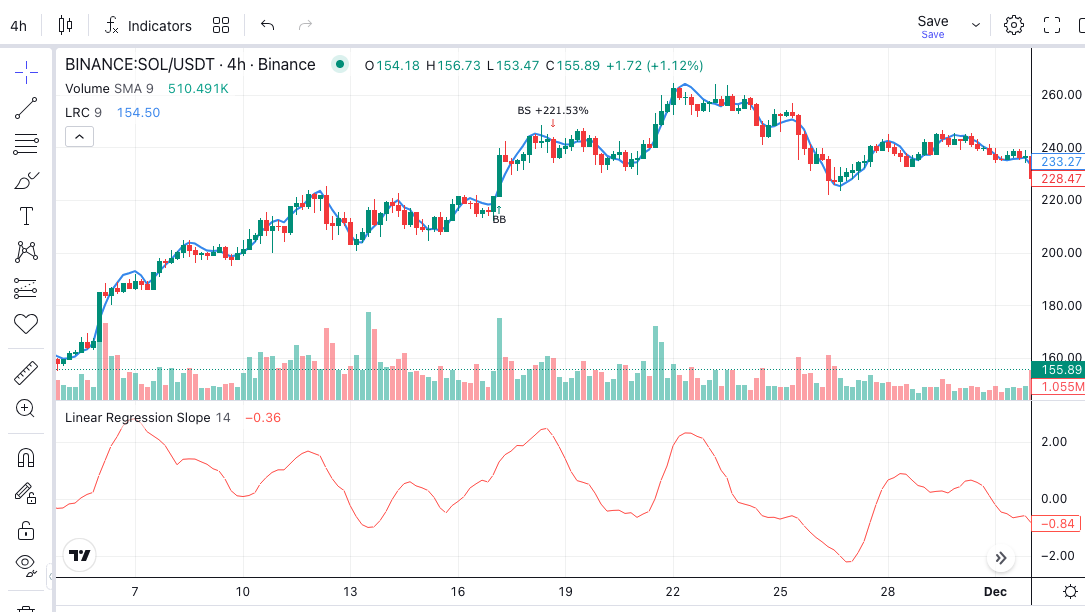
The Rate of Change Ratio (ROCR) is a momentum indicator that compares the current closing price to a closing price from a defined number of periods ago — expressed as a ratio rather than a percentage. Where the standard Rate of Change (ROC) indicator subtracts the past price and shows a difference, ROCR divides by it and shows how many times larger the current price is. That distinction changes how the indicator behaves and makes it easier to compare across assets at different price levels.
What Is the Rate of Change Ratio?
ROCR is a price momentum oscillator. It measures how much the current price has moved relative to where it was a set number of periods ago.
The neutral point is 1.0, not zero. A reading of 1.0 means today’s price equals the reference price — no change. A reading of 1.05 means price is 5% higher. A reading of 0.95 means it has dropped 5%.
ROCR belongs to the same family as the standard ROC, the Momentum indicator, and ROCR100 — which scales output by 100 so the neutral line becomes 100 instead of 1. All three measure price velocity. ROCR’s ratio format ensures readings are always positive, which makes it more stable when prices are low or when comparing different assets.
What Does ROCR Actually Measure?
ROCR answers one question: how does today’s price compare to the price N periods ago?
The period length controls the look-back window. A 14-period ROCR on a daily chart compares today’s close to the close 14 days ago. A 10-period ROCR on an hourly chart compares the current hour to ten hours prior.
Short periods (5–10) make ROCR reactive. It picks up changes quickly but generates more noise. Longer periods (20–30) smooth the signal and capture larger trends, but introduce lag. The right period depends on the strategy’s timeframe and target holding period.
Because the output is always a positive ratio, ROCR avoids the negative values that appear in difference-based momentum indicators. This makes it straightforward to set fixed thresholds across different assets.
How to Read ROCR Signals
The 1.0 level is the key reference point. Everything above it means the current price is higher than it was N periods ago; everything below means it is lower.
- Above 1.0: Positive momentum — price is higher than the reference period
- Below 1.0: Negative momentum — price is lower than the reference period
- Crossing 1.0 upward: Momentum turning positive — potential entry trigger
- Crossing 1.0 downward: Momentum turning negative — potential exit or short trigger
Magnitude matters. A reading of 1.15 shows stronger bullish momentum than 1.02. A reading of 0.80 shows a sharper decline than 0.99.
Divergence is one of ROCR’s most reliable signals. If price makes a new high but ROCR makes a lower high, momentum is weakening even as price rises. That divergence often precedes a reversal and is worth building detection logic around.
What Are the Best ROCR Trading Strategies?
Momentum Crossover Entries
When ROCR crosses above 1.0 after a sustained period below it, momentum has flipped from negative to positive. Systematic traders use this crossover as a long entry trigger — particularly when it coincides with a price breakout above a key resistance level or moving average.
Trend Strength Filter
ROCR works well as a confirmation layer in trend-following systems. Before allowing a long entry, require ROCR to be above 1.0. This filters out entries when momentum is negative, reducing low-quality signals in sideways or declining markets without adding much complexity to the logic.
Divergence-Based Exit Logic
When a strategy holds a long position and ROCR begins making lower highs while price continues rising, the divergence is a warning signal. Systematic traders can use this pattern to tighten stop-losses, reduce position size, or take partial profits ahead of a potential reversal.
Common ROCR Mistakes to Avoid
Using it without context. ROCR measures momentum direction only. It does not capture support and resistance, trend structure, or volume. Combine it with price structure or a trend indicator to filter low-quality signals.
Mismatching the period to the timeframe. A 5-period ROCR on a daily chart is extremely sensitive to noise. A 50-period ROCR may lag too much to be useful for entries. Test different period lengths on your specific asset and timeframe before committing.
Treating weak crossovers as strong signals. A crossover from 0.999 to 1.001 is technically above 1.0, but the momentum strength is negligible. Strong signals come from readings with meaningful distance from neutral, not just a technical line cross.
Confusing ROCR with ROCR100. ROCR100 multiplies the output by 100, shifting the neutral line to 100. Arrow Algo offers both. Make sure you know which version you have on the canvas when setting threshold values in your conditions.
How to Build ROCR Strategies in Arrow Algo
Arrow Algo includes ROCR as a native indicator block in the visual builder. Drag it onto the canvas, set the period length, and connect its output to your entry and exit logic — no code required.
A basic momentum filter looks like this in the block builder: connect the ROCR output to a comparison block set to check whether the value is above 1.0. Use that condition as a gate before allowing a long entry. Add a trend filter — such as requiring price to be above a moving average — to reduce false signals during ranging conditions.
For divergence-based exit logic, track successive ROCR peaks alongside price peaks. When ROCR makes a lower high as price makes a higher high, that triggers a tighter stop or an exit condition block.
Backtest ROCR across multiple period settings (10, 14, 20) on your target asset before deploying. ROCR behaviour varies by market and period — always validate on historical data. Arrow Algo’s backtesting engine runs tests directly on exchange data, giving you realistic results without needing to source or maintain your own datasets. Learn more at arrowalgo.com.
Key Takeaways
- ROCR compares today’s price to a past price as a ratio — neutral line is 1.0
- Values above 1.0 indicate positive momentum; values below 1.0 indicate negative momentum
- Crossovers of the 1.0 level signal momentum shifts and are commonly used as trade triggers
- Divergence between ROCR and price is one of the strongest signals the indicator produces
- Use ROCR alongside trend direction and price structure indicators — not in isolation
- Test different period lengths; sensitivity varies significantly with the setting chosen
- Build and backtest ROCR strategies visually in Arrow Algo without writing any code
Disclaimer: This content is for educational purposes only and does not constitute financial advice. Trading involves significant risk and you should only trade with capital you can afford to lose. Past performance is not indicative of future results. Always conduct your own research before making any trading decisions.
Ready to build your own automated trading strategies without writing a single line of code? Start for free at Arrow Algo and join thousands of traders who’ve made the switch to systematic trading.