
Regime Switching Strategy: Trade Every Market Condition
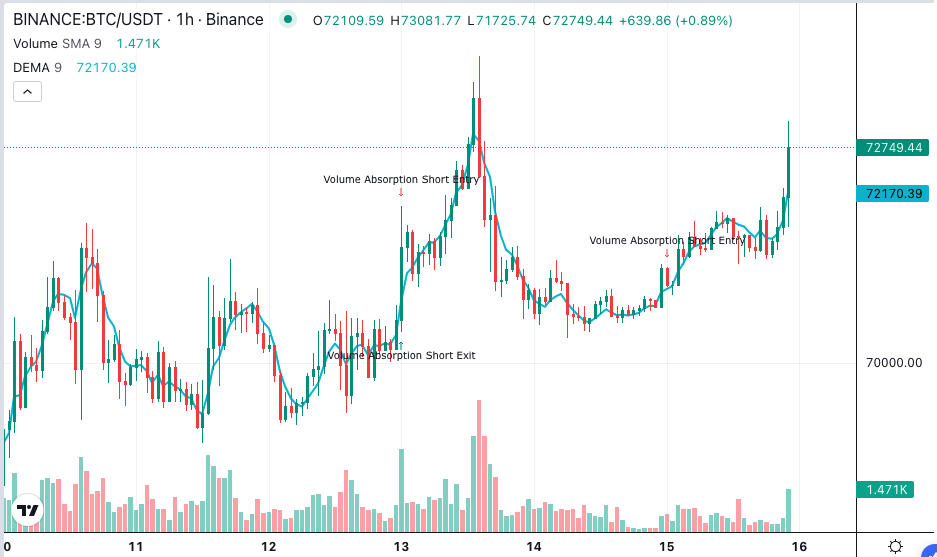
A regime switching strategy changes its trading rules based on the current market environment. Instead of applying the same logic in trending, ranging, and volatile conditions alike, it detects which state the market is in and activates the appropriate rule set automatically.
What Is a Regime Switching Strategy?
A regime switching strategy is a trading approach that uses different entry, exit, and position-sizing rules depending on the detected market state. Markets move through distinct regimes: strong trends, sideways ranges, and volatile breakout phases. Each regime rewards a different type of strategy. A regime switching framework routes signals through the correct sub-strategy for current conditions — rather than forcing a single approach onto all of them.
Why Market Regimes Matter for Systematic Traders
No single strategy performs consistently across all market conditions. A trend-following strategy produces strong results in sustained directional moves. Apply that same strategy in a sideways range and it generates a stream of small losses. A mean-reversion approach does the opposite: it thrives in ranges but bleeds in trending breakouts.
Most traders either ignore regimes entirely or try to make manual adjustments — neither approach is consistent or scalable. A regime-switching algorithm solves this by detecting conditions automatically and routing signals through the correct logic. The strategy does not need to be retrained or manually overridden as market conditions shift.
How to Detect a Market Regime
Regime detection uses indicators to classify the current market state. Common tools include:
ADX (Average Directional Index): ADX measures trend strength on a scale of 0 to 100. Above 25 generally indicates a trending market. Below 25 suggests a ranging market. A simple regime gate enables trend-following rules above this threshold and mean-reversion rules below it.
ATR (Average True Range): ATR measures price volatility. Rising ATR signals an expanding, volatile market. Low ATR signals compression or consolidation. Breakout strategies tend to perform better when volatility is expanding. Position sizes can be reduced automatically in high-ATR environments to manage risk.
EMA slope: The slope of a long-period EMA — such as the 200 EMA — classifies the broader trend as rising, falling, or flat. This provides a simple, stable regime signal without adding indicator complexity to the strategy.
Bitcoin dominance: For crypto portfolio strategies, Bitcoin dominance can act as a macro regime signal. Rising dominance often indicates capital rotating into BTC — a risk-off environment where altcoin strategies may underperform. Falling dominance suggests broader participation, where altcoin exposure performs better.
What Does a Regime Switching Strategy Look Like in Practice?
A regime switching strategy has two layers: a detection layer and a rules layer.
The detection layer continuously evaluates one or more regime indicators. It outputs a regime classification based on current readings — trending, ranging, or high volatility, for example.
The rules layer contains separate logic for each regime. When the detected regime changes, the active logic switches. Positions opened under one regime can be closed at the regime boundary, or they can continue running until their own exit conditions are met — depending on how the strategy is designed.
A basic two-regime example: when ADX is above 25, the strategy enters on EMA crossovers in the trend direction. When ADX drops below 25, it switches to Bollinger Band mean reversion — buying lower band touches and selling upper band touches. The detection layer handles the routing. Each sub-strategy only fires in its appropriate conditions. This approach builds naturally on the principles covered in our post on market regime detection.
How to Apply a Regime Switching Strategy in Arrow Algo
Arrow Algo’s drag-and-drop builder supports regime switching through condition blocks and logical gates — no code required.
Add an ADX block to your canvas and connect it to a condition block set to check whether ADX is above your threshold (e.g. 25). Connect the “true” output — the trending regime — to your trend-following entry blocks. Connect the “false” output — the ranging regime — to your mean-reversion entry blocks.
Each sub-strategy runs on its own branch of the canvas. The condition block acts as the regime gate: only one branch fires at any given time. Run the strategy through Arrow Algo’s backtester and compare the regime-switching version against each sub-strategy running in isolation. This tells you exactly how much value the switching logic is adding.
For a more advanced setup, add a second condition block gated on ATR to reduce position sizes in high-volatility regimes. Layering detection indicators builds a more robust framework without adding complexity to the trading logic itself.
What Are the Key Takeaways?
- A regime switching strategy detects the current market state and applies different trading rules for each condition
- Trending, ranging, and volatile markets reward different strategy types — a single rule set cannot serve all three
- Common detection tools: ADX for trend strength, ATR for volatility, EMA slope for trend direction
- The strategy has two layers: a detection layer that classifies conditions and a rules layer that routes signals accordingly
- Arrow Algo’s visual builder lets you build a regime-gated strategy using condition blocks — no programming required
- Backtest each sub-strategy in isolation before combining, so you understand the contribution of each regime branch
Disclaimer: This content is for educational purposes only and does not constitute financial advice. Trading involves significant risk and you should only trade with capital you can afford to lose. Past performance is not indicative of future results. Always conduct your own research before making any trading decisions.
Ready to build your own automated trading strategies without writing a single line of code? Start for free at Arrow Algo and join thousands of traders who’ve made the switch to systematic trading.