
Relative Strength Index (RSI): Complete Guide for Algorithmic Trading
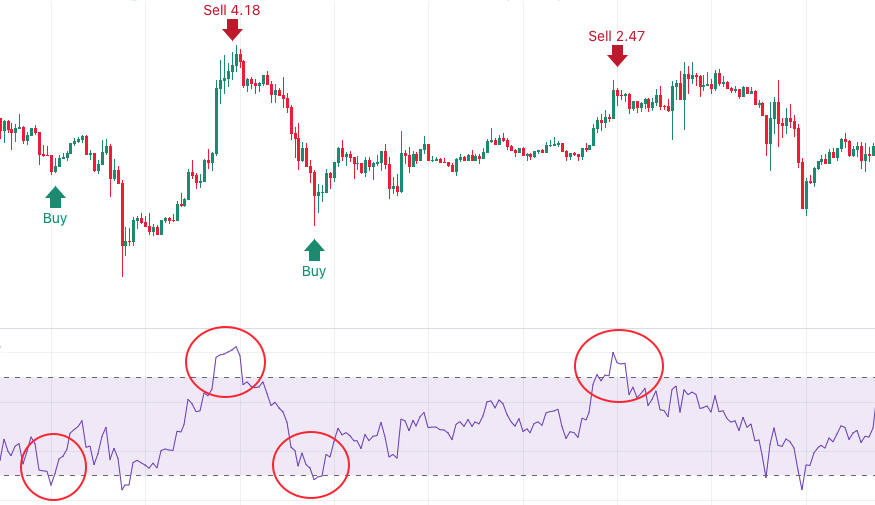
If there is one indicator that every trader encounters early in their journey, it is the Relative Strength Index (RSI). The Relative Strength Index was developed by J. Welles Wilder Jr. in 1978 and introduced in his book New Concepts in Technical Trading Systems. The Relative Strength Index has remained one of the most widely used momentum indicators in existence for algorithmic and discretionary traders alike.
What Is the Relative Strength Index?
According to Investopedia, the Relative Strength Index is a momentum oscillator that measures the speed and magnitude of recent price changes to evaluate whether an asset is overbought or oversold. It operates on a scale from 0 to 100 and is typically displayed as a line chart beneath the main price chart. The central idea is straightforward: markets do not move in a single direction indefinitely. When price rises too far, too fast, a pullback becomes increasingly likely. When price falls too far, too fast, a bounce tends to follow. RSI attempts to quantify that extremity — giving traders a numerical threshold to act on rather than relying on instinct.
How Is the Relative Strength Index Calculated?
RSI is computed over a lookback period — most commonly 14 periods (Wilder’s original recommendation), though shorter periods like 7 or 9 are used for more sensitive signals, and longer periods like 21 or 25 for smoother readings.
- Identify all closing price changes over the lookback period
- Separate the changes into gains (positive days) and losses (negative days)
- Calculate the average gain and average loss over the period
- Divide average gain by average loss to get the Relative Strength (RS)
- Apply the formula: RSI = 100 − (100 ÷ (1 + RS))
The result is a number between 0 and 100. A value near 100 means virtually every recent session has closed higher. A value near 0 means the opposite.
How to Read Relative Strength Index Signals
Overbought and Oversold Zones
The most widely used thresholds are:
- RSI above 70 — overbought. The asset has risen sharply and may be due for a pullback.
- RSI below 30 — oversold. The asset has fallen sharply and may be approaching a reversal.
Centreline Crossovers
The indicator’s 50 level acts as a midpoint. When RSI crosses above 50, momentum is broadly bullish. When it crosses below 50, momentum has shifted bearish. This is often used as a trend filter rather than a direct entry signal.
RSI Divergence
Divergence is one of RSI’s most powerful applications. It occurs when price and RSI move in opposite directions:
- Bullish divergence — price makes a lower low, but RSI makes a higher low. Suggests weakening downward momentum.
- Bearish divergence — price makes a higher high, but RSI makes a lower high. Suggests weakening upward momentum.
What Are the Best Relative Strength Index Strategies?
1. Classic Overbought/Oversold Reversal
Enter a long position when RSI drops below 30 and then crosses back above it. Exit when RSI reaches 70 or when a trailing stop is hit. This works well in ranging markets but can produce false signals in strong trends.
2. RSI as a Trend Filter
Use the Relative Strength Index to filter trade direction — only take long entries when RSI is above 50, and only take short entries when below 50. Combined with a moving average, this reduces counter-trend trades significantly.
3. RSI Divergence Strategy
Look for price making a new high while RSI fails to match it (bearish divergence), then enter short once price begins to pull back. This approach tends to identify genuine turning points rather than minor retracements.
What Are Common Relative Strength Index Mistakes to Avoid?
- Using RSI in isolation during trending markets. In a strong uptrend, the Relative Strength Index can remain overbought for days or weeks.
- Ignoring timeframe context. An RSI reading of 28 on a 1-minute chart carries far less significance than on a daily chart.
- Over-optimising the period. Backtesting to find the “perfect” RSI period tends to produce results that don’t hold in live conditions.
- Missing divergence confirmation. Divergence alone is not an entry signal — price must begin to confirm the reversal before acting.
Building Relative Strength Index Strategies in Arrow Algo
Arrow Algo’s visual block builder makes it straightforward to incorporate the Relative Strength Index into a fully automated strategy without writing a single line of code. Using the drag-and-drop interface you can:
- Add an RSI block and configure the period, overbought threshold, and oversold threshold directly in the settings panel
- Connect it to an Entry Condition block — for example, triggering a buy signal when the Relative Strength Index crosses back above 30
- Pair it with a Moving Average block as a trend filter, so RSI entries only fire in bullish context
- Set an Exit Condition based on RSI reaching 70, or combine with a fixed take-profit and stop-loss
- Run the full strategy through backtesting across historical data before committing any capital
What Are the Key Takeaways?
- RSI measures momentum on a 0–100 scale; above 70 is overbought, below 30 is oversold
- The 14-period setting is the standard starting point
- RSI works best as a filter or confirmation tool, not in isolation
- Divergence between RSI and price is one of its most reliable signals
- In trending markets, RSI can stay extreme for extended periods — always use trend context
- Arrow Algo’s visual builder lets you automate RSI strategies and backtest them before going live
Disclaimer: The information provided in this article is for educational purposes only and does not constitute financial advice. Trading involves significant risk and you should only trade with capital you can afford to lose. Past performance is not indicative of future results. Always conduct your own research before making any trading decisions. Ready to build your own RSI-powered trading strategies without writing a single line of code? Start for free at Arrow Algo and put the Relative Strength Index to work in a fully automated, backtested system.
Educational disclaimer: This content is for educational purposes only and does not constitute financial advice. Trading involves significant risk and you should only trade with capital you can afford to lose. Past performance is not indicative of future results.