
Revenge Trading: Why It Happens and How to Stop It
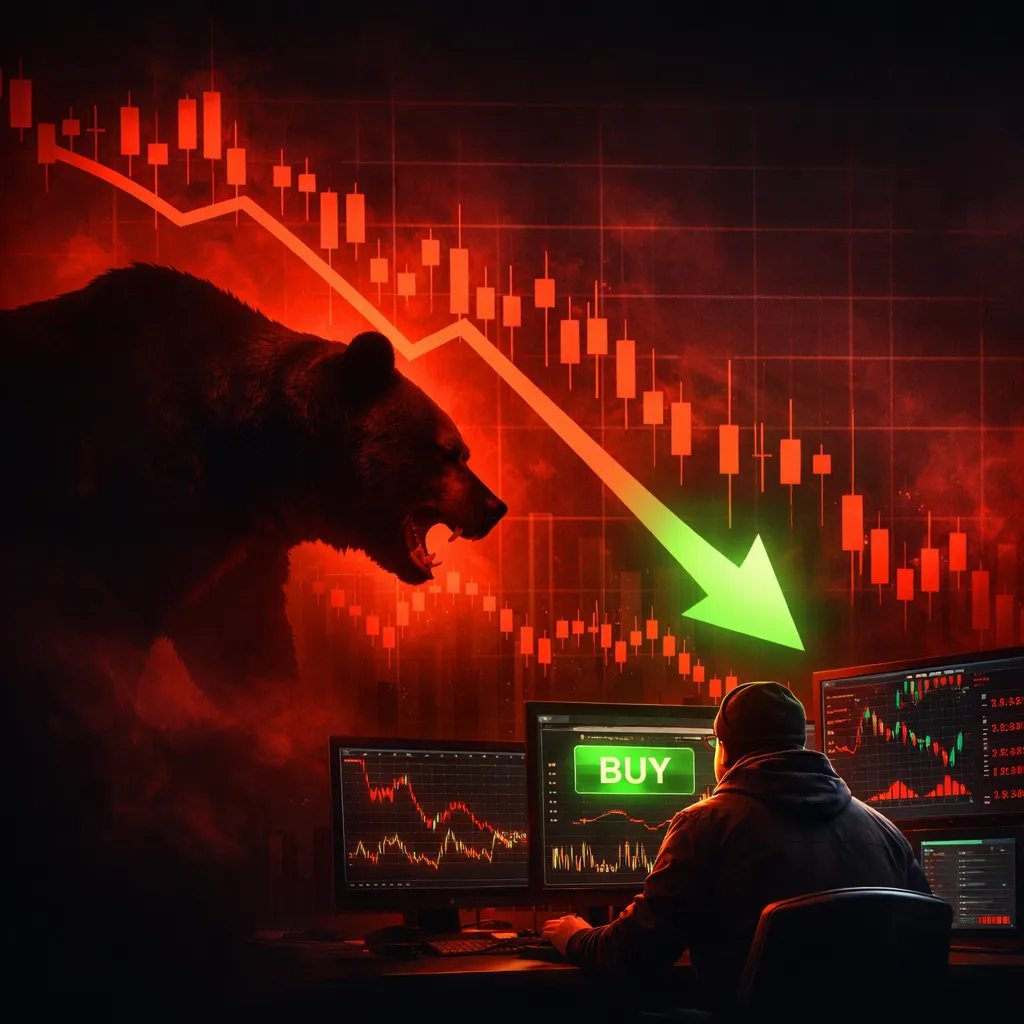
Revenge trading is what happens in the minutes after a painful loss: you jump straight back into the market — bigger size, weaker setup — to win the money back and make the discomfort stop. It is one of the most expensive behaviours in trading, and one of the most universal. Almost nobody blows up an account on a single bad trade. Accounts die in the frantic hour after the bad trade.
What Is Revenge Trading?
Revenge trading is entering new positions to recover a recent loss rather than because your strategy produced a signal. The market becomes an opponent to beat instead of a probability field to navigate. The defining feature is that the loss, not the setup, is driving the decision — which means the trade would not exist if the previous one had won.
Why Does It Happen?
The engine underneath is loss aversion: losses hurt roughly twice as much as equivalent gains feel good. A fresh loss creates a psychological open wound that the brain wants closed now, and the only thing that closes it is getting the money back. Add adrenaline and time pressure and you get what poker players call tilt — decision-making hijacked by emotion while feeling completely rational from the inside. Research on loss aversion shows people reliably take more risk when trying to escape a loss than when protecting a gain. That inversion is exactly backwards for survival, and exactly what revenge trading runs on.
The Telltale Signs
Revenge trading rarely announces itself. It disguises itself as determination. The pattern is recognisable from the outside:
- Size jumps after a loss. The recovery trade is 2-3x normal risk, because normal size would take too long to get back to even.
- The setup quality drops. Entries appear that your own rules would never have flagged an hour earlier.
- Time between trades collapses. A disciplined two-trades-a-day rhythm becomes eight trades in ninety minutes — a fast lane into overtrading.
- The reference point is the loss, not the chart. You are watching your P&L, not the market.
What Does It Cost?
The arithmetic is merciless. A trader risking 1% per trade takes a normal loss. Tilted, they risk 4% to recover it — and lose again, because the setup was forced. Now they are down 5% and the emotional pressure has quadrupled. Two more cycles of this and a routine losing day has become a 15-20% drawdown that takes months to rebuild. As we showed in the losing streaks post, consecutive losses are statistically guaranteed — so a behaviour that triggers on losses and escalates risk is a behaviour that will eventually meet the streak that ends the account.
How Do You Break the Cycle?
- Pre-commit to a daily loss limit. Decide in calm conditions: down X%, done for the day. The rule must exist before the loss does.
- Impose a cooldown. No new position within a set time after a losing trade. Even 30 minutes lets the chemistry settle.
- Fix position size mechanically. Size derived from a formula cannot be tripled by a feeling.
- Journal the aftermath, not just the trade. Recording what you did in the hour after each loss makes the pattern visible — and patterns you can see, you can interrupt.
How Arrow Algo Removes Revenge Trading Entirely
Every fix above is a rule — and rules are exactly what an algorithm is. When your strategy runs as visual blocks in Arrow Algo, the entry conditions, position size, and stop are executed identically after a loss as after a win, because the system does not know it is “supposed” to feel anything. It cannot double size to get even. It cannot force a setup that is not there. The emotional trade simply has no mechanism through which to happen. This is the deepest argument for systematic trading, one we explored in why algorithms beat emotions: automation is not about speed, it is about protecting the strategy from its owner at the exact moments the owner is least trustworthy.
What Should You Take Away?
- Revenge trading is loss-driven, not signal-driven — the trade exists only because the previous one lost.
- Loss aversion makes people take more risk to escape losses; that is the behaviour’s engine.
- The damage comes from escalation: oversized recovery trades converting a routine loss into a deep drawdown.
- Loss limits, cooldowns, and mechanical sizing break the cycle — if they are set before the loss.
- Building your strategy as an automated system in Arrow Algo removes the behaviour at the root: the rules cannot tilt.
Disclaimer: This content is for educational purposes only and does not constitute financial advice. Trading involves significant risk and you should only trade with capital you can afford to lose. Past performance is not indicative of future results. Always conduct your own research before making any trading decisions.
Ready to build your own automated trading strategies without writing a single line of code? Start for free at Arrow Algo and join thousands of traders who’ve made the switch to systematic trading.