
Seasonal Trading Strategy: How to Exploit Recurring Market Patterns
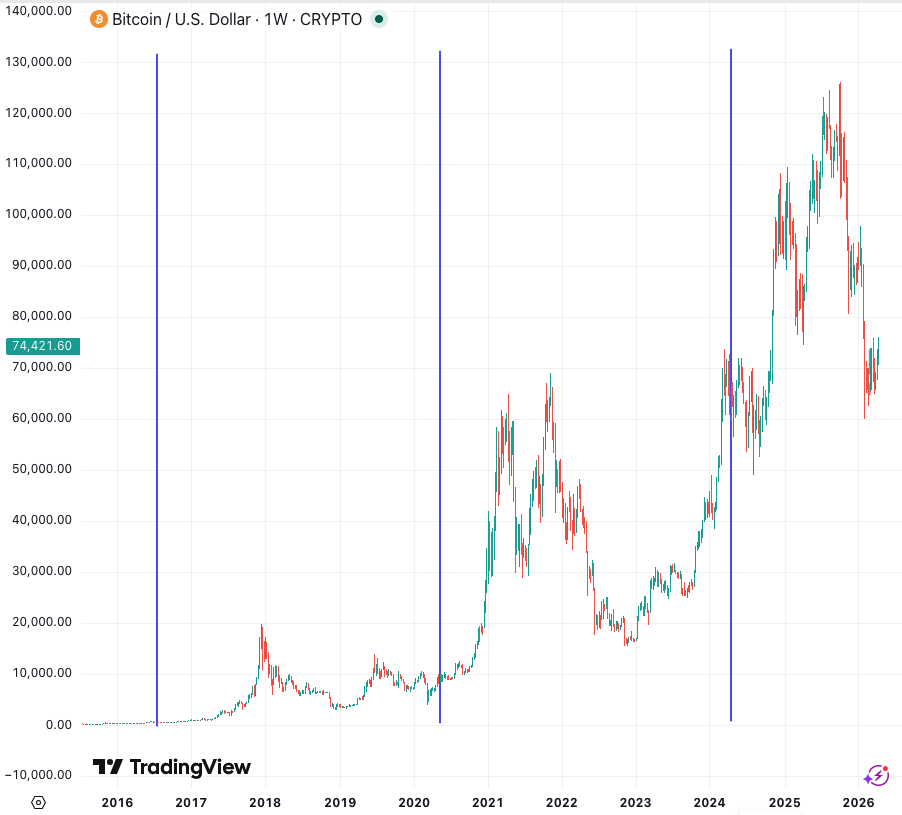
A seasonal trading strategy exploits recurring patterns that appear at predictable times — specific hours of the day, days of the week, or months of the year. These patterns exist because market participants consistently behave in similar ways at the same points on the calendar, and systematic traders can build rules to capture these tendencies automatically.
What Is a Seasonal Trading Strategy?
A seasonal trading strategy is a systematic approach that uses time-based patterns as entry filters. Instead of reacting to price action in real time, the strategy enters trades at specific calendar points where historical data shows a statistical edge.
In crypto, this includes intraday patterns (certain hours showing higher average returns), weekly patterns (specific days tending to trend or range), and monthly patterns (end-of-month positioning, options expiry effects, or recurring funding rate cycles). The pattern does not have to be perfectly reliable — just consistent enough across a large historical sample to provide a statistical edge when combined with other conditions.
Why Seasonality Exists in Markets
Markets are made of people with predictable routines. Institutional traders have reporting deadlines, portfolio rebalancing schedules, and funding obligations at consistent points on the calendar. Retail traders respond to news cycles that repeat weekly. Options and futures expiry creates predictable end-of-period positioning pressure.
In crypto specifically, funding rates on perpetual contracts reset at regular intervals. Exchange volumes consistently peak during US and European trading hours. Weekend sessions carry lower liquidity and can amplify moves in either direction. None of these effects are permanent or guaranteed. They are tendencies — and tendencies, measured carefully across a large data set, can form the basis of a systematic edge.
What Seasonal Patterns Are Most Reliable?
Time-of-day patterns
Crypto markets show higher volatility and volume during the European and US trading overlap — roughly 13:00 to 17:00 UTC. Momentum and breakout strategies often perform better in this window than in the Asian session, which tends to be quieter. A time filter restricting entries to this window can improve risk-adjusted returns for strategies that depend on volume to execute cleanly.
Day-of-week patterns
Weekend sessions show structurally different behaviour from weekdays — lower volume, wider spreads, and larger moves on thinner order books. Some strategies underperform on weekends not because the logic is wrong but because the market conditions are different. Restricting entries to weekdays is a simple filter worth testing on any live strategy.
Monthly patterns
End-of-month periods tend to see increased volatility as institutional portfolios are rebalanced and derivatives expire. The first few days of a new month historically show positive bias in Bitcoin and equities — often called the turn-of-the-month effect. Monthly options expiry on platforms like Deribit creates positioning pressure that produces predictable short-term moves around the expiry date.
Funding rate cycles
Perpetual contract funding rates settle every 8 hours. When funding is persistently high (longs paying shorts), it creates systematic pressure for a short-term pullback as over-leveraged longs are squeezed. When funding turns negative (shorts paying longs), the reverse applies. Using funding rate direction as an entry filter is a form of seasonality specific to crypto derivatives.
How to Test a Seasonal Pattern Before Trading It
The risk with seasonal patterns is data snooping — finding something that looks compelling because you tested it on the same data you used to discover it. A few hours showing higher average returns does not constitute an edge. You need a large sample and out-of-sample validation.
The correct approach: identify the pattern on one segment of historical data, then test whether it holds on a separate out-of-sample period the strategy was never exposed to. If the pattern exists in both, the evidence is meaningful. If it only appears in the discovery data, it is likely noise. Also check whether the pattern holds across multiple assets — a time-of-day edge that shows up consistently on BTC, ETH, and SOL simultaneously is far more credible than one appearing on a single pair.
For a deeper look at avoiding this problem, see the guide on market regime detection — understanding which conditions a pattern thrives in helps separate genuine edges from statistical accidents.
How to Apply Seasonal Trading Strategy in Arrow Algo
Arrow Algo’s no-code block builder includes a Time Filter block that makes seasonal entries straightforward to build. Here is the practical setup:
- Add a TimeFilter block — set the start and end hours for your target window (for example, 13:00–17:00 UTC for the European-US overlap)
- Connect the TimeFilter to an AND gate — your existing entry signal conditions feed into the same AND gate. The entry only fires when both the time window is active and the signal conditions are met
- Add a day-of-week filter if needed — use a comparison block to check the current day and exclude Saturday and Sunday entries if your backtest shows weekend performance is weaker
- Run two backtests side by side — one with the time filter active, one without. Compare risk-adjusted returns to measure exactly what the seasonal filter adds. If it improves performance without dramatically cutting trade count, it earns its place in the strategy
Seasonal filters work best as an addition to an existing strategy, not a standalone entry trigger. They improve the quality of setups your primary logic already generates — not replace that logic entirely.
Key Takeaways
- A seasonal trading strategy uses recurring time-based patterns — time of day, day of week, monthly cycles — as entry and exit filters
- Seasonality exists because participants have predictable routines: institutional rebalancing, options expiry, funding rate cycles, and volume concentration in specific windows
- The most reliable crypto seasonal patterns include the European-US trading overlap (13:00–17:00 UTC), weekday vs weekend behaviour differences, and end-of-month derivatives expiry effects
- Always validate seasonal patterns on out-of-sample data — a pattern that only appears in the data you discovered it in is likely noise
- In Arrow Algo, use the TimeFilter block to restrict entries to your target window and connect it to your existing strategy logic via an AND gate
Disclaimer: This content is for educational purposes only and does not constitute financial advice. Trading involves significant risk and you should only trade with capital you can afford to lose. Past performance is not indicative of future results. Always conduct your own research before making any trading decisions.
Ready to build your own automated trading strategies without writing a single line of code? Start for free at Arrow Algo and join thousands of traders who’ve made the switch to systematic trading.