
Rate of Change (ROC): Complete Guide for Algorithmic Trading
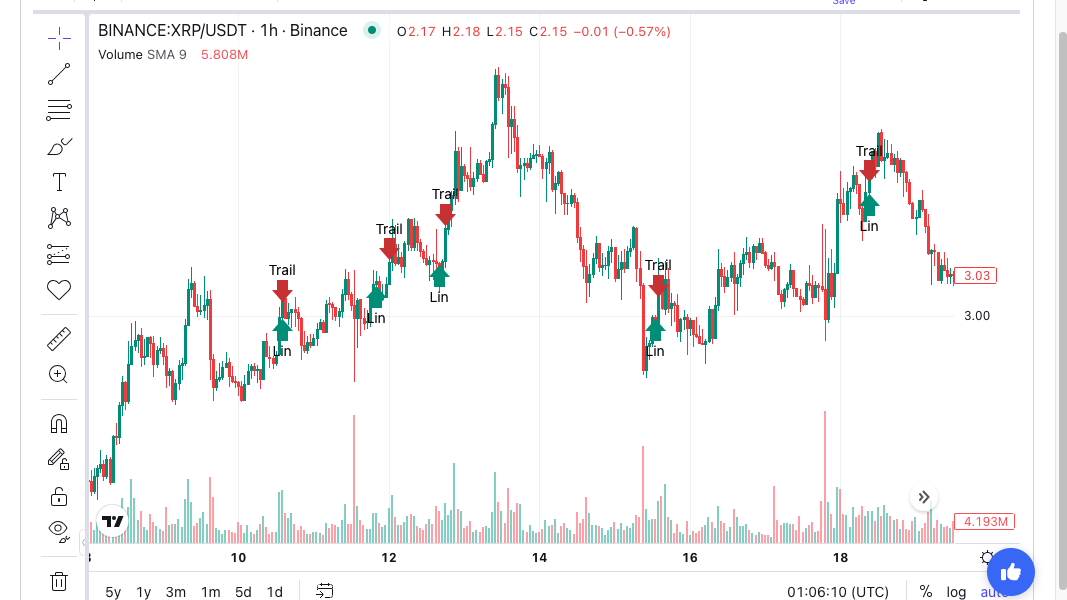
Most momentum indicators are built on the same underlying question: is price moving faster or slower than it was before? The Rate of Change (ROC) answers that question as directly as possible — no smoothing, no lag from averages, just a straightforward measurement of how much price has changed over a defined period. For algorithmic traders, ROC is one of the cleanest momentum signals available: easy to calculate, easy to interpret, and highly effective when applied correctly.
What Is the Rate of Change (ROC) Indicator?
The Rate of Change indicator is a momentum oscillator that measures the percentage difference between the current closing price and the closing price a set number of periods ago. A reading above zero means price is higher than it was N periods ago — positive momentum. A reading below zero means price is lower — negative momentum. The further the reading from zero in either direction, the stronger the momentum.
Developed and popularised by technical analysts including Gerald Appel, ROC is one of the foundational momentum indicators in technical analysis. Unlike RSI or Stochastic, it has no upper or lower boundary — it can reach any value, which makes it particularly useful for identifying the strength of a trend rather than just its direction.
How Is the Rate of Change Calculated?
The calculation is deliberately transparent. For a 12-period ROC:
- Take today’s closing price
- Subtract the closing price from 12 periods ago
- Divide the result by the closing price from 12 periods ago
- Multiply by 100 to express as a percentage
A result of +8 means price today is 8% higher than it was 12 periods ago. A result of -5 means price is 5% lower. The most commonly used periods are 9, 12, and 25, as StockCharts documents in detail — shorter periods produce more sensitive, noisier signals; longer periods reveal slower, more reliable momentum shifts. The 12-period daily ROC is the most widely used default for swing trading.
How to Read Rate of Change Signals?
The Zero Line
The zero line is the most fundamental reference point. When ROC crosses above zero, price has climbed above where it was N periods ago — momentum has turned positive and a trend may be beginning. When ROC crosses below zero, momentum has turned negative. Zero-line crossovers are often used as entry signals for trend-following strategies.
Overbought and Oversold Extremes
Unlike RSI or Stochastic, ROC has no fixed overbought/oversold thresholds because the values depend on the asset’s typical volatility. For Bitcoin trading at a 12-period daily ROC, a reading above +20 often indicates an overextended move, while a reading below -15 often signals oversold conditions — but these levels need to be calibrated to the specific asset using historical data. The key is to identify extreme readings relative to the asset’s own historical range, not a universal threshold.
Divergence
ROC divergence is one of its most powerful signals. When price makes a new high but ROC makes a lower high, bullish momentum is weakening — a potential trend reversal warning. When price makes a new low but ROC makes a higher low, bearish momentum is fading. Divergence signals from ROC tend to be early, making them most useful as a preparation alert rather than an immediate entry trigger.
What Are the Best Rate of Change Trading Strategies?
1. Zero-Line Crossover Strategy
Enter a long position when the 12-period ROC crosses above zero after a period of negative readings. Exit when ROC crosses back below zero. This strategy works well in trending markets and aligns entries with the early stages of a momentum shift. The main risk is frequent false crossovers in choppy conditions — pairing with an ADX filter (only taking signals when ADX is above 25) significantly reduces false entries.
2. Momentum Continuation
Look for ROC pulling back toward zero after a strong positive reading, then bouncing back upward without crossing below zero. This “pullback to zero” is a classic momentum continuation pattern that offers better entry timing than chasing a breakout. The entry triggers when ROC turns back up from near zero while the overall trend is still intact.
3. Extreme Reading Reversal
When ROC reaches an unusually high positive extreme for the asset being traded, begin looking for reversal setups. ROC will typically roll over and start declining before price does, giving systematic traders an early warning to tighten stops or prepare for an exit. This is most reliable when combined with a confirming signal from a second indicator such as RSI or a moving average crossover.
What Are Common Rate of Change Mistakes to Avoid?
- Using fixed overbought/oversold levels across all assets. ROC’s scale depends entirely on the asset’s volatility. A reading of +15 may be extreme for a stable equity but unremarkable for a volatile crypto asset. Always calibrate levels to the specific market being traded.
- Acting on zero-line crossovers alone in ranging markets. In a sideways market, ROC will cross zero repeatedly without meaningful trend information. Always confirm with a trend filter before acting on crossover signals.
- Ignoring the period length. A 9-period ROC and a 25-period ROC will produce very different signals on the same chart. The shorter the period, the more noise. The longer the period, the more lag. Match the period to your holding timeframe.
- Confusing ROC with percentage return. ROC measures the percentage change in price, not the return on a position. A ROC of +10 means price is 10% higher than N periods ago — it does not mean you would have made 10% on a trade.
How to Build Rate of Change Strategies in Arrow Algo?
Arrow Algo’s visual block builder makes it straightforward to construct and backtest ROC-based strategies without writing any code. Using the drag-and-drop interface you can:
- Add a Rate of Change block and set your preferred period (12 is a solid default) — the output is the ROC value for each bar, ready to connect to entry and exit conditions
- Create an Entry Condition block that triggers when ROC crosses above zero, with an option to require that it has been below zero for at least 3 consecutive bars before crossing — reducing false signals from brief oscillations
- Add an ADX filter block to restrict entries to trending conditions, ensuring ROC signals are only acted upon when a genuine trend is in progress
- Set a divergence detection by comparing ROC highs to price highs across rolling windows — identifying momentum fading before price confirms it
- Run the complete strategy through backtesting against historical exchange data to calibrate the overbought/oversold thresholds specific to your chosen asset and timeframe
- Test different period settings (9, 12, 25) side-by-side in separate backtests to understand which produces the most consistent signals for your trading style
What Are the Key Takeaways?
- The Rate of Change indicator measures the percentage price change over a defined lookback period — above zero means positive momentum, below zero means negative
- The zero-line crossover is the primary signal; divergence between ROC and price is an early reversal warning
- ROC has no fixed overbought/oversold levels — calibrate extremes to the specific asset using historical data
- Pair with ADX to avoid false signals in ranging markets
- Shorter periods are more sensitive; longer periods are more reliable — match the period to your holding timeframe
- Arrow Algo’s visual builder lets you automate ROC strategies and backtest period and threshold settings before going live
Educational disclaimer: This content is for educational purposes only and does not constitute financial advice. Trading involves significant risk and you should only trade with capital you can afford to lose. Past performance is not indicative of future results.
Disclaimer: The information provided in this article is for educational purposes only and does not constitute financial advice. Trading involves significant risk and you should only trade with capital you can afford to lose. Past performance is not indicative of future results. Always conduct your own research before making any trading decisions.
Ready to build your own automated trading strategies without writing a single line of code? Start for free at Arrow Algo and join thousands of traders who’ve made the switch to systematic trading.