
Simple Moving Average (SMA): Complete Guide for Algorithmic Trading
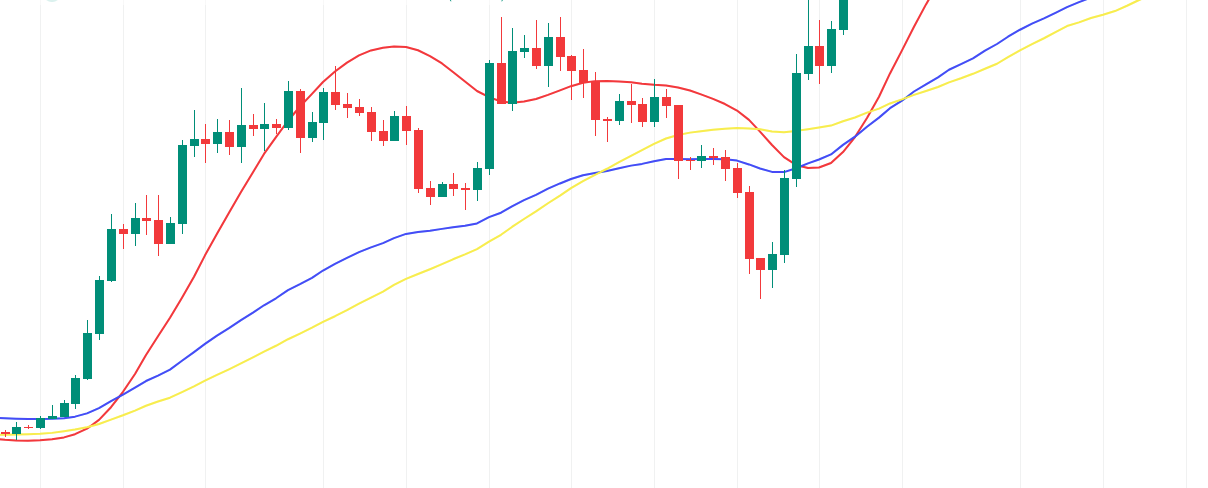
Simple Moving Average (SMA): A Comprehensive Guide for Algorithmic Traders
Introduction
The Simple Moving Average (SMA) is a fundamental and widely-used technical indicator in the world of trading. As one of the oldest and most straightforward tools available to traders, the SMA has stood the test of time due to its effectiveness and versatility. Developed in the early 20th century, this indicator has been a staple for generations of traders seeking to identify trends and potential entry or exit points in various financial markets. The SMA calculates the average price of an asset over a specified number of periods, creating a smoothed line that helps traders visualize the overall price direction. Its simplicity makes it accessible to beginners, while its adaptability allows experienced traders to incorporate it into sophisticated strategies. In algorithmic trading, the SMA serves as a cornerstone for many automated strategies. Its ease of calculation and clear signals make it an ideal component for computerized decision-making processes. Whether used for trend identification, support and resistance levels, or as part of more complex indicator combinations, the SMA provides valuable insights that can be easily integrated into algorithmic trading systems.
How It Works
Mathematical Formula
The Simple Moving Average is calculated using the following formula: SMA = (P1 + P2 + … + Pn) / n Where: - P1, P2, …, Pn are the prices for each period - n is the number of periods
Calculation Process
- Choose the number of periods (n) for your SMA
- Collect the closing prices for the last n periods
- Sum up all the prices
- Divide the sum by the number of periods (n)
- Plot the resulting value on the chart
- Repeat this process for each new period, dropping the oldest price and adding the newest
Visual Description
On a price chart, the SMA appears as a single smooth line that follows the general direction of price movement. This line tends to lag behind the actual price action, as it’s based on historical data. The SMA line will be less volatile than the price itself, providing a clearer view of the overall trend.
Key Parameters
The primary parameter for the SMA is the number of periods used in the calculation. Common choices include:
- 10-period SMA: Short-term trend
- 50-period SMA: Medium-term trend
- 200-period SMA: Long-term trend
The choice of period affects the sensitivity of the SMA. Shorter periods result in a more responsive line that stays closer to the current price, while longer periods create a smoother line that reacts more slowly to price changes.
What It Measures
The SMA measures the average price over a specific timeframe, effectively smoothing out short-term price fluctuations. This allows traders to more easily identify the underlying trend direction and potential support or resistance levels.
Interpretation & Signals
Reading the Indicator
- Trend Direction: When prices are consistently above the SMA, it indicates an uptrend. Conversely, prices below the SMA suggest a downtrend.
- Trend Strength: The distance between the price and the SMA can indicate trend strength. A larger gap suggests a stronger trend.
- Trend Changes: When the price crosses above or below the SMA, it may signal a potential trend reversal or the beginning of a new trend.
Common Trading Signals
- Bullish Crossover: When a shorter-term SMA crosses above a longer-term SMA, it’s often considered a buy signal.
- Bearish Crossover: When a shorter-term SMA crosses below a longer-term SMA, it’s typically seen as a sell signal.
- Price-SMA Crossover: When the price crosses above the SMA, it can be a buy signal. Crossing below may indicate a sell signal.
- Support/Resistance: The SMA can act as dynamic support in an uptrend or resistance in a downtrend.
Divergences and Confirmations
- Trend Confirmation: When multiple SMAs (e.g., 50-day and 200-day) are aligned in the same direction, it can confirm the strength of a trend.
- Divergence: If the price is making new highs, but the SMA is not, it might indicate weakening momentum and a potential reversal.
Signal Strength Indicators
- The angle of the SMA line can indicate trend strength. A steeper angle suggests a stronger trend.
- The relationship between multiple SMAs (e.g., 10, 50, and 200-period) can provide insight into trend strength across different timeframes.
Trading Strategies
1. SMA Crossover Strategy
This strategy uses two SMAs of different periods to generate buy and sell signals. Setup: - Fast SMA: 10-period - Slow SMA: 50-period Entry Rules: - Buy when the 10-period SMA crosses above the 50-period SMA - Sell when the 10-period SMA crosses below the 50-period SMA Exit Rules: - Long positions - exit when the 10-period SMA crosses below the 50-period SMA - Short positions - exit when the 10-period SMA crosses above the 50-period SMA Best Used: - In trending markets - On daily or 4-hour charts for longer-term trades
2. Price-SMA Bounce Strategy
This strategy uses the SMA as a dynamic support/resistance level. Setup: - 50-period SMA Entry Rules: - Buy when the price pulls back to touch the 50-period SMA in an uptrend - Sell when the price rallies to touch the 50-period SMA in a downtrend Exit Rules: - Either set a stop-loss below the recent swing low for long positions - Or set a stop-loss above the recent swing high for short positions - Take profit at the next significant resistance level for longs or support level for shorts Best Used: - In strong trending markets - On 1-hour or 4-hour charts for intraday or swing trading
3. Triple SMA Strategy
This strategy uses three SMAs to confirm trends and generate signals. Setup: - Fast SMA: 5-period - Medium SMA: 20-period - Slow SMA: 50-period Entry Rules: - Buy when all three SMAs are aligned in ascending order (5 above 20 above 50) and price is above all SMAs - Sell when all three SMAs are aligned in descending order (5 below 20 below 50) and price is below all SMAs Exit Rules: - Long positions - exit when the 5-period SMA crosses below the 20-period SMA - Short positions - exit when the 5-period SMA crosses above the 20-period SMA Best Used: - In trending markets with clear direction - On daily charts for position trading or 4-hour charts for swing trading
When Not to Use SMA Strategies
- During highly volatile, choppy markets where price is moving sideways
- In markets with low liquidity, where slippage may be high
- During major news events or economic announcements that can cause erratic price movements
Implementation in Algo Trading
Integrating the SMA into algorithmic trading strategies requires careful consideration of several factors:
- Data Processing: Ensure your algorithm can efficiently calculate and update SMA values in real-time as new price data becomes available.
- Signal Generation: Define clear rules for generating buy and sell signals based on SMA crossovers or price-SMA relationships.
- Timeframe Alignment: Align the SMA periods with your trading timeframe. Shorter timeframes may require faster-moving SMAs.
- Backtesting: Thoroughly backtest your SMA-based strategies across different market conditions to assess performance.
- Optimization: Experiment with different SMA periods to find the optimal settings for your specific trading instrument and timeframe.
- Confirmation: Consider using the SMA in conjunction with other indicators or price action patterns for signal confirmation.
- Risk Management: Implement proper position sizing and stop-loss rules to manage risk, as SMA signals can sometimes be lagging.
Common pitfalls to avoid: - Over-optimization: Avoid curve-fitting by testing your strategy on out-of-sample data. - Ignoring market context: Be aware that SMA strategies may underperform in ranging or highly volatile markets. - Neglecting transaction costs: Factor in commissions and slippage, especially for strategies with frequent trades. Optimization tips: - Use walk-forward optimization to test different SMA periods across various market conditions. - Implement adaptive SMA periods that adjust based on market volatility. - Combine SMAs with volatility indicators to filter out low-quality signals during choppy markets.
Building with Arrow Algo’s Block Builder
Arrow Algo’s NO-CODE block builder makes it easy to implement SMA-based strategies without writing a single line of code. Here’s how you can use the platform to create your own SMA strategy:
- Adding the SMA Indicator: Simply drag and drop the SMA block from the indicator library into your strategy workspace.
- Configuring Parameters: Double-click the SMA block to open its settings. Here, you can visually set the period for your SMA calculation.
- Creating Multiple SMAs: To implement strategies like the SMA Crossover, drag multiple SMA blocks into your workspace and configure each with different periods.
- Setting Up Trading Logic: Use comparison blocks to create conditions based on SMA values or crossovers. For example, drag a “Greater Than” block to check if a faster SMA is above a slower SMA.
- Defining Entry and Exit Rules: Connect your SMA conditions to “Buy” and “Sell” action blocks to define when your strategy should enter or exit trades.
- Risk Management: Utilize stop-loss and take-profit blocks to manage risk and lock in profits based on your SMA signals.
- Backtesting and Optimization: Use Arrow Algo’s built-in backtesting tool to evaluate your strategy’s performance. Easily adjust SMA periods and other parameters to optimize your results.
The visual nature of Arrow Algo’s block builder allows you to quickly experiment with different SMA combinations and trading rules without any coding knowledge. This makes it ideal for both beginners looking to implement their first SMA strategy and experienced traders wanting to rapidly prototype and test complex multi-indicator systems.
Conclusion
The Simple Moving Average (SMA) is a versatile and powerful tool for algorithmic traders. Its ability to smooth out price action and identify trends makes it an essential component of many trading strategies. Key takeaways include:
- Use SMAs to identify trend direction and potential support/resistance levels
- Combine multiple SMAs for more robust trend confirmation and crossover signals
- Adapt SMA periods to your specific trading timeframe and market conditions
- Always use SMAs in conjunction with proper risk management techniques
- Be aware of the lagging nature of SMAs and consider combining them with leading indicators
To implement effective SMA strategies, focus on thorough backtesting, avoid over-optimization, and always consider the broader market context. By leveraging the power of SMAs within a well-designed algorithmic trading system, you can create robust strategies capable of navigating various market conditions. Ready to build your own strategies using Simple Moving Average (SMA)? Visit https://www.arrowalgo.com to start creating custom indicator-based strategies with Arrow Algo’s NO-CODE block builder platform.
Disclaimer: Algorithmic trading involves substantial risk. Past performance is not indicative of future results. This content is for educational purposes only and should not be considered financial advice. Always do your own research and consider consulting with a financial advisor before making trading decisions.
Educational disclaimer: This content is for educational purposes only and does not constitute financial advice. Trading involves significant risk and you should only trade with capital you can afford to lose. Past performance is not indicative of future results.