
TradingView Algo Trading: From Chart Analysis to Automated Execution
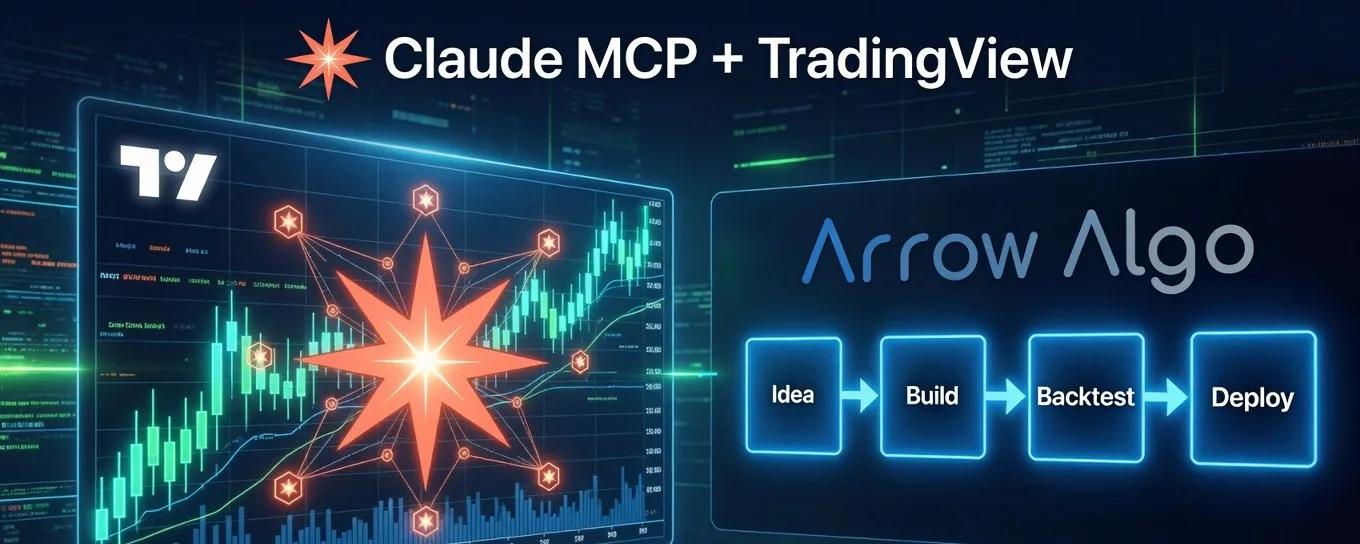
TradingView algo trading is what happens when the analysis you’ve been doing on charts finally runs automatically — entering trades, managing positions, and executing your rules 24/7 without you needing to be there. If you’ve been using TradingView to develop strategy ideas and you’re tired of executing them manually, this guide is for you.
TradingView is the most widely used charting platform in the world. Millions of traders rely on it every day. But for most of them, the strategy stays on the screen. The execution remains manual — and manual execution is where most strategies fall apart.
What Is Algo Trading and Why TradingView Traders Want It
Algorithmic trading means a computer executes your strategy automatically, based on rules you’ve defined. Instead of watching a chart and deciding when to act, the system watches for your conditions and acts on them instantly, consistently, and without the emotional interference that costs manual traders so much money.
For TradingView users, the appeal is immediate. You’ve already done the analysis. You’ve studied the indicators, identified the patterns, developed a thesis. The frustrating part is the gap between having a strategy and having it run reliably — especially when the crypto market generates signals at 3am on a Sunday and you’re not there to see them.
TradingView algo trading closes that gap. Your rules become the algorithm. The algorithm runs automatically. You stop being the weakest link in your own strategy.
The Gap Between TradingView and Live Algo Trading
TradingView is exceptionally good at visualising price data and applying analytical tools. But it isn’t built to run a strategy. It doesn’t follow your rules continuously without your involvement, or send signals to your exchange account while you sleep.
This creates a real gap. You can see the signal on TradingView. Acting on it — automatically, every time, around the clock — requires something built for execution, not analysis.
Traditional Routes to TradingView Algo Trading (And Why They’re Difficult)
Traders who’ve tried to close this gap before are familiar with the options — and their limitations.
Pine Script, TradingView’s built-in scripting language, lets you code strategies and see historical performance. But it’s a programming language. Learning it takes time, debugging it takes patience, and turning a Pine Script strategy into a live automated strategy requires additional technical infrastructure well beyond the script itself.
The webhook route — using TradingView alerts to fire signals to a server that places orders on an exchange — works in theory but requires you to build, host, and maintain that server. When something breaks during a live trade, it’s a serious problem. For traders without a technical background, this route has never been truly accessible.
The No-Code Route to TradingView Algo Trading
No-code strategy builders have fundamentally changed who can run algorithmic strategies. Instead of writing code, you build your strategy visually — connecting logical blocks together to define entry conditions, exit rules, stop-losses, and position sizing.
The indicators available in a no-code builder are the same ones TradingView users already know. Moving averages, RSI, MACD, Bollinger Bands, ATR — they’re all there as blocks you can drag onto a canvas and connect together. The logic is identical to what you’d build on TradingView. The difference is that now your rules run automatically and signal your exchange every time the conditions are met.
Arrow Algo is built for exactly this — a visual no-code strategy builder that connects directly to Binance, Bybit, Coinbase, MEXC, HyperLiquid, and BingX, running your algo trading strategies automatically around the clock.
What Real TradingView Algo Trading Looks Like
Here’s a concrete example of the workflow.
A trader has been watching Bitcoin on the 4-hour chart and noticed that a moving average crossover combined with elevated volume tends to precede strong upward moves. In a no-code builder, they drag in a crossover block, connect a volume condition, add an entry trigger, a stop-loss set to 3% below entry, a take-profit at 9%, and a position sizing block set to 2% of account per trade.
They run a backtest against 18 months of real Binance price data, including fees. The results show a profitable strategy with acceptable drawdown. They paper trade for two weeks. It performs as expected. They go live.
Now it runs automatically — through the night, over weekends, without hesitation, without emotion, without deviation from the plan.
Backtesting: The Step You Cannot Skip
One of the most important advantages of a dedicated algo builder over manual TradingView trading is access to proper backtesting on real exchange data. Testing your strategy before risking real capital isn’t optional — it’s the foundation of responsible algo trading.
A good backtest shows you how your strategy performed across different market conditions, what its worst losing streak looked like, and whether it has a genuine edge after fees. Arrow Algo’s backtester provides debug data at specific timestamps, full signal history, order logs, and walk-forward testing — the method that validates your strategy on data it was never optimised against. That’s the level of rigour that matters before going live with real money.
The Role of AI in TradingView Algo Trading
AI is accelerating how quickly traders can move from idea to live strategy. Arrow Algo has a native MCP server — a standard that lets Claude AI connect directly to the platform. Setup requires one line copied from your Arrow Algo account settings and pasted into your Claude Code terminal.
Once connected, Claude can help you build strategies inside Arrow Algo, suggest logic based on your trading ideas, and help you interpret backtest results — all in plain language, without writing any code. It’s the same conversation-based AI experience traders are excited about with TradingView, but built into a platform designed for it from the ground up.
Start Your TradingView Algo Trading Journey
The analysis you’ve been building on TradingView already contains the raw material for an automated algo trading strategy. The ideas are there. The patterns are there. What’s been missing is the bridge to an automated strategy — and that bridge is now available without writing a single line of code.
Build your first automated algo trading strategy on Arrow Algo — free to start.
Trading involves risk. Past performance is not indicative of future results. This content is for educational purposes only and does not constitute financial advice.