
USDT vs Coin-Margined Trading
USDT vs Coin-Margined Trading: What’s the Difference and Which Is Safer?
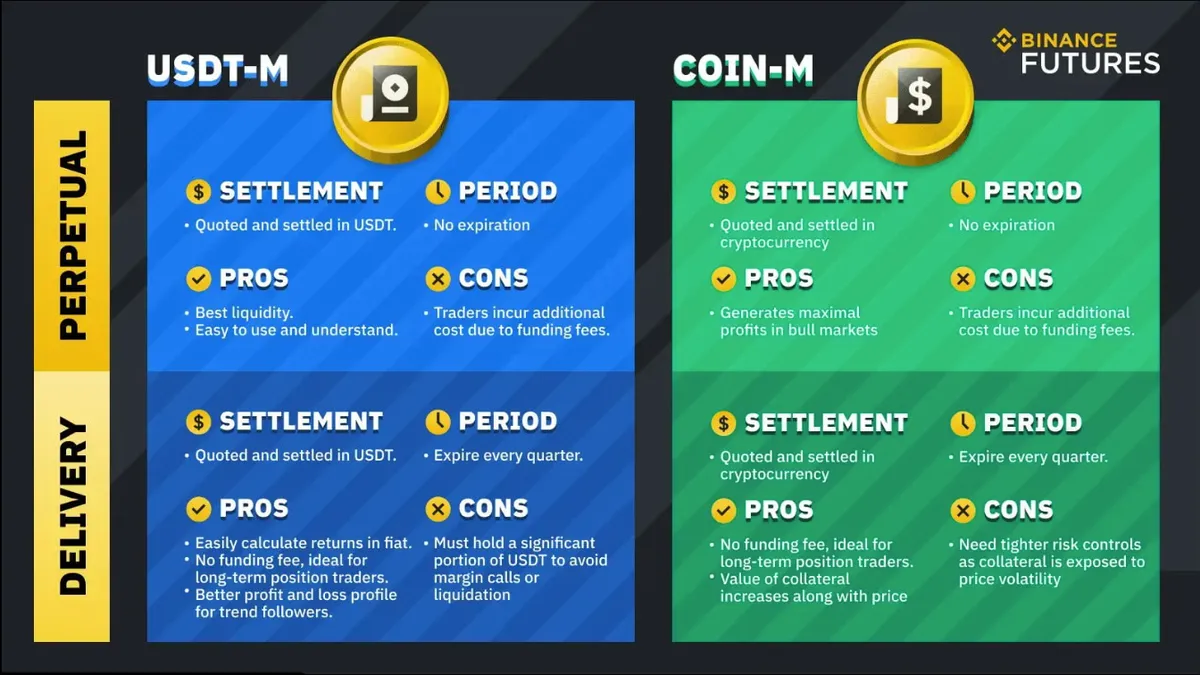
Understanding USDT vs coin-margined trading is essential for anyone using leverage in trading. This guide explains how margin type affects your risk, liquidation price, and overall strategy performance. Most traders hear the term “margin trading” and think only about leverage — but the more important difference is the type of collateral you use. In this guide, we explain the real distinction between:
- USDT/USDC-margined contracts (stablecoin collateral)
- Coin-margined contracts (collateral in BTC, ETH, XRP, etc.)
This difference affects your risk, liquidation price, profit stability, and portfolio volatility far more than your leverage setting.
🔍 What Is USDT/USDC-Margined Trading? (Stablecoin Collateral)
With USDT or USDC margined futures:
- You use stablecoins as margin
- You profit and lose in stablecoins
- Your collateral value stays stable
- Liquidation depends only on the position’s P&L
- Not on market movements of the underlying coin
This is the most popular type of margin trading today.
✔ Benefits
- Predictable P&L
- Easier risk management
- Collateral doesn’t fluctuate
- No double volatility
- Ideal for algo strategies
- Liquidation price is easier to calculate
❗ Downsides
- You miss out on large collateral appreciation runs (if the coin pumps 40%, your margin doesn’t grow automatically)
In short: Stablecoin margin is simpler, safer, and more predictable.
🪙 What Is Coin-Margined Trading? (Crypto Collateral)
With coin-margined futures:
- You post BTC, ETH, XRP, etc. as collateral
- Your P&L is also paid in the same coin
- Collateral value changes constantly
- Liquidation price increases in volatility
- You are exposed to double price risk
This is the original futures system on old-school platforms.
✔ Benefits
- If the collateral coin pumps, your margin grows
- Useful for hedging (e.g., hedge your BTC bag using BTC collateral)
- Efficient for long-term directional strategies
❗ Downsides
- If BTC/ETH/XRP drops, your collateral value falls while your position loses
- Liquidation becomes much more likely in crashes
- P&L varies based on coin price
- Much harder to model risk
- Volatile equity curve
Coin-margined contracts are riskier by design because the collateral itself is volatile.
⚖️ The Real Difference: Single Volatility vs Double Volatility
This is the key concept you explained in the video.
USDT/USDC-Margined = Single Volatility
Only the trade itself can move against you.
Coin-Margined = Double Volatility
- The trade can go against you
- The collateral can lose value
- Both can drop at the same time → faster liquidation
In a crypto crash, coin-margined positions get destroyed much more quickly because margin value collapses while your position loses money.
This is why professional traders overwhelmingly prefer USDT-margined contracts for leverage.
📉 Example: XRP Margin Comparison
Let’s say you long XRP using XRP-margined collateral:
- If XRP pumps → your margin increases → good
- If XRP dumps → your margin shrinks → liquidation becomes likely
- At the same time your long position is losing value
- You get hit from both sides
Now compare that to USDT-margined trading:
- XRP can dump
- But your USDT collateral stays stable
- No double hit
- Liquidation price remains predictable
This is why stablecoin margin is better for algo trading, trend-following, and systematic strategies.
🧠 Which Type Should You Use?
Choose USDT/USDC-Margined Trading if you want:
✔ Stable collateral
✔ Lower liquidation risk
✔ Easier risk modelling
✔ More consistent algo performance
✔ Predictable P&L
✔ Less volatility in drawdowns
Choose Coin-Margined Trading if you want:
✔ To hedge a crypto portfolio
✔ Exposure to the coin long-term
✔ To benefit from collateral appreciation
✔ You accept liquidation risk rises in crashes
Stablecoin margin suits most traders, especially algorithmic strategies.
🔬 Testing Margin Types on Arrow Algo
Arrow Algo allows you to simulate risk with different margin setups:
- Compare stablecoin vs coin collateral
- Understand liquidation risk
- See how drawdowns change
- Test the same strategy under both conditions
- Evaluate whether double volatility helps or hurts strategy performance
This gives you a complete view of margin risk before going live.
Want to simulate USDT/USDC vs Coin-Margined trading safely?
Test both instantly on Arrow Algo:
Educational disclaimer: This content is for educational purposes only and does not constitute financial advice. Trading involves significant risk and you should only trade with capital you can afford to lose. Past performance is not indicative of future results.