
Volume Analysis: Confirm Signals Before You Trade
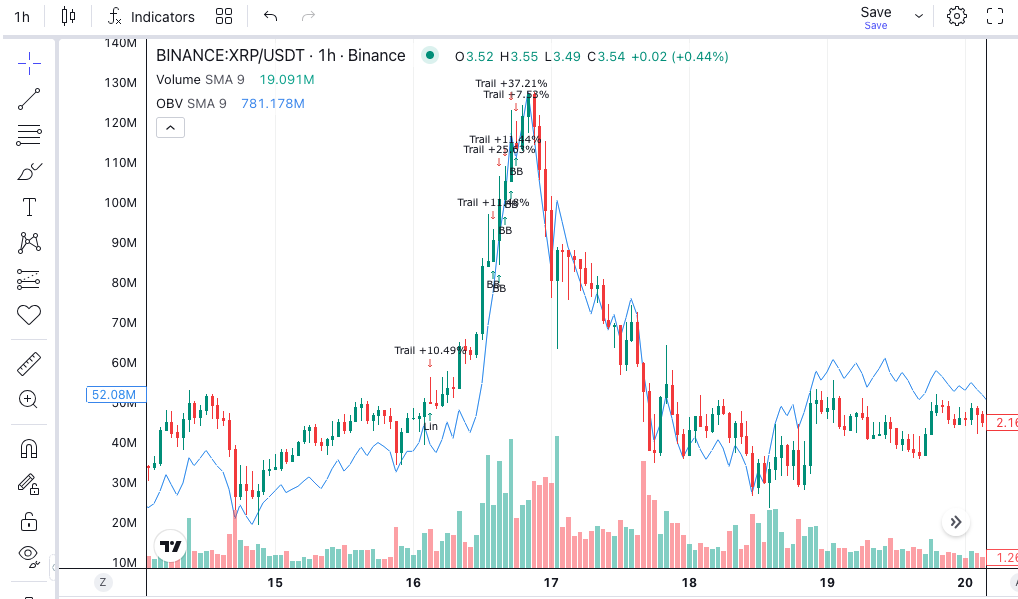
Volume analysis is one of the most overlooked yet powerful tools in a trader’s arsenal, offering critical confirmation before entering or exiting any position. While most traders fixate on price action alone, volume tells the story behind the movement — revealing whether a trend has genuine strength or is running on fumes. Understanding how to read and interpret volume can be the difference between catching a real breakout and falling for a false signal.
What Is Volume Analysis?
Volume analysis is the study of the number of units traded during a given time period to assess the strength or weakness of a price movement. In simple terms, volume measures how many buyers and sellers are actively participating in the market at any moment. High volume suggests strong interest and conviction, while low volume often signals indecision or lack of commitment from market participants.
Think of volume as the fuel behind a price move. A car can roll downhill without petrol, but it cannot climb a steep hill without it. Similarly, price can drift in a direction on thin volume, but sustaining a meaningful trend requires genuine participation — and volume analysis helps you measure exactly that.
Why Does Volume Analysis Matter in Trading?
Volume matters because it provides context that price alone cannot. Here are the three primary reasons every systematic trader should incorporate volume analysis into their decision-making process.
Volume confirms price moves. When price rises on increasing volume, it signals that buyers are stepping in with conviction. A price increase on declining volume, however, suggests the rally may be losing steam. This confirmation principle is foundational to technical analysis and helps traders avoid entering weak trends.
Volume validates breakouts. One of the most frustrating experiences in trading is buying a breakout only to watch price reverse immediately. Volume analysis acts as a filter here. A breakout accompanied by a significant volume surge is far more likely to follow through than one that occurs on average or below-average volume. According to Investopedia’s guide on volume, volume is considered one of the most reliable confirmation tools for breakout trading.
Volume reveals institutional activity. Large players cannot move in and out of positions without leaving footprints. Unusual volume spikes often indicate that institutional money is entering or exiting, which can signal the beginning or end of a significant move. The CME Group’s educational resources highlight volume as a key metric for identifying smart money participation.
What Are the Key Volume Patterns to Watch?
Successful volume analysis relies on recognising a handful of recurring patterns. Each tells a different story about market sentiment.
Volume spikes occur when trading activity surges well above the recent average. These often appear at key turning points — the start of a new trend, a breakout from consolidation, or a reversal. The key is to assess the spike in context: where did it occur relative to support, resistance, or a trend?
Climax volume refers to an extreme surge in volume that typically marks the exhaustion of a trend. After a prolonged rally, a climax volume day often signals that the last wave of buyers has entered, leaving no one left to push prices higher. This pattern frequently appears at market tops and bottoms.
Dry-up volume is the opposite — a noticeable contraction in trading activity. This often occurs during consolidation phases or just before a significant move. When volume dries up after a trend, it can signal that the trend is pausing before continuation, or that interest is fading ahead of a reversal.
Volume divergence is perhaps the most powerful pattern. This occurs when price moves in one direction while volume trends in the opposite direction. For example, if price is making higher highs but volume is making lower highs, buyers are losing enthusiasm. This bearish divergence often precedes a reversal and is a warning sign that the trend is on borrowed time.
How Do Volume Indicators Strengthen Your Strategy?
Raw volume data is useful, but volume indicators transform it into actionable signals that can be systematically applied. Several widely used tools quantify volume patterns and make them easier to integrate into an algorithmic trading strategy.
On Balance Volume (OBV) creates a running total of volume, adding volume on up days and subtracting it on down days. This creates a cumulative line that should trend with price — divergences between OBV and price are powerful early warning signals. For a complete breakdown, see our OBV guide for algorithmic trading.
VWAP (Volume Weighted Average Price) calculates the average price weighted by volume throughout a trading session. It serves as a benchmark for fair value and is particularly useful for identifying whether an asset is trading at a premium or discount relative to the day’s activity.
Volume Oscillator measures the difference between a fast and slow moving average of volume, helping traders spot shifts in participation levels before they become obvious on the chart.
Chaikin Money Flow (CMF) combines price and volume to measure the flow of money into or out of an asset over a set period. Positive CMF values suggest accumulation, while negative values indicate distribution. Our CMF guide for algorithmic trading covers this indicator in detail.
Using these indicators together creates a layered volume analysis framework that is far more reliable than any single metric.
What Are Common Volume Analysis Mistakes?
Even experienced analysts fall into traps when interpreting volume. Here are three mistakes to avoid.
Ignoring volume context. A volume spike means nothing without context. High volume during a news event is expected and may not carry the same weight as high volume during a quiet session. Always compare current volume to recent averages and consider what external factors may be at play.
Treating all volume spikes equally. Not every surge in volume is a trading signal. Some spikes are caused by liquidations, exchange maintenance windows reopening, or end-of-session rebalancing. Effective volume analysis requires filtering noise from genuine participation shifts.
Using volume in isolation. Volume is a confirmation tool, not a standalone signal generator. It should always be combined with price action, trend analysis, or other indicators. A volume spike without a corresponding price setup is just noise — and trading noise is expensive.
How to Apply Volume Analysis in Arrow Algo
Arrow Algo’s no-code visual block builder makes it straightforward to integrate volume analysis into your automated strategies — without writing a single line of code.
Start by connecting volume data watchers to your chart’s timeframe. These blocks pull live volume data directly from the exchange, giving your strategy real-time access to trading activity. From there, drag and drop volume indicator blocks like OBV, VWAP, or CMF onto your workspace and connect them to your data source.
The real power comes from combining volume conditions with price conditions using AND blocks. For example, you could build a breakout strategy that only triggers when price crosses above a resistance level AND volume exceeds its 20-period average. This two-condition approach filters out the false breakouts that trap so many traders.
You can also set up volume divergence detection by comparing the direction of your volume indicator against price trend blocks, creating a systematic early warning system that runs around the clock. Every element is configured through the drag-and-drop visual builder — no programming knowledge required.
What Are the Key Takeaways?
- Volume analysis confirms whether price moves have genuine participation behind them — without it, you are trading blind to market conviction.
- Breakouts on high volume are far more reliable than those occurring on thin activity, making volume the best false breakout filter available.
- Watch for divergences between price and volume — they are among the earliest and most reliable reversal warning signals.
- Layer multiple volume indicators such as OBV, VWAP, and CMF to build a comprehensive picture rather than relying on raw volume alone.
- Never use volume in isolation — it is a confirmation tool that works best alongside price action and trend analysis.
- Arrow Algo’s visual block builder lets you automate volume analysis by connecting data watchers, indicators, and condition blocks without any coding.
Educational disclaimer: This content is for educational purposes only and does not constitute financial advice. Trading involves significant risk and you should only trade with capital you can afford to lose. Past performance is not indicative of future results.
Disclaimer: The information provided in this article is for educational purposes only and does not constitute financial advice. Trading involves significant risk and you should only trade with capital you can afford to lose. Past performance is not indicative of future results. Always conduct your own research before making any trading decisions.
Ready to build your own automated trading strategies without writing a single line of code? Start for free at Arrow Algo and join thousands of traders who’ve made the switch to systematic trading.