
Bollinger Bands: Complete Guide for Algorithmic Trading
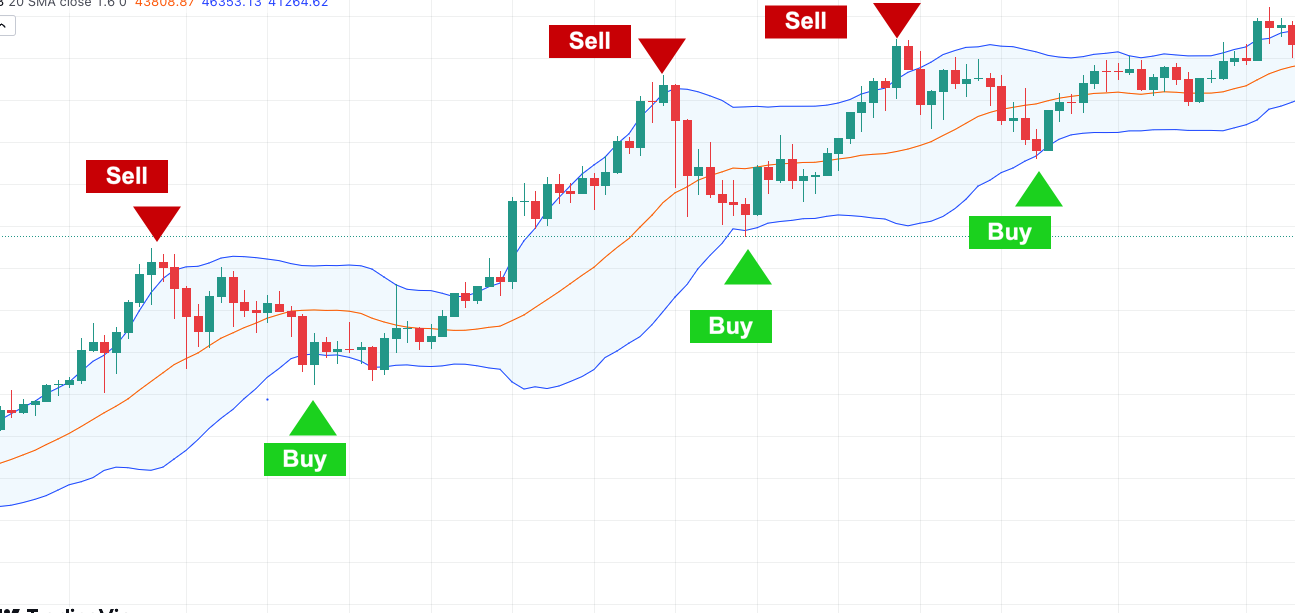
Bollinger Bands: A Comprehensive Guide for Algorithmic Traders
Introduction
Bollinger Bands are a powerful and versatile volatility indicator developed by John Bollinger in the 1980s. This technical analysis tool consists of three lines: a simple moving average (SMA) in the middle, with an upper and lower band placed two standard deviations above and below the SMA. Bollinger Bands provide traders with valuable insights into price volatility, potential reversals, and overbought/oversold conditions. Widely used by both discretionary and algorithmic traders, Bollinger Bands excel in identifying market trends, breakouts, and potential entry and exit points. Their ability to adapt to changing market conditions makes them particularly valuable for automated trading systems. By incorporating Bollinger Bands into algorithmic strategies, traders can create robust systems that respond dynamically to market volatility and price action.
How Does Bollinger Bands Work?
Mathematical Formula
The Bollinger Bands indicator consists of three components:
- Middle Band: N-period Simple Moving Average (SMA)
- Upper Band: Middle Band + (K × N-period Standard Deviation of Price)
- Lower Band: Middle Band - (K × N-period Standard Deviation of Price)
Where: - N = number of periods for the SMA (typically 20) - K = number of standard deviations (typically 2)
Calculation Process
- Calculate the N-period Simple Moving Average (SMA) of the closing prices.
- Compute the N-period standard deviation of closing prices.
- Multiply the standard deviation by K (usually 2).
- Add the result to the SMA for the Upper Band.
- Subtract the result from the SMA for the Lower Band.
Visual Description
On a price chart, Bollinger Bands appear as three lines: - A middle line (the SMA) that follows the general price trend - An upper band that moves above the SMA - A lower band that moves below the SMA The bands expand and contract based on market volatility, creating a dynamic envelope around the price action.
Key Parameters
- Period (N): The number of periods used for the SMA and standard deviation calculations. Typically set to 20, but can be adjusted based on trading preferences and timeframes.
- Standard Deviation Multiplier (K): Determines the width of the bands. Usually set to 2, but can be increased to 2.5 or 3 for more conservative signals, or decreased for more frequent signals.
- Price Input: While closing prices are most common, some traders use high/low or other price data points.
What Bollinger Bands Measure
Bollinger Bands primarily measure and visualize volatility. The distance between the upper and lower bands expands during periods of high volatility and contracts when volatility is low. This dynamic adjustment allows the indicator to maintain its effectiveness across various market conditions and instruments.
How to Read Bollinger Bands Signals?
Reading the Indicator
- Band Width: The distance between the upper and lower bands indicates volatility. Wide bands suggest high volatility, while narrow bands indicate low volatility.
- Price Position: Where the price is in relation to the bands provides insights into potential overbought or oversold conditions.
- Band Touches: When price touches or moves outside the bands, it can signal potential reversals or continuation of trends.
Common Trading Signals
- Bollinger Bounce: When price approaches the lower band and then moves back towards the middle band, it may signal a potential buy opportunity. Conversely, price moving from the upper band back towards the middle may signal a sell opportunity.
- Bollinger Squeeze: When the bands contract significantly (indicating low volatility), it often precedes a period of high volatility and potential breakouts.
- Bollinger Breakout: When price decisively moves outside the bands after a squeeze, it may signal the start of a new trend in that direction.
Overbought/Oversold Levels
- Price near or above the upper band may indicate overbought conditions.
- Price near or below the lower band may indicate oversold conditions.
However, these conditions alone are not always sufficient for trading decisions, as strong trends can see price “walk” along the bands for extended periods.
Divergences and Confirmations
- Positive Divergence: When price makes a lower low, but the indicator makes a higher low, it may signal a potential bullish reversal.
- Negative Divergence: When price makes a higher high, but the indicator makes a lower high, it may signal a potential bearish reversal.
Signal Strength Indicators
- The percentage of price closes outside the bands can indicate signal strength.
- The duration price spends outside the bands can also be a measure of signal strength.
What Are the Best Bollinger Bands Trading Strategies?
1. Bollinger Band Squeeze Breakout Strategy
This strategy aims to capture significant moves following periods of low volatility. Entry Rules: - Identify a Bollinger Squeeze (bands narrowing significantly) - Wait for a candle to close outside the bands - Enter in the direction of the breakout Exit Rules: - Set a profit target at 2-3 times the average true range (ATR) - Place a stop loss at the opposite band Timeframes: Works well on hourly and daily charts Market Conditions: Best during ranging markets transitioning to trending markets
2. Bollinger Band Mean Reversion Strategy
This strategy capitalizes on the tendency of price to return to the mean (middle band) after touching the outer bands. Entry Rules: - Wait for price to touch or slightly penetrate an outer band - Enter when price starts moving back towards the middle band - Confirm with an oscillator (e.g., RSI) showing oversold/overbought conditions Exit Rules: - Take profit when price reaches the middle band - Set a stop loss beyond the outer band that was touched Timeframes: Effective on shorter timeframes (5-15 minutes) for quick trades Market Conditions: Works best in ranging or choppy markets
3. Bollinger Band Trend-Following Strategy
This strategy aims to ride strong trends when price consistently respects the bands. Entry Rules: - Identify a strong trend where price is “walking the band” (consistently touching or staying near one band) - Enter on pullbacks to the middle band in the direction of the trend Exit Rules: - Trail a stop loss behind the opposite band - Exit when price crosses the middle band in the opposite direction of the trend Timeframes: Most effective on daily and weekly charts for capturing larger trends Market Conditions: Excels in strongly trending markets
When NOT to Use Bollinger Bands
- During major news events or economic releases when volatility can spike unpredictably
- In extremely low-volume periods where price action may be erratic
- As a standalone indicator without confirmation from other technical or fundamental analysis
Implementation in Algo Trading
Integration into Algorithmic Strategies
- Dynamic Volatility Adjustment: Use the band width to dynamically adjust position sizes or stop losses based on current market volatility.
- Trend Identification: Incorporate the slope of the middle band to determine overall trend direction.
- Multi-Timeframe Analysis: Compare Bollinger Bands across different timeframes for more robust signals.
Automated Decision-Making
- Create rules based on price position relative to the bands (e.g., “If price closes above upper band, then…”)
- Use band touches or crosses as triggers for entry or exit signals
- Implement Bollinger Band width thresholds to identify squeeze conditions
Backtesting Considerations
- Test strategies across different market conditions and volatility regimes
- Evaluate performance with various period and standard deviation settings
- Consider the impact of transaction costs, especially for strategies with frequent trades
Common Pitfalls and Avoidance
- False Breakouts: Confirm breakouts with volume or other indicators to reduce false signals
- Overreliance on Overbought/Oversold Signals: Remember that price can remain at extreme levels during strong trends
- Neglecting Overall Trend: Always consider the broader market context when interpreting Bollinger Band signals
Optimization Tips
- Experiment with non-standard settings (e.g., 2.5 standard deviations) for different assets
- Combine Bollinger Bands with momentum indicators for signal confirmation
- Use adaptive parameters that adjust based on recent market conditions
Building with Arrow Algo’s Block Builder
Arrow Algo’s NO-CODE block builder makes it easy to incorporate Bollinger Bands into your custom trading strategies without writing a single line of code. Here’s how you can leverage this powerful tool:
- Adding Bollinger Bands: Simply drag and drop the Bollinger Bands indicator block into your strategy workspace.
- Configuring Parameters: Use the visual interface to set your desired period, standard deviation multiplier, and price input. No coding required – just input values.
- Creating Trading Logic: Connect your Bollinger Bands block to decision blocks that define your entry and exit conditions. For example, you can create a block that triggers a buy signal when price touches the lower band and starts moving up.
- Combining Indicators: Easily add other indicator blocks (like RSI or MACD) and connect them to create more complex strategies that use Bollinger Bands in conjunction with other technical tools.
- Setting Conditions: Use comparison blocks to create specific conditions, such as “Price > Upper Band” or “Band Width < Threshold”, linking these to your trading logic.
- Testing and Optimization: Utilize Arrow Algo’s built-in backtesting tools to evaluate your strategy’s performance. Adjust parameters visually and re-run tests with a few clicks to optimize your approach.
By using Arrow Algo’s intuitive block builder, you can experiment with various Bollinger Band strategies, from simple breakout systems to complex multi-indicator algorithms, all without writing code.
Conclusion
Bollinger Bands are a versatile and powerful tool for algorithmic traders, offering insights into volatility, trend strength, and potential reversal points. By understanding how to interpret the bands and implement them in trading strategies, algo traders can create robust systems that adapt to changing market conditions. Key takeaways for effective use of Bollinger Bands include: - Always consider the broader market context and trend - Combine with other indicators for signal confirmation - Adjust parameters based on the specific asset and timeframe - Use band width to gauge volatility and potential breakouts - Be cautious of false signals, especially in low-volatility environments As you implement Bollinger Bands in your algorithmic trading strategies, remember to thoroughly backtest and optimize your approach. With careful application and continuous refinement, Bollinger Bands can become a valuable component of your trading arsenal. Ready to build your own strategies using Bollinger Bands? Visit https://www.arrowalgo.com to start creating custom indicator-based strategies with Arrow Algo’s NO-CODE block builder platform.
Disclaimer: Algorithmic trading involves substantial risk. Past performance is not indicative of future results. This content is for educational purposes only and should not be considered financial advice. Always do your own research and consider consulting with a financial advisor before making trading decisions.
Educational disclaimer: This content is for educational purposes only and does not constitute financial advice. Trading involves significant risk and you should only trade with capital you can afford to lose. Past performance is not indicative of future results.