
Can Grok Trade Crypto? What It Can and Cannot Do
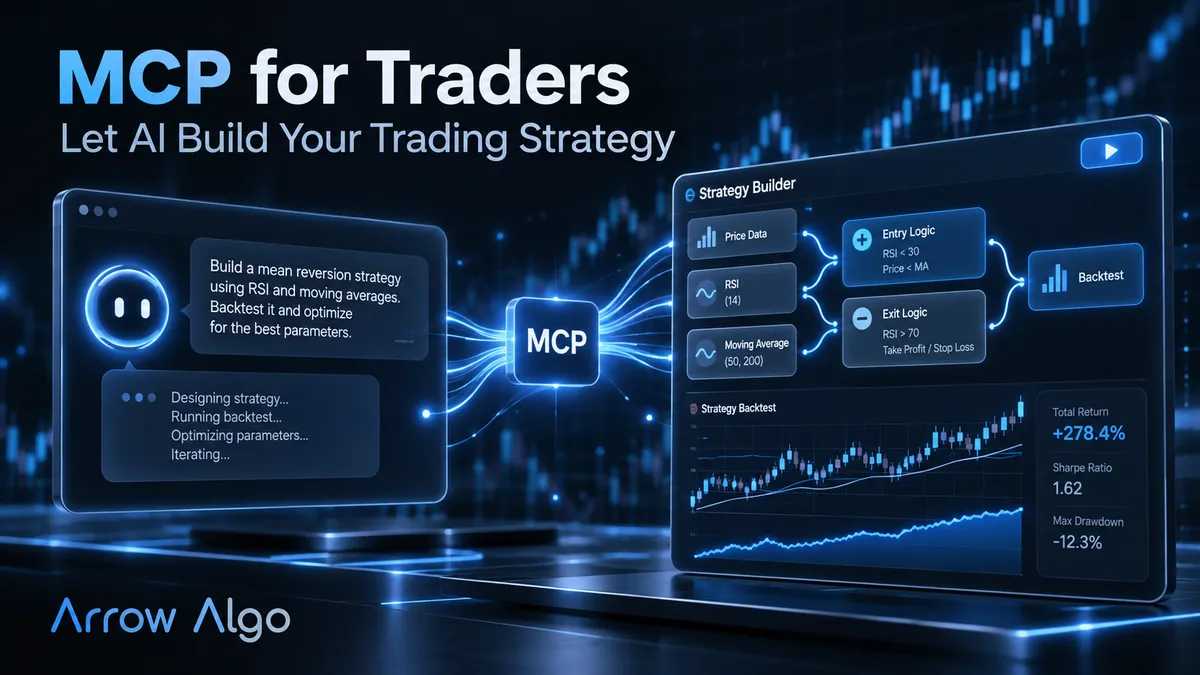
Can Grok trade crypto? Not on its own. Grok has no exchange account, places no orders and does not watch your positions overnight. What it does have is something other assistants lack: built-in access to posts on X as they happen. That makes it useful for a specific part of systematic trading, as long as you know where its job ends.
We asked the same question about ChatGPT and Claude. This post covers what is different about Grok.
What Is Grok Actually Doing?
Grok is a large language model made by xAI. Like other assistants, it reads text, reasons about it and writes a reply. It does not hold funds or connect to an exchange by default.
Its standout feature is live search across X and the web. Ask about a coin, and Grok can pull in posts from the last few minutes. Crypto news often breaks on X first, so that is a real advantage for research.
Grok can also use outside tools through the Model Context Protocol, or MCP. This open standard lets an assistant call actions in other software. xAI documents custom connectors for Grok that let paid users add a remote MCP server. Our MCP for traders guide explains the idea.
Why Live Sentiment Is Not a Trading Signal
Fast information feels like an edge. For a systematic trader, it has three problems.
It cannot be backtested easily. A rule needs the same input on every past candle. You cannot replay what Grok would have said about X posts on a date two years ago.
It changes between answers. Ask Grok the same question twice and the summary may differ. A trading rule must give the same output for the same inputs.
It is easy to game. Coordinated accounts can push a coin’s mentions. A summary of loud posts is not the same as a summary of real buyers.
So use Grok for context, not for the trigger. Let it explain why the market moved. Let fixed rules decide what to do about it.
Where Grok Fits in a Systematic Workflow
Split the work the same way you would with any assistant:
- Grok handles research and words. It gathers news, summarises sentiment and turns your ideas into written rules.
- A deterministic strategy handles decisions. The same inputs always give the same output, on every candle.
- Your exchange handles orders. It decides whether to accept and execute each one.
Turning a Narrative Into a Testable Rule
Grok is most useful when it helps you translate a story into something measurable. Suppose X is full of talk about a liquidation cascade. That story has a measurable footprint: a fast drop on heavy volume.
Ask Grok to help you define it. For example: “a four-hour candle that falls more than three ATRs, with volume twice its 20-candle average.” Now you have a rule you can test on years of data. Today’s crypto market update shows what one of those days looks like.
What Can Grok Do Through Arrow Algo?
Arrow Algo strategies are built from visual blocks, with no code. Connected through MCP, Grok can work on the research loop in plain English:
- Build. Turn a written strategy into visual blocks on the canvas.
- Backtest. Run the blocks on the exchange’s historical data and read back the results.
- Iterate. Change one rule, then test again.
- Explain. Answer questions about specific trades or losing periods.
Grok can also start or stop a strategy through the connection, if you allow it. Once started, the rules keep running after the chat ends. Each result comes from the backtest, not from Grok’s view of the market.
Grok Build, xAI’s terminal agent, can run longer test batches. We compare it with similar tools in our Claude Code vs Codex vs Grok Build post.
What Grok Still Cannot Do
- It cannot predict prices. Live posts describe what people think now. They do not tell you what happens next.
- It cannot guarantee a correct build. Check every period, threshold and exit on the canvas yourself.
- It cannot turn noise into an edge. A persuasive sentiment summary is still an opinion until a backtest supports it.
- It does not remove responsibility. Actions taken in your account remain yours.
Never paste exchange API keys into a chat. The exchange connection is set up once in your Arrow Algo account. Grok connects to Arrow Algo, not to your exchange.
How to Apply Grok in Arrow Algo
Start with research, and add autonomy slowly:
- Add the connector. Add Arrow Algo as a custom connector in Grok, then ask it to list your strategies. That confirms the link works.
- Use X for questions, not triggers. Ask what is driving a move. Then ask what measurable price or volume pattern that story would leave.
- Build and inspect. Have Grok build the rule in visual blocks, then check it against your brief on the canvas.
- Backtest with limits. Decide how many variants you will test before you start. Keep a final stretch of data untouched.
- Paper trade first. Compare live behaviour with the backtest before risking capital.
If you later choose to deploy, your rules send signals to your own exchange account, and the exchange decides whether to execute.
What Are the Key Takeaways?
- Can Grok trade crypto? Not by itself. It has no exchange access and places no orders.
- Its real strength is live search across X and the web.
- Live sentiment cannot be replayed, so it cannot be backtested as a trigger.
- Use Grok to explain moves and to turn stories into measurable rules.
- Connected through MCP, Grok can build, backtest and adjust visual-block strategies.
- Keep a manual approval on anything that starts a strategy.
Disclaimer: This content is for educational purposes only and does not constitute financial advice. Trading involves significant risk and you should only trade with capital you can afford to lose. Past performance is not indicative of future results. Always conduct your own research before making any trading decisions.
Ready to build your own automated trading strategies without writing a single line of code? Start for free at Arrow Algo and join thousands of traders who've made the switch to systematic trading.