
CCI Mean Reversion Strategy: How to Build It in Arrow Algo
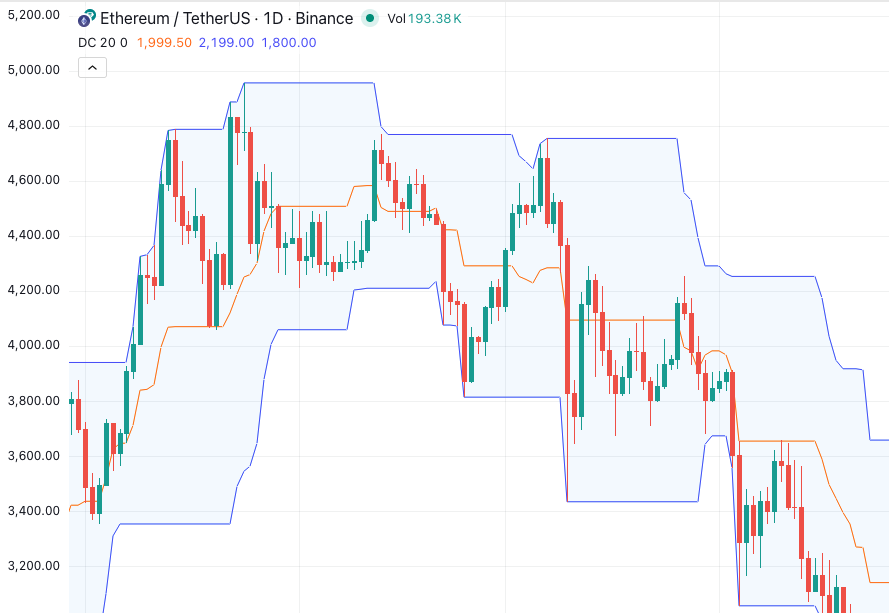
A CCI mean reversion strategy uses the Commodity Channel Index to catch price when it has stretched unusually far from its recent average — and to trade the snap back. Donald Lambert designed the CCI in 1980 so that roughly 70-80% of its values land between +100 and -100. Everything outside those bounds is, by construction, a statistical extreme. Mean reversion traders treat those extremes as rubber bands: the further price stretches, the more interesting the return trip becomes.
What Is a CCI Mean Reversion Strategy?
A CCI mean reversion strategy sells strength and buys weakness at defined statistical thresholds. The core idea: when CCI drops below -100, price has fallen unusually hard relative to its own recent behaviour. Rather than buying the falling knife immediately, the strategy waits for the indicator to cross back above -100 — evidence the snap-back has begun — and enters long, targeting a return toward the mean. This is the same logic that drives mean reversion systems everywhere: prices oscillate around fair value, and extremes tend to correct.
How Is the CCI Calculated?
The indicator measures the distance between the typical price (the average of high, low, and close) and its own moving average, scaled by the average size of those distances, per Investopedia. In plain English: CCI asks “how far is price from normal, in units of normal?” A reading of +200 means price is twice as stretched above its average as it typically gets. The standard 20-period setting is a sensible default; shorter periods produce more extremes and more noise.
Reading the Thresholds
- Between -100 and +100: ordinary behaviour — no signal for a reversion trader.
- Below -100: statistically oversold. The setup zone for longs, not yet the trigger.
- Crossing back above -100: the reversion trigger — the extreme has started to resolve.
- Above +100: statistically overbought — the mirror setup for exits or shorts.
- The zero line: the mean itself, and a natural profit target for reversion trades.
The Rule Set for a CCI Mean Reversion Strategy
The Classic Fade
- Setup: CCI (20) drops below -100.
- Entry: CCI crosses back above -100.
- Target: CCI reaching the zero line, or a fixed take-profit.
- Stop: below the low made during the extreme — if price makes a fresh low, the snap-back thesis is wrong.
The Trend-Aligned Pullback
- Filter: only take longs when price is above its 200-period EMA — you are buying dips in an uptrend, not catching collapses.
- Entry and exit: identical to the classic fade.
- Why it helps: reversion works best when the larger tide is already flowing your way — the same regime logic behind our Bollinger Band mean reversion strategy.
Building It in Arrow Algo
- Add a CCI block and connect your candle feed — the period is an editable property.
- Use a crossover block to detect the CCI output crossing above a fixed -100 level. That cross is your entry gate.
- Add an EMA block and condition for the trend filter if you are building the pullback variant.
- Route CCI crossing the zero line (or your fixed target) to the exit, with a stop-loss below the setup low.
- Backtest on live exchange data from Binance, Coinbase, or HyperLiquid — reversion behaviour differs sharply between majors and small caps, so test the exact market you intend to trade.
Where Does CCI Mean Reversion Fail?
- Strong trends. In a genuine trend, CCI can sit beyond +100 or -100 for weeks. Fading every extreme in a trending market is a donation to trend followers. The regime filter is the difference between the two outcomes.
- Entering on the extreme, not the turn. Buying the instant CCI hits -100 catches knives. Waiting for the cross back is what separates reversion from hope — the same discipline as the RSI overbought/oversold strategy.
- Over-shortening the period. CCI(7) flags “extremes” constantly; most are noise.
- No stop. Reversion trades have a defined invalidation — a fresh low — and skipping it turns small losers into portfolio events.
What Should You Remember?
- A CCI mean reversion strategy trades statistical extremes: setup beyond ±100, trigger on the cross back inside.
- The zero line is the mean — and the natural target.
- Regime filtering is not optional: fade extremes in ranges and uptrend pullbacks, never in fresh downtrends.
- The entry discipline — wait for the turn, not the touch — is most of the edge.
- Arrow Algo’s CCI block makes both variants drag-and-drop; the complete CCI guide covers the indicator’s full background.
Disclaimer: This content is for educational purposes only and does not constitute financial advice. Trading involves significant risk and you should only trade with capital you can afford to lose. Past performance is not indicative of future results. Always conduct your own research before making any trading decisions.
Ready to build your own automated trading strategies without writing a single line of code? Start for free at Arrow Algo and join thousands of traders who’ve made the switch to systematic trading.