
Fibonacci Retracement: Complete Guide for Algorithmic Trading
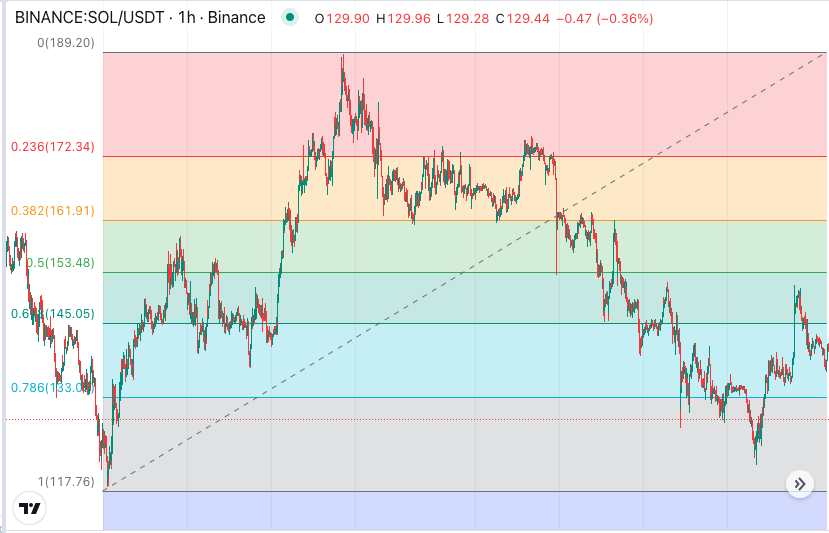
Fibonacci Retracement: A Comprehensive Guide for Algorithmic Traders
The Fibonacci Retracement indicator is a powerful tool in technical analysis, used to identify potential support and resistance levels in financial markets. Based on the mathematical sequence discovered by Leonardo Fibonacci in the 13th century, this indicator has become a staple for traders seeking to predict price reversals and set strategic entry and exit points. Developed in the 1970s by technical analysts who recognized the significance of Fibonacci numbers in market behavior, the indicator has gained widespread adoption among both traditional and algorithmic traders. It’s particularly valuable in trending markets, where it helps identify potential retracement levels after significant price moves. For algorithmic traders, the Fibonacci Retracement indicator offers a systematic way to identify key price levels without relying on subjective chart analysis. Its mathematical basis makes it well-suited for integration into automated trading systems, providing a reliable method for generating trade signals and managing risk across various timeframes and market conditions.
How Fibonacci Retracement Works
Mathematical Foundation
The Fibonacci Retracement indicator is based on the Fibonacci sequence, where each number is the sum of the two preceding ones (0, 1, 1, 2, 3, 5, 8, 13, 21, 34, …). The key Fibonacci ratios used in trading are derived from this sequence:
- 23.6% (derived from 89/377)
- 38.2% (derived from 89/233)
- 50% (not a Fibonacci ratio, but widely used)
- 61.8% (derived from 144/233)
- 78.6% (square root of 61.8%)
Calculation Process
- Identify a significant price move (swing high to swing low or vice versa)
- Draw a line from the start to the end of this move
- Divide this line by the key Fibonacci ratios
- Draw horizontal lines at these division points
Visual Representation
On a price chart, Fibonacci Retracements appear as horizontal lines intersecting the price action. These lines represent potential support (in an uptrend) or resistance (in a downtrend) levels where price might pause or reverse.
Key Parameters
- Start Point: The beginning of the price move (often a significant low or high)
- End Point: The end of the price move (often the most recent significant high or low)
- Ratio Levels: Typically 23.6%, 38.2%, 50%, 61.8%, and sometimes 78.6%
What It Measures
Fibonacci Retracements measure the potential retracement levels of a price move. They suggest areas where price might find support or resistance during a correction, based on the theory that markets often retrace a predictable portion of a move before continuing in the original direction.
How to Read Fibonacci Retracement Signals?
Reading the Indicator
- In an uptrend, look for price to retrace to Fibonacci levels for potential buying opportunities
- In a downtrend, watch for price to retrace to Fibonacci levels for potential selling opportunities
- The strength of a level increases if it coincides with other technical indicators or chart patterns
Common Trading Signals
- Buy Signal: Price retraces to a Fibonacci level in an uptrend and shows signs of bouncing
- Sell Signal: Price retraces to a Fibonacci level in a downtrend and shows signs of rejection
Signal Strength Indicators
- Stronger signals occur when price reacts strongly at a Fibonacci level
- Multiple timeframe confirmation increases signal reliability
- Volume spikes at Fibonacci levels can indicate increased significance
Divergences and Confirmations
- Divergence between price action and other indicators at Fibonacci levels can signal potential reversals
- Confirmation from other technical indicators (e.g., RSI, MACD) strengthens the signal
What Are the Best Fibonacci Retracement Trading Strategies?
1. Trend Continuation Strategy
This strategy aims to enter trades in the direction of the main trend after a retracement. Entry Rules: - Identify the overall trend - Wait for a retracement to a key Fibonacci level (often 38.2% or 61.8%) - Enter when price shows signs of resuming the main trend (e.g., candlestick reversal patterns) Exit Rules: - Set profit target at the next Fibonacci extension level - Place stop-loss below the swing low (for longs) or above the swing high (for shorts) Example: In an uptrend, if price retraces from $100 to $80, the 38.2% retracement level would be at $92.36. A buy entry could be triggered if price bounces strongly from this level, with a stop-loss below $80 and a target at the 100% extension ($120).
2. Reversal Prediction Strategy
This strategy looks for potential trend reversals at deep Fibonacci retracement levels. Entry Rules: - Identify a strong trend - Wait for a deep retracement (61.8% or 78.6%) - Enter counter-trend if price shows strong rejection at this level (e.g., engulfing candle) Exit Rules: - Set initial target at the 38.2% retracement of the counter-move - Trail stop-loss to protect profits Example: In a downtrend from $100 to $60, if price retraces to the 78.6% level ($91.44) and forms a strong bearish engulfing pattern, enter a short position with a stop above the high of the engulfing candle and an initial target at $72.18 (38.2% retracement of the $60 to $91.44 move).
3. Multiple Timeframe Confluence Strategy
This strategy seeks high-probability trades by combining Fibonacci levels across different timeframes. Entry Rules: - Identify Fibonacci levels on higher timeframe (e.g., daily) - Look for retracements on lower timeframe (e.g., 1-hour) that align with higher timeframe levels - Enter when price reacts at the confluence zone with confirming price action Exit Rules: - Set profit target at the next significant Fibonacci level on the higher timeframe - Place stop-loss beyond the most recent swing point Best Practices: - Use Fibonacci Retracements in trending markets for best results - Combine with other indicators (e.g., moving averages, RSI) for confirmation - Be cautious in ranging markets where Fibonacci levels may be less reliable - Avoid using in highly volatile or news-driven market conditions
Implementation of Fibonacci Retracement in Algo Trading
Integrating Fibonacci Retracements into algorithmic trading strategies requires careful consideration of several factors:
Automated Decision-Making
- Define clear rules for identifying significant swing highs and lows
- Implement logic to automatically draw and update Fibonacci levels
- Create conditions for trade entry and exit based on price interaction with Fibonacci levels
Backtesting Considerations
- Test the strategy across various market conditions and timeframes
- Evaluate performance with different Fibonacci ratio combinations
- Consider the impact of slippage and transaction costs, especially for shorter timeframes
Common Pitfalls and Solutions
- False Signals: Implement additional confirmation criteria (e.g., candlestick patterns, volume)
- Overreliance: Combine Fibonacci Retracements with other technical indicators for more robust signals
- Dynamic Market Conditions: Regularly update Fibonacci levels as new swing points form
Optimization Tips
- Experiment with different ratio combinations to find optimal settings for specific assets
- Use adaptive parameters that adjust based on market volatility
- Implement position sizing rules based on the distance to Fibonacci-based stop-loss levels
Building with Fibonacci Retracement in Arrow Algo
Arrow Algo’s NO-CODE block builder makes it easy to incorporate Fibonacci Retracements into your custom trading strategies without writing a single line of code. Here’s how:
- Add the Indicator: Drag and drop the Fibonacci Retracement block from the indicator library into your strategy workspace.
- Configure Parameters: Use the visual configuration panel to set your preferred Fibonacci levels and other parameters.
- Define Trading Logic: Connect the Fibonacci Retracement block to decision blocks that define your entry and exit conditions.
- Set Conditions: Use comparison blocks to create rules based on price interaction with Fibonacci levels (e.g., “If price crosses above 61.8% level”).
- Implement Risk Management: Add position sizing and stop-loss blocks, referencing Fibonacci levels for placement.
- Backtest and Optimize: Utilize Arrow Algo’s built-in backtesting tools to evaluate your strategy’s performance across different market conditions.
- Refine Your Strategy: Easily adjust your strategy by modifying block connections or parameters, all through the visual interface.
This NO-CODE approach allows you to rapidly prototype, test, and refine complex Fibonacci-based strategies without the need for programming skills.
Conclusion
Fibonacci Retracements offer a powerful tool for identifying potential support and resistance levels in trending markets. By understanding how to interpret and apply this indicator, algorithmic traders can develop sophisticated strategies for trend following, reversal prediction, and risk management. Key takeaways: - Use Fibonacci Retracements in conjunction with other technical indicators for confirmation - Focus on strong trends and clear swing points for more reliable signals - Implement proper risk management, using Fibonacci levels to inform stop-loss and take-profit placement - Regularly backtest and optimize your Fibonacci-based strategies to adapt to changing market conditions By leveraging the power of NO-CODE platforms like Arrow Algo, traders can quickly implement and refine Fibonacci Retracement strategies without extensive programming knowledge, opening up new possibilities for algorithmic trading success. Ready to build your own strategies using Fibonacci Retracement? Visit https://www.arrowalgo.com to start creating custom indicator-based strategies with Arrow Algo’s NO-CODE block builder platform.
Disclaimer: Algorithmic trading involves substantial risk. Past performance is not indicative of future results. This content is for educational purposes only and should not be considered financial advice. Always do your own research and consider consulting with a financial advisor before making trading decisions.
Educational disclaimer: This content is for educational purposes only and does not constitute financial advice. Trading involves significant risk and you should only trade with capital you can afford to lose. Past performance is not indicative of future results.