
Momentum Trading Algorithms: Riding the Trend
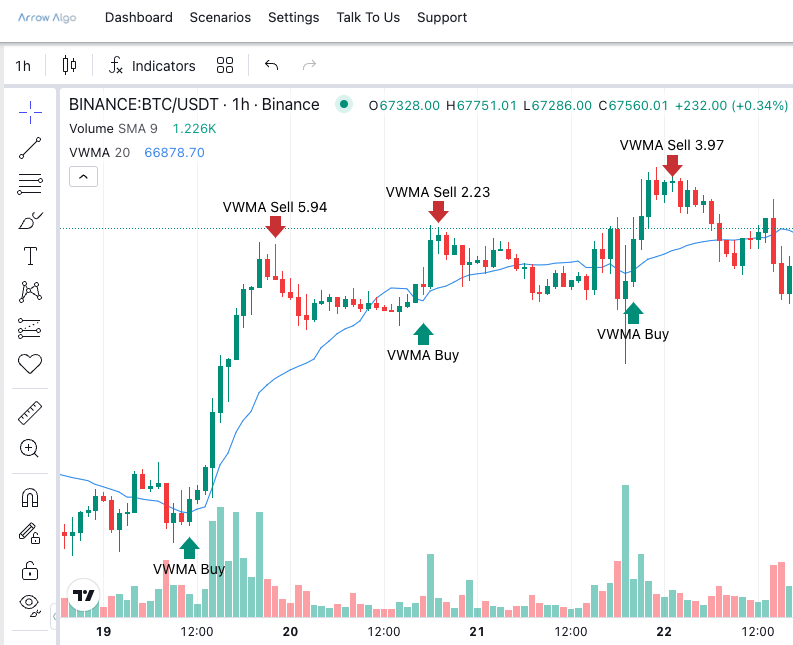
Momentum Trading Algorithms: Riding the Trend
In the fast-paced world of financial markets, traders are constantly seeking an edge to capitalize on price movements. Enter momentum trading algorithms: powerful tools that harness the energy of market trends to generate profitable opportunities. But what exactly are these algorithms, and how can you leverage them in your trading strategy? In this comprehensive guide, we’ll dive deep into the world of momentum trading algorithms, exploring their principles, applications, and how you can create your own without writing a single line of code.
Understanding Momentum Trading
Momentum trading is based on the principle that assets trending in a particular direction are likely to continue in that direction. It’s like catching a wave in surfing – once you’re on it, you can ride it for a while before it loses energy. In financial markets, this translates to buying assets that are rising in price and selling those that are falling.
The Physics of Market Momentum
Just as in physics, market momentum involves mass (trading volume) and velocity (price change). When both are aligned, you get a powerful trend that can persist for extended periods. Momentum traders aim to:
- Identify assets with strong upward or downward trends
- Enter positions in the direction of the trend
- Exit when the momentum shows signs of weakening
Key Components of Momentum Trading Algorithms
To create effective momentum trading algorithms, you need to understand and implement several crucial elements:
1. Trend Identification
The foundation of any momentum strategy is accurately identifying trends. Common methods include:
- Moving Averages: Using short-term and long-term moving averages to determine trend direction
- Rate of Change (ROC): Measuring the percentage change in price over a specific period
- Relative Strength Index (RSI): Gauging the speed and change of price movements
2. Entry and Exit Signals
Once a trend is identified, your algorithm needs clear rules for entering and exiting positions:
- Breakout strategies: Entering when price breaks above resistance or below support
- Pullback entries: Buying dips in uptrends or selling rallies in downtrends
- Momentum oscillators: Using indicators like the Stochastic Oscillator to time entries and exits
3. Position Sizing and Risk Management
Proper position sizing is crucial for long-term success. Your algorithm should include:
- Dynamic position sizing based on volatility or account equity
- Stop-loss orders to limit potential losses
- Take-profit levels to secure gains
4. Timeframe Selection
Momentum can exist across various timeframes. Your algorithm might focus on:
- Intraday momentum for short-term trades
- Daily or weekly trends for swing trading
- Monthly charts for long-term trend following
Practical Applications of Momentum Algorithms
Let’s explore some real-world applications of momentum trading algorithms:
Cross-Asset Momentum
This strategy involves ranking multiple assets based on their recent performance and:
- Going long the top-performing assets
- Shorting the worst-performing assets
- Rebalancing at regular intervals (e.g., monthly)
Sector Rotation
Sector rotation algorithms capitalize on the cyclical nature of different market sectors:
- Identify sectors with the strongest momentum
- Allocate capital to ETFs or stocks within those sectors
- Rotate holdings as sector momentum shifts
Breakout Momentum
This approach combines trend following with breakout strategies:
- Scan for assets approaching key resistance levels
- Enter long positions when price breaks above resistance with strong volume
- Set trailing stops to protect profits as the trend develops
Best Practices for Momentum Algorithm Development
To create robust momentum trading algorithms, consider these tips:
- Use multiple timeframes: Confirm trends across different timeframes to increase confidence in your signals.
- Incorporate volume: Strong trends are usually accompanied by above-average trading volume.
- Account for volatility: Adjust your position sizes and stop-loss levels based on the asset’s volatility.
- Test for different market conditions: Ensure your algorithm performs well in both trending and ranging markets.
- Implement filters: Use additional criteria (e.g., fundamental factors) to filter out low-quality momentum signals.
- Regular rebalancing: Periodically reassess and adjust your positions to maintain optimal exposure to momentum.
- Consider market regimes: Be aware that momentum strategies may perform differently in various market environments (e.g., bull vs. bear markets).
Creating Your Momentum Algorithm with Arrow Algo
Now that you understand the principles of momentum trading algorithms, you might be wondering how to put this knowledge into practice. This is where Arrow Algo’s powerful no-code platform comes in. With Arrow Algo, you can create, backtest, and run your own custom momentum trading strategies without writing a single line of code. Arrow Algo’s visual block builder allows you to:
- Easily implement trend identification techniques using pre-built indicator blocks
- Create complex entry and exit rules with intuitive logic blocks
- Incorporate dynamic position sizing and risk management
- Backtest your strategies across multiple timeframes and assets
By leveraging Arrow Algo’s user-friendly interface, you can experiment with different momentum strategies, fine-tune your algorithms, and gain valuable insights into market behavior – all without the need for programming skills.
Conclusion
Momentum trading algorithms offer a powerful way to capitalize on market trends and generate consistent returns. By understanding the key components of these strategies and following best practices, you can create sophisticated trading systems that harness the power of market momentum. Remember, the key to success lies in continuous learning, testing, and refining your approach. With the right tools and knowledge, you can develop momentum algorithms that adapt to changing market conditions and help you achieve your trading goals. Ready to build and test your own algorithmic trading strategies? Visit https://www.arrowalgo.com to start creating custom algorithms with Arrow Algo’s powerful platform.
Disclaimer: Algorithmic trading involves substantial risk. Past performance is not indicative of future results. This content is for educational purposes only and should not be considered financial advice. Always do your own research and consider consulting with a financial advisor before making trading decisions.
Educational disclaimer: This content is for educational purposes only and does not constitute financial advice. Trading involves significant risk and you should only trade with capital you can afford to lose. Past performance is not indicative of future results.